 April 2020 in “Journal of the Endocrine Society”
 This case report details an atypical presentation of Hodgkin's lymphoma in an 87-year-old man, where severe hypercalcemia and mental status changes prompted further investigation and diagnosis.
 April 2019 in “The journal of investigative dermatology/Journal of investigative dermatology”
 This study demonstrates that extracellular ATP induced by UV radiation promotes melanin production in human melanocytes, suggesting ATP-induced purinergic signaling may influence skin pigmentation.
 November 2025 in “Zenodo (CERN European Organization for Nuclear Research)”
 In this observational study, researchers found that 55% of participants with hair loss known as Khalitya had serum calcium deficiency, which aligns with both Ayurvedic and modern perspectives linking poor nutrition to hair disorder, highlighting the importance of dietary regulation and stress management.
 4 citations
,
June 2013 in “The Journal of Rheumatology”
4 citations
,
June 2013 in “The Journal of Rheumatology” This abstract describes a program with various presentations and events focused on Canadian excellence in rheumatology but reports no new research findings.
 2 citations
,
April 2018 in “Journal of Investigative Dermatology”
2 citations
,
April 2018 in “Journal of Investigative Dermatology” This study suggests that frontal fibrosing alopecia is a highly inflammatory disease involving TH1 and JAK-STAT pathways, without reduced hair keratins, highlighting JAK-STAT signaling as a potential therapeutic target.
 June 2023 in “JAAD international”
 This report highlights that 49.4% of U.S. patients with skin issues use complementary and alternative medicine (CAM), with 6% leveraging it specifically for their skin conditions, including treatments like herbal, vitamin, and mineral supplementation for alopecia.
 January 2023 in “International Journal of Contemporary Pediatrics”
 This case study describes a 5-year-old boy with vitamin D dependent rickets type 2, motor delays, and alopecia totalis who showed improved biochemical parameters with calcium and calcitriol treatment.
 July 2018 in “International journal of clinical & experimental dermatology”
 This narrative review describes the components of human hair and their nutritional importance but reports no clinical results; the authors suggest dietary sulfur amino acids are essential for hair health.
February 1994 in “Neuroscience letters” This review provides an overview of biotin's role in metabolism and the consequences of deficiency but reports no new clinical findings; it highlights that intestinal bacteria usually meet biotin needs.
March 1993 in “Neuroscience letters” This summary outlines the essential roles and recommended daily intakes of biotin, while discussing consequences and mechanisms of deficiency, but presents no new research findings.
September 1989 in “Neuroscience letters” This review discusses the role of biotin in metabolism and its dietary requirements, but provides no new experimental findings.
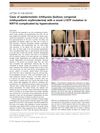 October 2011 in “Journal of dermatology”
 A man with a rare skin condition and a new gene mutation developed high calcium levels due to his treatment.
1 citations
,
February 2024 in “International Journal of Physics Research and Applications” In this study, powdered milk samples from Senegal showed varying levels of heavy metals, with some exceeding acceptable maximum levels for calcium, potassium, and phosphorus, indicating potential safety concerns.
1 citations
,
December 2005 in “Journal of Biological Research - Bollettino della Società Italiana di Biologia Sperimentale” This study used Scanning Electron Microscopy to analyze South American mummy hair, revealing high levels of sulfur, calcium, and potassium, highlighting SEM's utility in anthropological investigations.
September 2024 in “American Journal of Modern Physics” This study used X-ray fluorescence to analyze elemental and heavy metal contents in Senegalese powdered milk, finding potential safety concerns with excessive calcium in certain samples and significantly high potassium levels in one, suggesting ongoing monitoring is crucial for consumer safety.
519 citations
,
October 1998 in “Endocrinology” The study found that normalizing mineral ion levels in vitamin D receptor-ablated mice prevented hyperparathyroidism and bone disorders but did not address hair loss, indicating the VDR's role in hair growth.
119 citations
,
October 1998 in “Endocrinology” This study found that normalizing mineral ion levels in vitamin D receptor-ablated mice prevented hyperparathyroidism, rickets, and osteomalacia, but alopecia persisted, indicating a separate role for the receptor in hair growth.
July 2025 in “Ecotoxicology and Environmental Safety” This study found that higher levels of lead and molybdenum in hair were associated with an increased risk of dyslipidemia, while there was a significant interaction showing opposing effects of lead and cadmium on dyslipidemia risk among adults in China.
January 2004 in “Weiliang yuansu yu jiankang yanjiu” This study found that diabetic individuals had significantly lower hair levels of chromium, manganese, and copper, but higher iron levels, compared to non-diabetic controls.
8 citations
,
August 2020 in “International Journal of Molecular Sciences” This study found that in Arabidopsis root hairs, oscillating cytoplasmic potassium dynamics precede growth oscillations, suggesting a complex interplay with calcium signaling and microfilament structure in regulating root hair growth.
July 2004 in “Journal of the American Dietetic Association” Many Korean preschool children have low zinc levels, which may affect their growth, and zinc supplements could help.
 16 citations
,
December 2019 in “Journal of Cellular and Molecular Medicine”
16 citations
,
December 2019 in “Journal of Cellular and Molecular Medicine” This study found that sonicated platelet-rich plasma was more effective than calcium chloride-induced platelet-rich plasma in activating hair follicle stem cells and promoting hair follicle regeneration in mice.
 July 2025 in “New Phytologist”
 This study demonstrated that the FER/MLO signaling module regulates calcium dynamics and ROS accumulation in root hair growth, with the constitutively active MLO (faNTA) able to restore normal development and signaling in specific mutant genotypes, highlighting MLO15's role in root hair tip growth regulation.
82 citations
,
January 2011 in “New Phytologist” This study demonstrated that AtVLN4 plays a role in root hair growth by regulating actin organization in a calcium-dependent manner.
7 citations
,
October 2021 in “Journal of Mind and Medical Sciences” This study found that most milk powder samples tested from the Romanian market contained element concentrations exceeding legal limits, especially potassium, calcium, chlorine, phosphorus, and aluminum.
 December 2022 in “European journal of internal medicine”
 This case report details an instance of acute kidney injury associated with increased oxalate levels likely due to systemic absorption of glycolic acid from hair straightening agents, exacerbated by untreated psoriasis.
January 1994 in “中医杂志:英文版” This study found that aplastic anemia patients with deficiencies in yin, yang, or both had reduced levels of various trace elements in their hair compared to healthy controls.
7 citations
,
December 2015 in “Turkish Journal of Osteoporosis” In this study, researchers observed that vitamin D deficiency is common among patients with musculoskeletal pain admitted to the hospital, with particularly low levels found in females.
May 2025 in “Hormone Research in Paediatrics” This case study described a girl with vitamin D-dependent rickets type 2A who developed long-standing tertiary hyperparathyroidism, yet this did not hinder the healing of her rickets or normalization of hypophosphatemia; high doses of intravenous calcium were pivotal for recovery.
May 2024 in “International journal of medicine and psychology.” This study found that in laboratory rats, toxic concentrations of hydrogen sulfide affected the immune system differently depending on age and immune suppression status, with notable changes in immune cell levels and phagocytosis, suggesting significant roles in age-associated pathologies.