 5 citations
,
March 2019 in “Journal of lipid research”
5 citations
,
March 2019 in “Journal of lipid research” This study reports new fluorogenic ceramidase substrates and highlights RBM14C24:1 as an efficient substrate for neutral ceramidase, while RBM15C18:1 is the best probe for measuring ACER1 and ACER2 activities, potentially aiding high-throughput screening for ceramidase inhibitors.
August 2021 in “The Journal of Physiology” This study found that GABA can depolarize murine sensory nerve axons via GABAA receptor activation, with the ß3 subunit being crucial to excitability, and that NKCC1 plays a vital role in mediating this effect.
 42 citations
,
April 2013 in “Steroids”
42 citations
,
April 2013 in “Steroids” This review discusses the pathophysiology, molecular genetics, and management of non-classic congenital adrenal hyperplasia due to 21-hydroxylase deficiency, with no new clinical findings reported.
4 citations
,
November 2024 in “Journal of Advanced Research” In this study, the researchers reported that NMMHC IIA dissociates from PAR1 and activates the CREB3/ARF4 pathway, worsening thrombin-induced blood-brain barrier damage, suggesting it as a potential therapeutic target for blood-brain barrier-related diseases.
 49 citations
,
January 2010 in “International Journal of Pediatric Endocrinology”
49 citations
,
January 2010 in “International Journal of Pediatric Endocrinology” This review covers the pathophysiology, diagnosis, and treatment of nonclassic congenital adrenal hyperplasia due to P450c21, but it reports no new clinical results.
17 citations
,
July 2018 in “Environmental and Experimental Botany” The researchers reported that silencing the NtNCED3-2 gene in tobacco reduced ABA content and drought tolerance, inhibited root and leaf development, and decreased photosynthetic ability due to altered isoprenoid metabolism.
20 citations
,
March 2014 in “Molecular Endocrinology” This study suggests that NFIB and STAT5 work together to control cell-specific genetic programs in mammalian tissues, particularly in mammary and hair follicle stem cells.
 27 citations
,
June 2013 in “Genes & development”
27 citations
,
June 2013 in “Genes & development” This study found that L-type channel blockers can induce hair growth in Timothy syndrome by overcoming delays in anagen phase, suggesting a potential therapeutic role for tissue regeneration.
5 citations
,
October 2020 in “bioRxiv (Cold Spring Harbor Laboratory)” In this study, the authors found that inhibiting Cdc42 activity with CASIN restored hair follicle stem cell function and hair growth in aged mice, suggesting potential for treating aging-related hair regeneration issues.
 April 2019 in “The journal of investigative dermatology/Journal of investigative dermatology”
 In this study, the researchers observed significant metabolic dysregulation in central centrifugal cicatricial alopecia, particularly involving lipid metabolism and the downregulation of AMPK-related genes.
 January 2025 in “bioRxiv (Cold Spring Harbor Laboratory)”
 This study identifies Armadillo Repeat Only proteins as crucial regulators of plant CNGC channels, influencing various plant functions and showcasing a unique plant-specific role in Ca2+ signaling.
This research found that nod factor can induce root hair reorientation and gene expression in Medicago truncatula with as little as a single molecule, implicating heterotrimeric G-protein signaling in this process.
January 2026 in “Applied Sciences” In this study, cyclic ADP-ribose (cADPR) treatment in human hair follicle dermal papilla cells was associated with increased intracellular calcium retention and activated anagen-related signaling without causing significant cytotoxicity, indicating its potential impact on hair growth processes.
 43 citations
,
August 2016 in “Scientific Reports”
43 citations
,
August 2016 in “Scientific Reports” This animal study found that Cinnamomi cortex water extract reduced prostate weight and improved histological changes in a benign prostatic hyperplasia model, suggesting potential as a treatment.
![Benzo[c]quinolizin-3-ones Theoretical Investigation: SAR Analysis and Application to Untested Compounds](/images/assets/6712367a-949f-47c7-a756-2bfe6316fc69/small/15331.jpg) 6 citations
,
August 2004 in “Journal of Chemical Information and Computer Sciences”
6 citations
,
August 2004 in “Journal of Chemical Information and Computer Sciences” This study found that certain molecular quantum descriptors can be directly correlated with the biological activity of benzo[c]quinolizin-3-ones, potentially aiding in the identification and design of active compounds.
 1 citations
,
April 2022 in “The Journal of Family Practice”
1 citations
,
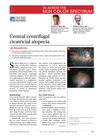
April 2022 in “The Journal of Family Practice” This report describes early and late stages of central centrifugal cicatricial alopecia in two Black women, highlighting progression from a small to a large central patch of hair loss.
January 2022 in “International journal of dermatology and venereology” This case study reports a 36-year-old man with KID syndrome caused by an N14Y GJB2 mutation, expanding the mutation spectrum of this condition in the Chinese population.
 June 2026 in “Strathprints: The University of Strathclyde institutional repository (University of Strathclyde)”
 In this study, researchers found that inhibiting IKKα in patient-derived CCS tumour models reduces tumour viability, supporting the potential for topical IKKα inhibitors as a treatment for CCS.
 September 2025 in “Digital Commons - RU (Rockefeller University)”
 This study found that when NFIB was removed in adult mouse hair follicle stem cells, it did not affect their maintenance but unexpectedly led to increased proliferation and differentiation of nearby melanocyte stem cells.
 14 citations
,
February 2021 in “Experimental Dermatology”
14 citations
,
February 2021 in “Experimental Dermatology” This study found that activating CB1 receptor signaling in human hair follicles increased stem cell proliferation while reducing differentiated cell survival, suggesting CB1's role as a survival stimulus for epithelial stem cells.
8 citations
,
January 2020 in “Evidence-based Complementary and Alternative Medicine” This study found that Cinobufacin combined with chemotherapy improved clinical outcomes in breast cancer patients and reduced certain side effects compared to chemotherapy alone.
3 citations
,
December 2013 in “Balkan Journal of Medical Genetics” This case report highlights the use of microarray analysis to identify cryptic chromosomal rearrangements in a young woman with intellectual disability and multiple congenital anomalies.
November 2025 in “Biomedicine & Pharmacotherapy” This study found that administering calcium blockers verapamil or nimodipine significantly preserved auditory function and hair cell survival in Cx26-cKO mice, suggesting potential protective effects for other inner ear disorders.
This study identified a 14,883 bp genomic deletion affecting the Plcd1 and Vill genes as likely responsible for the abnormal phenotype observed in snthr-1Bao mice.

The researchers reported that a child with epilepsy developed encephalopathy after an asymptomatic COVID-19 infection, confirmed by clinical and laboratory assessments showing post-COVID19 effects.
 June 2024 in “British Journal of Dermatology”
 This report detailed the British Hair and Nail Society's national grand round, which aids in diagnosing and treating complex hair disorders, showcasing rare diagnoses and suggesting novel therapies.
 July 2023 in “Nasza Dermatologia Online”
 More research is needed on CCCA in children, especially Black and Asian adolescents.
 July 2016 in “Hair transplant forum international”
 This article discusses participation in the Brazilian Association of Hair Restoration Surgery's workshop on hair transplantation but does not present any new research findings.
April 2018 in “DSpace@MIT (Massachusetts Institute of Technology)” Nephronectin is linked to worse outcomes in breast cancer and helps cancer spread.
 August 2023 in “JAAD international”
 This study, conducted at Montefiore Medical Center, reports that central centrifugal cicatricial alopecia predominantly affects middle-aged Black or African American women, often presenting without symptoms, which may delay diagnosis and treatment. The study underscores the need for a specific ICD-10 code for better epidemiological studies.