12 citations
,
November 2022 in “Toxics” This review describes how liver and kidney diseases and diabetes may affect ethyl glucuronide levels in hair, impacting forensic and clinical interpretations, but reports no new experimental results.
 135 citations
,
August 1994 in “Clinical Endocrinology”
135 citations
,
August 1994 in “Clinical Endocrinology” In this study of women with hirsutism or androgenic alopecia, diverse underlying endocrine disorders including polycystic ovaries and various enzyme deficiencies were detected, often associated with elevated testosterone levels.
48 citations
,
August 1998 in “Developmental Biology” In this study, researchers created a mutant mouse lacking the first cut repeat in the Cux/CDP protein, resulting in curly vibrissae and wavy hair, supporting the role of Cux/CDP's DNA binding domains in gene regulation during development.
1 citations
,
September 2023 in “Genes” This study found no significant difference in CUX1 core promoter methylation levels between different lambskin patterns in Hu sheep, suggesting other mechanisms influence CUX1 expression related to hair follicle development.
1 citations
,
August 2025 in “Epigenetics & Chromatin” This study explored the role of the histone modification H3K4me3 in cashmere goat dermal papilla cells, finding that increased levels enhanced cell proliferation and activated Wnt signaling genes, suggesting H3K4me3's involvement in hair follicle development through regulation of the gene RSPO3.
 1 citations
,
June 2016 in “Equine Veterinary Education”
1 citations
,
June 2016 in “Equine Veterinary Education” This article discusses various diagnostic techniques for investigating equine skin diseases and reports no new clinical results.
 April 2024 in “The journal of investigative dermatology/Journal of investigative dermatology”
 In this mouse model study, researchers found that deleting the ASH2L gene in epidermal progenitor cells led to thinner epidermal layers, delayed hair follicle development, and reduced epidermal stem cell pools, with alterations in genes related to hair follicle development and the Notch signaling pathway.
 January 2009 in “Egyptian Journal of Medical Human Genetics”
 This study, conducted among Egyptians, found a borderline significant association between the Stul polymorphism of the androgen receptor gene and androgenetic alopecia in males, with higher androgen receptor expression in balding scalp areas.
 4 citations
,
July 2005 in “International Journal of Dermatology”
4 citations
,
July 2005 in “International Journal of Dermatology” This study found no significant difference in psychological stress between males with and without androgenetic alopecia. Social and cultural factors might influence perceptions of alopecia's impact.
 4 citations
,
January 2014 in “Indian Journal of Endocrinology and Metabolism”
4 citations
,
January 2014 in “Indian Journal of Endocrinology and Metabolism” This study found that the currently established ultrasound cut-off values for diagnosing PCOS are not applicable to Indian women, suggesting that region-specific criteria improve diagnostic accuracy.
 6 citations
,
January 2000 in “Dermatology”
6 citations
,
January 2000 in “Dermatology” A girl's severely tangled hair couldn't be fixed and had to be cut due to a rare condition called plica neuropathica.
 19 citations
,
March 2012 in “Clinical Endocrinology”
19 citations
,
March 2012 in “Clinical Endocrinology” This study established a normative free androgen index range of 0.7-6.4 and identified a cut-off value of 6.1 for reproductive-age women in southern China, highlighting hyperandrogenic women's increased metabolic disorder risks.
 January 2014 in “Pathology”
 Non-scarring hair loss can be diagnosed with two 4mm punch biopsies, one cut vertically and the other transversely.
January 2022 in “Skin appendage disorders” In this study, the researchers found that trichoscopy can effectively visualize scalp micropigmentation, identified by homogenous, grey to black circular dots similar to closely cut hair, potentially reducing the need for invasive procedures.
 45 citations
,
January 2012 in “International Journal of Trichology”
45 citations
,
January 2012 in “International Journal of Trichology” This study reported that trichoscopy is a more effective diagnostic tool than the trichogram for early diagnosis of FAGA, regardless of hair shaft diversity cut-off levels.
March 2014 in “한국유기농업학회지” In this study, Hypochoeris radicata L. showed increased growth and colony formation when cut, and its extracts inhibited seed germination and growth in other plants while demonstrating varying antifungal activity.
223 citations
,
June 2018 in “Human Reproduction Update” This study concluded that including ovarian morphology in the diagnosis significantly increases the estimated prevalence of PCOS, revealing substantial variability due to clinical criteria and diagnostic cut-offs.
4 citations
,
January 2017 in “International journal of trichology” This case study reports that sudden hair matting occurred in a patient after using coconut and castor oils on long hair, requiring the hair to be cut off due to irreversible felting.
March 2026 in “Drug Testing and Analysis” This study observed that the degradation product PTeCA significantly increased in hair treated with oxidative cosmetics, suggesting it could be a reliable marker for detecting such treatments, with a proposed PTCA cut-off value using PTeCA as the gold standard.
 22 citations
,
January 2019 in “Endocrinology and metabolism”
22 citations
,
January 2019 in “Endocrinology and metabolism” This study found that among Filipino women, a modified Ferriman-Gallwey score of 7 or above indicates hirsutism and is significantly associated with elevated calculated free testosterone.
47 citations
,
November 2007 in “The journal of investigative dermatology. Symposium proceedings/The Journal of investigative dermatology symposium proceedings” This review discusses how various factors, including cosmetic procedures and scalp conditions, can damage hair, but highlights the availability of products to improve hair health; it reports no new empirical results.
 206 citations
,
September 2010 in “PLoS ONE”
206 citations
,
September 2010 in “PLoS ONE” This study found that using a Picosecond IR Laser (PIRL) on mouse skin led to less tissue damage and scarring compared to conventional surgical lasers and tools.
 1 citations
,
January 2021 in “Nihon rinsho hifukaikai zasshi”
1 citations
,
January 2021 in “Nihon rinsho hifukaikai zasshi” This article discusses the diagnostic methods for differentiating alopecia areata from similar hair loss conditions and emphasizes the importance of accurate diagnosis, but it reports no new research findings.
 98 citations
,
July 2011 in “Fertility and Sterility”
98 citations
,
July 2011 in “Fertility and Sterility” This study determined that an mFG score of 5 or greater defines hirsutism among Southern Chinese women, with prevalence and score thresholds decreasing with age.
29 citations
,
April 2011 in “Journal of Microscopy” This study describes a modified reduction-osmication method for staining human scalp hair that improves reagent penetration and visualization of hair cortex features using transmission electron microscopy.
28 citations
,
January 2021 in “Burns & Trauma” This study found that wound healing after scald burns in mice was slower in deeper burns, but the healing quality in second-degree deep scalds was similar to normal healing.
 13 citations
,
October 2002 in “Journal of Investigative Dermatology”
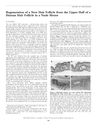
13 citations
,
October 2002 in “Journal of Investigative Dermatology” This study found that only one upper portion of a bisected human hair follicle successfully regenerated a complete new follicle with a pigmented hair in nude mice, although the overall success rate was very low.
5 citations
,
April 2021 in “Journal of Academic Research in Medicine” In this study, the free androgen index (FAI) was found to be a reliable marker for diagnosing and monitoring adolescent girls with hyperandrogenism, suggesting clinical reference values for PCOS, obesity, and idiopathic hirsutism.
4 citations
,
October 2006 in “Anais Brasileiros de Dermatologia” This case report describes a patient with alopecia areata treated with diphencyprone, who experienced both successful hair regrowth and later intense hair shedding, compatible with telogen effluvium, suggesting a possible link between contact dermatitis treatments and telogen effluvium onset.
 2 citations
,
June 2016 in “Dermatologic Clinics”
2 citations
,
June 2016 in “Dermatologic Clinics” This article reviews clinical practice gaps in dermatology regarding the care of patients with hair disorders, including attitude, knowledge, and skill deficiencies, and reports no new results.