 6 citations
,
January 2013 in “Indian Journal of Paediatric Dermatology”
6 citations
,
January 2013 in “Indian Journal of Paediatric Dermatology” This study found that skin disorders were more common among schoolchildren in Kashmir Valley, North India, with eczema and acne vulgaris being the most prevalent conditions.
 4 citations
,
October 2015 in “Journal of Evaluation in Clinical Practice”
4 citations
,
October 2015 in “Journal of Evaluation in Clinical Practice” This study evaluated the quality of androgenetic alopecia guidelines using the AGREE II instrument and found the European guideline to be the highest-rated, while American guidelines required modifications.
 4 citations
,
January 2015 in “International Journal of Trichology”
4 citations
,
January 2015 in “International Journal of Trichology” In this study, transplanted hair follicles from different body sites showed changes in morphology and immune status, suggesting their ability to adapt and function in new recipient areas such as the scalp or eyebrows.
 4 citations
,
April 2014 in “Journal of Pharmacology and Pharmacotherapeutics”
4 citations
,
April 2014 in “Journal of Pharmacology and Pharmacotherapeutics” This report describes a case of reversible alopecia in a 10-year-old boy attributed to isoniazid use during anti-tuberculosis therapy.
 3 citations
,
May 2018 in “Reproductive Sciences”
3 citations
,
May 2018 in “Reproductive Sciences” In this randomized study, BAY 1158061, a prolactin receptor antibody, was found to be safe, well-tolerated, and exhibited low immunogenicity in healthy postmenopausal women, but had no effect on serum prolactin levels compared to placebo.
 3 citations
,
July 2015 in “oURspace (University of Regina)”
3 citations
,
July 2015 in “oURspace (University of Regina)” This thesis presents research conducted in partial fulfillment of a Master's degree in Software Systems Engineering but does not report new empirical findings.
 3 citations
,
December 2003 in “University of California Press eBooks”
3 citations
,
December 2003 in “University of California Press eBooks” This article discusses the pervasive presence and influence of advertisements in daily life but does not provide new research findings.
 1 citations
,
March 2024 in “Research Square (Research Square)”
1 citations
,
March 2024 in “Research Square (Research Square)” In this study, the authors assessed videos on laryngeal carcinoma across YouTube, Bilibili, and TikTok, finding that TikTok videos, while more interactive, generally offered less information and lower quality, with YouTube videos ranking highest in quality but all platforms needing improvement in professional content creation.
 1 citations
,
December 2021 in “Pakistan biomedical journal”
1 citations
,
December 2021 in “Pakistan biomedical journal” This review explores the effectiveness of seed cycling, a modern alternative medicine approach, in treating polycystic ovary syndrome and reports no new clinical results.
 June 2026 in “Research Square”
 This study identified a group of dermal fibroblasts near hair follicle stem cells in mice that facilitate hair regeneration by creating a biomechanically compliant extracellular matrix, enhancing stem cell activation and promoting a positive feedback loop for tissue regeneration.
 May 2026 in “International Journal for Educational Integrity”
 In this study, researchers observed that organic traffic to Spanish contract cheating websites rose during the COVID-19 pandemic but decreased from 2023, possibly due to the increasing use of generative AI tools.
This study analyzed Yul Brynner's star image in 1950s Hollywood, highlighting how his distinct physical presence and flexible ethnic portrayals influenced his cinematic appeal, while examining the interplay of his unique performance style with biographical tales.

This chapter reviews various metrics for measuring sales performance, including sales effectiveness, market share, customer retention, and more, but reports no new research findings.
 August 2000 in “Australasian Journal of Dermatology”
 This article contains book reviews from the Australasian Journal of Dermatology and reports no new research findings.
 November 2003 in “Journal of Dermatology”
 Authors defend finasteride-depression link, suggest detailed medical history, and call for more investigation.
10 citations
,
September 1994 in “International Journal of Dermatology” This case report describes three Iranian men with gradual reddish-brown pigmentation on their cheeks and preauricular areas since childhood, unresponsive to sunblocks and topical steroids.
210 citations
,
May 2006 in “The FASEB journal” This study found that oxidative stress in hair follicle melanocytes contributes to premature aging and apoptosis, providing insights into graying as a model for studying aging and testing antiaging therapies.
 9 citations
,
June 1959 in “Archives of dermatology”
9 citations
,
June 1959 in “Archives of dermatology” This article discusses the importance of integrating clinical observations with laboratory research, emphasizing the need for clinicians to collaborate with researchers to address medical problems.
 75 citations
,
January 2009 in “International journal of trichology”
75 citations
,
January 2009 in “International journal of trichology” This review examines the differential aging of melanocytes in hair follicles and skin, and reports no new findings; the authors suggest further research is needed to understand these processes.
118 citations
,
January 1992 in “Experientia” 2 citations
,
January 1973 in “ACTA HISTOCHEMICA ET CYTOCHEMICA” In this study, the brown skin of guinea pigs exhibited higher levels of certain biochemical markers related to melanogenesis compared to black and white skin, with distinct differences in ascorbic acid utilization and protein concentrations observed between regions.
January 2004 in “Giornale di Metafisica: revista bimestrale di filosofia” This study suggests that increased Wnt signaling may promote excessive differentiation of melanocytes, leading to exhaustion of melanocyte stem cells and hair graying in aged mice.

In this study, the researchers analyzed skin samples from Dun Mongolian horses to uncover molecular pathways linked to the "Bider" marking, identifying differential gene expression and several pigment-related signaling pathways that may play key roles in its formation.

This case report describes perifollicular melanocyte regeneration in the affected skin of a patient with bullous pemphigoid, highlighting an underreported aspect of the condition in skin of color patients, and emphasizing the need for increased awareness and earlier diagnosis in this demographic.
2 citations
,
September 2024 in “Animals” In this study, researchers identified key genes such as EDNRB2, GPNMB, TRPM1, TYR, and DCT that regulate melanin deposition in the breast muscles of black-boned chickens, contributing to their unique pigmentation during embryonic development.
 15 citations
,
March 2004 in “American Journal of Ophthalmology”
15 citations
,
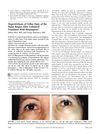
March 2004 in “American Journal of Ophthalmology” This case report found that topical bimatoprost in a female Hispanic patient with glaucoma led to increased hair growth and pigmentation in the malar region, which resolved after discontinuing use and epilation.
 23 citations
,
April 2004 in “American Journal of Ophthalmology”
23 citations
,
April 2004 in “American Journal of Ophthalmology” This case report found that topical bimatoprost usage in a female Hispanic patient with open-angle glaucoma was associated with hypertrichosis and increased pigmentation of vellus hairs on the malar region.
 January 2007 in “Journal of the American Academy of Dermatology”
 A 73-year-old man's grey-white hair turned dark brown after eczema treatment.
70 citations
,
December 2004 in “Proceedings of the National Academy of Sciences” This study found that BMP signaling influences hair pigmentation in mice by affecting the Agouti protein and interacts with MC-1R pathways to modulate melanin production.
4 citations
,
May 2023 in “Pigment Cell & Melanoma Research” In this study, researchers found that deleting the Bmi1 gene in murine melanocytes caused premature hair greying and loss of melanocyte lineage cells, highlighting BMI1's role in protecting melanocyte stem cells from stress and oxidative damage.