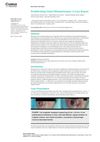
In this case report, researchers detailed a giant proliferating pilomatrixoma in a 36-year-old woman, emphasizing the importance of complete excision to prevent recurrence or potential malignant transformation, distinguishing it from malignancies like angiosarcoma or melanoma.
2 citations
,
May 2006 in “Archives of Pathology & Laboratory Medicine” This case report describes a 40-year-old woman with Birt-Hogg-Dubé syndrome diagnosed with multiple chromophobe renal cell carcinomas, highlighting the importance of recognizing associated dermatologic lesions for early intervention.
18 citations
,
February 2001 in “Der Hautarzt” This case study of a 50-year-old woman with myotonic dystrophy and multiple basal cell carcinomas suggests there could be a genetic predisposition for certain cutaneous tumors in such patients.
 1 citations
,
February 2017 in “The American journal of dermatopathology/American journal of dermatopathology”
1 citations
,
February 2017 in “The American journal of dermatopathology/American journal of dermatopathology” This case report presented a 52-year-old man with cutaneous focal mucinosis, exhibiting rare follicular induction of the epidermis, underscoring the importance of recognizing this association in differential diagnoses.
9 citations
,
April 1985 in “Archives of Dermatology” This case report describes a 7-year-old boy with Netherton's syndrome, highlighting the identification of the tricorrhexis invaginata hair defect using a photographically illustrated scalp biopsy, which had not been visually documented before.
This report describes a case of Goltz syndrome in a 12-year-old Saudi girl, highlighting the variability in symptoms and the importance of documenting such rare syndromes.
 8 citations
,
September 2016 in “The American Journal of Dermatopathology”
8 citations
,
September 2016 in “The American Journal of Dermatopathology” This study found that eccrine duct dilation is significantly more frequent in cicatricial alopecias compared to noncicatricial alopecias, possibly due to the scarring process.
2 citations
,
July 2018 in “Chinese Journal of Dermatology” This study reported that imaging characteristics of sebaceous nevus vary significantly by age group, revealing dynamic developmental changes that can be effectively identified through dermoscopy and reflectance confocal microscopy, offering noninvasive diagnostic potential.
October 2020 in “Pediatrics in Review” This case report describes a newborn diagnosed with dominant dystrophic epidermolysis bullosa due to a COL7A1 mutation, following the presentation of blisters that healed without further complications.
January 2016 in “Dermatology online journal” This case report describes an adolescent female with a linear array of trichoepitheliomas on her left neck, highlighting the clinical presentation of this benign tumor.
January 2022 in “Clinical Cases in Dermatology” This report describes a case of a 4-year-old boy diagnosed with linear alopecia areata, characterized by patchy hair loss and associated with unique hyperpigmented skin lesions.
 1 citations
,
February 2017 in “Clinical Dermatology Open Access Journal”
1 citations
,
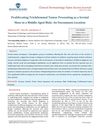
February 2017 in “Clinical Dermatology Open Access Journal” This case report describes a middle-aged man with a growing scrotal mass, diagnosed as a benign proliferating trichilemmal tumor, which can mimic squamous cell carcinoma, highlighting the importance of correct diagnosis.
7 citations
,
January 2008 in “Indian Journal of Dermatology” This review discusses the clinical manifestations and genetic basis of pigmentary mosaicism, highlighting its varied phenotypic expressions, but reports no new clinical results.
7 citations
,
February 2012 in “Journal of cutaneous pathology” This case report presents unique histopathological findings in skin lesions of hereditary mucoepithelial dysplasia that have not been previously documented.
January 2026 in “Indian Journal of Paediatric Dermatology” This case report describes a rare co-existence of Becker nevus and plexiform neurofibroma in a child with genetically confirmed neurofibromatosis type 1, offering insights into the potential cellular and molecular links between these lesions.
18 citations
,
January 2013 in “Dermatology Online Journal” This case report describes a 19-year-old woman with typical clinical and histopathological findings of trichofolliculoma, a rare hair follicle hamartoma usually located on the face or scalp.
 February 2026 in “Journal of Cutaneous and Aesthetic Surgery”
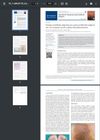
 In this study, a case of a 20-year-old woman revealed ectopic acanthosis nigricans at a post-syndactyly-release surgical site, suggesting this rare condition could result from epidermal–dermal mismatch and altered growth factor signaling in grafted skin, without indicating any metabolic or malignancy concerns.
September 2024 in “The Journal of Dermatology” In this study, researchers reported a rare case of nevus comedonicus with hair growth in a 26-year-old male, challenging prior reports that affected lesions typically lack the capability to develop terminal hair.
 March 2025 in “American Journal of Medical Genetics Part A”
 In this study, researchers found that mosaic PLCD1 hotspot variants, even without the recognized germline "risk allele," may be a rare but significant genetic cause of nevus trichilemmocysticus, warranting DNA testing and sensitive sequencing technologies for accurate diagnosis.
 January 2017 in “Turkiye Klinikleri Journal of Dermatology”
 This article describes a rare case of infantile ring-shaped scalp alopecia and discusses differential diagnosis, approach, and preventive measures, but presents no new clinical results.
May 2017 in “Journal of the American Academy of Dermatology”  7 citations
,
December 2021 in “Curēus”
7 citations
,
December 2021 in “Curēus” This review outlines the diverse clinical presentations of cutaneous metastases in breast cancer patients and emphasizes the importance of biopsy for accurate diagnosis, but reports no new results.
 21 citations
,
January 2018 in “Anticancer Research”
21 citations
,
January 2018 in “Anticancer Research” This study suggests that NBCCS and BFHS may be the same genetic condition, which could help improve identification and management of misdiagnosed cases with specific surveillance strategies.
 October 2023 in “Research Review”
 This source describes the development, structure, and types of skin appendage tumors, noting both benign and malignant forms, potential associations with syndromes, and categories based on follicular differentiation.
June 2026 in “Indian Journal of Case Reports” This source reports a rare case of a 10-year-old child developing periorbital milia as an unusual cutaneous manifestation of chronic graft-versus-host disease following allogeneic stem cell transplantation, suggesting that immune-mediated epidermal disruption may lead to milia formation.
9 citations
,
September 2020 in “Journal of cosmetic dermatology” This case report describes koebnerization-induced vitiligo in a woman following repeated eyebrow microblading, suggesting a link between the procedure and the phenomenon in susceptible individuals.
19 citations
,
July 1994 in “International Journal of Dermatology” This case report describes a 9-year-old Korean boy with a calcified nodule on his earlobe, confirmed by histopathologic examination and Von Kossa staining.
 4 citations
,
November 2012 in “Dermatitis”
4 citations
,
November 2012 in “Dermatitis” A man got severe skin irritation after using marking nut sap for hair loss.
61 citations
,
April 1969 in “Archives of Dermatology” This study highlights a case where progressive baldness initially diagnosed as alopecia universalis was attributed to a basal cell hamartoma of each hair follicle, stressing the importance of skin biopsies for unusual alopecia cases.
 January 2020 in “Journal of oral medicine and oral surgery”
 This report describes a rare case of recurrent hair growth in the floor of the mouth, suggesting heterotopia as the possible cause in an adult male.