 May 2024 in “Journal of colloid and interface science”
 This study developed a bilayer bionic skin scaffold that mimics the skin's structure to resist microbial invasion and enhance wound healing, with in vivo animal studies showing improved collagen deposition, neovascularization, and hair follicle formation.
13 citations
,
January 2025 in “Lab on a Chip” This review discusses recent developments in capillary microfluidic wearables for non-invasive, continuous biofluid monitoring, highlighting advances in device design, electrochemical and optical biosensing, and the challenges of clinical validation and scalable manufacturing.
September 2026 in “Angewandte Chemie International Edition” In this study, SEU-302, a newly synthesized covalent organic framework, demonstrated potent photodynamic antibacterial effects, showing effective elimination of Staphylococcus aureus, wound healing promotion, and inflammation reduction both in vitro and in vivo, highlighting its therapeutic promise against bacterial infections.
 1 citations
,
March 2024 in “Brain Imaging and Stimulation”
1 citations
,
March 2024 in “Brain Imaging and Stimulation” This study reported that a 3D-printed LED photobiomodulation device is technically and financially feasible, but requires further experimental and clinical testing before being used in human healthcare.
4 citations
,
March 2023 in “Cancer Innovation” This paper discusses the recent advancements and challenges of flexible bioelectronics in personalized health management and cancer therapy, but reports no new studies or results.
10 citations
,
January 2020 in “Journal of Materials Chemistry B” This study developed a biodegradable nanofibrous biofilm that attracts skin-related cells and accelerates blood vessel formation, potentially improving skin wound healing.
1 citations
,
February 2023 in “Pharmaceutics” This article reviews cell proteomic footprinting technology and its application in improving the authentication and quality control of cell-based immunotherapeutics, without providing new clinical results.
September 2026 in “Angewandte Chemie” In this research, SEU-302, a newly developed covalent organic framework, exhibited significant antibacterial and wound-healing properties in vitro and in vivo, effectively eliminating Staphylococcus aureus and reducing inflammation under light activation, thereby showcasing its potential for therapeutic photodynamic applications.
April 2026 in “Industrial & Engineering Chemistry Research” This study showed that keratinase pretreatment effectively reduces the time for enzymatic unhairing in bovine hides by opening channels for faster penetration, which shortens the process by over 50% and enhances leather quality.
5 citations
,
January 1994 in “PubMed” This study found that the metabolism of finasteride in rat hepatic microsomes involves key hydroxylation steps, highlighting the role of a novel enzyme in 6 alpha-hydroxylation.
This study identified ISPP-Rb, a novel immuno-stimulatory complex from Royoporus badius, that significantly activates murine macrophage cells and induces multiple proinflammatory cytokines.
 June 2025 in “World Journal of Medical Oncology”
 In this study, researchers explored the use of new biobased compounds and gels as potential treatments for skin cancer, finding that these biological materials may be significant in limiting and eliminating skin tumors alone or when combined with other methods.
 December 2024 in “JAPI (Jurnal Akses Pengabdian Indonesia)”
 This study found that a community education program using group discussions and leaflets significantly increased knowledge and skills among Sungai Bilu residents in South Kalimantan for using riverbank plants as alternative medicine.
30 citations
,
May 2020 in “Forensic Science International Genetics” This study found that optimizing proteomic genotyping conditions from single human hair samples significantly improves the detection of genetically variant peptides, enhancing human identification with high precision across different biogeographic backgrounds.
November 2025 in “Journal of Natural Fibers” This study reviews the potential to repurpose human hair waste, often discarded from places like barber shops and hospitals, into valuable raw materials for chemical and materials science applications, despite existing challenges in its utilization.
 December 2020 in “Nippon Laser Igakkaishi”
 This review covers the mechanisms and reported clinical effects of Photobiomodulation therapy, particularly in the fields of plastic surgery and dermatology, without presenting new clinical results.
34 citations
,
September 2019 in “ACS Biomaterials Science & Engineering” In this study, probiotic-functionalized nanocomposite scaffolds accelerated wound healing and inhibited harmful bacteria in burn wounds on mice, suggesting a potential new approach for infection control and healing promotion.
2 citations
,
November 2025 in “Biomedicines” This review explores how platelet- and marrow-derived biologics like PRP and BMAC exhibit both regenerative and antimicrobial properties useful in musculoskeletal conditions and wound healing, though their clinical outcomes are affected by preparation inconsistencies and lack of standardized protocols.
15 citations
,
January 2017 in “Polymers” This review discusses how engineering cell surfaces with polyelectrolytes can address challenges in cell therapy and related biomedical fields and reports no new research findings.
January 2026 in “International Journal of Cosmetic Science” This study observed that eco-friendly PALF forms a protective physical barrier on the skin, helping limit the impact of environmental pollutants and offering additional benefits for skin and hair in various cosmetic formulations.
 January 2026 in “International journal of high school research”
 This review discusses how combining single-cell RNA sequencing and 3D bioprinting is advancing skin tissue engineering by enhancing cellular-level precision and addressing challenges like vascularization, ultimately improving regenerative outcomes and therapeutic strategies.
 May 2026 in “Zenodo (CERN European Organization for Nuclear Research)”
 This study suggests that 3D bioprinting may become a practical solution for tissue regeneration and complex wound care, demonstrating improved outcomes over traditional methods in various applications.
1 citations
,
August 2022 in “Zenodo (CERN European Organization for Nuclear Research)” This review discusses detoxification methods for poisonous plants in Ayurvedic medicine, detailing purification techniques and their pharmacological effects, but it reports no new results.
26 citations
,
June 2023 in “International Journal of Bioprinting” In this study, an innovative composite hydrogel incorporating methylene blue-loaded nanoparticles was developed for 3D-printed wound dressings, showing improved mechanical properties, excellent antibacterial effects, and enhanced skin healing in mice.
August 2025 in “International Journal of Biological Macromolecules” A new hydrogel can kill resistant bacteria and help heal infected burn wounds.
 July 2023 in “BENTHAM SCIENCE PUBLISHERS eBooks”
 This book chapter reviews the subclasses and applications of platelet-rich plasma in tissue engineering and highlights the challenges in clinical translation without reporting new clinical results.
 57 citations
,
March 2024 in “Nano-Micro Letters”
57 citations
,
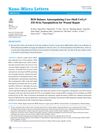
March 2024 in “Nano-Micro Letters” In this study, researchers created a core-shell nanozyme, CeO2@ZIF-8/Au, which autonomously regulates ROS levels to efficiently eliminate bacteria, reduce inflammation, and promote wound healing by balancing ROS generation and scavenging in response to environmental conditions.
The researchers reported that human foreskin fibroblasts isolated by enzyme digestion method proliferated faster and were purified more quickly than those isolated by the inverted tissue culture method; additionally, post-psoralen photoactivation therapy moderately repaired UVB-induced damage in these fibroblasts, suggesting potential clinical applications.
12 citations
,
April 2023 in “Frontiers in Materials” This review discusses the biofunctionalization of hydrogel scaffolds for vascular tissue regeneration and reports promising results from in vivo studies, such as improved angiogenesis and healing in pressure ulcers when using specific peptides.
April 2017 in “DR-NTU (Nanyang Technological University)” This study found that adjusting the polymer gel composition can create a more consistent release profile of finasteride with reduced initial burst release, enhancing patient compliance through in situ polymer precipitation.