 September 2021 in “CRC Press eBooks”
 This review discusses fibrosing alopecia in a pattern distribution and highlights diagnostic features, but reports no new clinical results; the authors emphasize the value of trichoscopy and histology in diagnosis.
April 2022 in “Actas Dermo-Sifiliográficas” This article discusses the case of a 59-year-old woman with a history of progressive facial hyperpigmentation and explores potential connections between her condition and her family history, but reports no clinical findings.
 5 citations
,
April 2017 in “Dermatologic Surgery”
5 citations
,
April 2017 in “Dermatologic Surgery” PRP treatment satisfies 58% of female hair loss patients, with most noticing fuller, thicker hair and less shedding.
 4 citations
,
June 2022 in “Journal of Cosmetic Dermatology”
4 citations
,
June 2022 in “Journal of Cosmetic Dermatology” This study suggests that dermal fibroblast-conditioned medium containing multi-peptide factors may stimulate hair growth by enhancing growth factor expression and β-catenin regulation in hair follicle cells.
 June 2019 in “Reactions Weekly”
  11 citations
,
October 2019 in “Journal of Cancer Immunology”
11 citations
,
October 2019 in “Journal of Cancer Immunology” This article discusses the role of external beam radiotherapy as a primary treatment method for cancer and reports no new clinical findings.
2 citations
,
January 2010 in “PubMed” This case report observed no hair regrowth after treating a woman with postmenopausal frontal fibrosing alopecia using systemic and local corticosteroids, suggesting the need for more innovative therapies.
7 citations
,
September 1997 in “PubMed” This study found that Finasteride treatment significantly reduced dihydrotestosterone and epidermal growth factor levels in benign prostatic hyperplasia tissue, particularly in the periurethral zone, while Flutamide decreased epidermal growth factor but not dihydrotestosterone.
 June 2023 in “LA Referencia (Red Federada de Repositorios Institucionales de Publicaciones Científicas)”
 Home photobiomodulation therapy can improve life quality and mobility for disabled individuals.
 July 2020 in “European urology open science”
 Methylated gene parts may cause finasteride-resistance in some enlarged prostate patients.
 July 2007 in “Faculty Opinions – Post-Publication Peer Review of the Biomedical Literature”
 This study introduced the BASP classification, a new system for categorizing pattern hair loss in both men and women, and applied it to analyze 2213 Korean subjects.
 December 2021 in “Research Square (Research Square)”
 This study found that repeatedly collecting hair follicles from individuals with fragile X syndrome is feasible for measuring FMR1 and FMRP levels in both home and office settings.
 39 citations
,
July 2015 in “British Journal of Dermatology”
39 citations
,
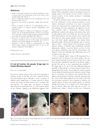
July 2015 in “British Journal of Dermatology” This article discusses the pseudo 'fringe sign' in frontal fibrosing alopecia, highlighting that it is not solely related to traction, and it reports no new clinical results.
1 citations
,
February 2023 in “Pharmaceutics” This article reviews cell proteomic footprinting technology and its application in improving the authentication and quality control of cell-based immunotherapeutics, without providing new clinical results.
 January 2015 in “Hair transplant forum international”
 This snippet mentions an increase in women seeking surgical hair restoration and subsequently encountering more cases of frontal fibrosing alopecia, but the abstract doesn't contain results or conclusions.
 127 citations
,
May 2004 in “PubMed”
127 citations
,
May 2004 in “PubMed” This randomized pilot study suggests that finasteride may benefit some men with category IIIA chronic pelvic pain syndrome, although it is not recommended as monotherapy unless benign prostatic hyperplasia is also present.
 June 2026 in “Springer Link (Chiba Institute of Technology)”
 This study found that fibroblast growth factors exhibit significant expression differences in the skin of rodents and primates, which may be linked to their evolutionary and environmental adaptations.
344 citations
,
May 2018 in “EMBO journal” This review discusses the regulation of the MiT-TFE family transcription factors, particularly TFEB, through phosphorylation-mediated subcellular localization and reports no new clinical results.
5 citations
,
January 2016 in “Skin appendage disorders” This case report describes frontal fibrosing alopecia in a woman with primary biliary cirrhosis and polymyalgia rheumatica, suggesting a possible autoimmune link to this form of hair loss.
 July 2018 in “Elsevier eBooks”
 This review discusses the evolving understanding of frontal fibrosing alopecia as a generalized skin condition with diverse manifestations, and reports no new clinical results.
 119 citations
,
November 2014 in “Trends in Cell Biology”
119 citations
,
November 2014 in “Trends in Cell Biology” This review discusses the mechanisms and pathways of FGFR signalling and its roles in development, disorders, and therapeutic targeting, but reports no new clinical results.
 January 2026 in “BIO Web of Conferences”
 This study suggests that fibroblast growth factors exhibit significant expression differences in rodent and primate skin, potentially related to their evolutionary paths and environmental adaptations.
January 2015 in “프로그램북(구 초록집)” In this study, researchers found that nearly half of Korean women with female pattern hair loss showed temporal scalp involvement, with a decrease in temporal hair density compared to occipital areas.
February 2024 in “Institutional Repository of the Federal Technological University of Paraná (RIUT) (Federal University of Technology – Paraná)” This review examines the molecular effects of photobiomodulation therapy, particularly its influence on gene and protein expression related to inflammation and cell functions, but reports no new clinical results.
7 citations
,
February 2019 in “Anais Brasileiros de Dermatologia”  October 2022 in “Journal of ophthalmology”
 This review discusses the implementation and mechanisms of photobiomodulation therapy in various medical fields, including ophthalmology, and reports no new clinical results.
195 citations
,
December 2009 in “Journal of Investigative Dermatology” This study found that sebum free fatty acids may enhance the antibacterial defense of human sebaceous glands by upregulating the expression of the antimicrobial peptide hBD-2, potentially aiding in acne treatment.
 August 2015 in “Dermatología Argentina”
 This study reviewed 18 postmenopausal women with frontal fibrosing alopecia, noting frontotemporal hairline recession and eyebrow loss, often treated with steroids, triamcinolone, and other medications.
 6 citations
,
September 2022 in “Frontiers in pharmacology”
6 citations
,
September 2022 in “Frontiers in pharmacology” In this study, Epimedii Folium extract was found to enhance melanin production and promote pigmentation through mechanisms involving the MAPK/ERK1/2 pathway in both in vitro and in vivo models.
 November 2025 in “PARIPEX-INDIAN JOURNAL OF RESEARCH”
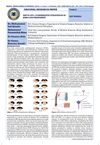
 GFC is more effective than PRP for treating hair loss.