 65 citations
,
January 2017 in “Postępy Dermatologii i Alergologii”
65 citations
,
January 2017 in “Postępy Dermatologii i Alergologii” This review highlights the increasing clinical applications of high-frequency ultrasonography in dermatology, particularly for assessing the depth of skin tumors and monitoring inflammatory skin diseases, but reports no new clinical results.
 23 citations
,
June 2015 in “Journal of Tissue Engineering and Regenerative Medicine”
23 citations
,
June 2015 in “Journal of Tissue Engineering and Regenerative Medicine” This study demonstrated that a 3D air–liquid culture system using Wnt-CM-treated cells can induce hair regeneration in nude mice and may facilitate large-scale preparation for hair loss treatment.
 19 citations
,
July 2011 in “Microscopy and Microanalysis”
19 citations
,
July 2011 in “Microscopy and Microanalysis” This article reviews the role of adult stem cells in tissue homeostasis and wound repair, focusing on their regulation within the murine hair follicle's specialized niche, but it presents no new findings.
 11 citations
,
March 2014 in “Journal of Investigative Dermatology”
11 citations
,
March 2014 in “Journal of Investigative Dermatology” In this study, basal cell carcinoma developed in Ptch-deficient mice only after chemical treatment, not skin wounding, suggesting a second unknown event is necessary for tumor formation.
 11 citations
,
April 2013 in “SpringerPlus”
11 citations
,
April 2013 in “SpringerPlus” This study reports that melanocytes form a defined photoresponsive network in the skin that reads environmental light cycles and may influence the sleep-waking cycle similar to the pineal gland.
 10 citations
,
May 2009 in “Journal of The American Academy of Dermatology”
10 citations
,
May 2009 in “Journal of The American Academy of Dermatology” This case report describes a dual transposition flap technique for closing large scalp defects post-Mohs surgery, achieving minimal alopecia and scar visibility, though it is based on a single patient.
 7 citations
,
August 2017 in “PloS one”
7 citations
,
August 2017 in “PloS one” This study found that NIH hairless mice exhibit abnormalities in hair growth and immune-related pathways, with Pik3r1 and Pik3r3 identified as key genes for further investigation.
 6 citations
,
July 2015 in “International Journal of Dermatology”
6 citations
,
July 2015 in “International Journal of Dermatology” This study observed that multiple familial trichoepitheliomas commonly presented with a cribriform histopathological tumor pattern, differentiating them from solitary trichoepitheliomas.
 1 citations
,
January 2023 in “IEEE access”
1 citations
,
January 2023 in “IEEE access” This review examines advancements in deep learning methods for detecting dermatological conditions from dermoscopic images, summarizing available datasets and suggesting future research directions, but reports no new results.
 1 citations
,
April 2017 in “Journal of Investigative Dermatology”
1 citations
,
April 2017 in “Journal of Investigative Dermatology” This proof-of-concept study reported that a new, ultra-fast, one-step immunohistochemistry method improved the interpretation of Mohs surgery slides, particularly for poorly differentiated tumors.

This study identified a genetic locus associated with rhabdomyosarcoma susceptibility in mice and found that specific differentiation markers are linked to the regression of basal cell carcinoma.
February 2017 in “Developmental Cell” This study reported that mammary stem cells in terminal end buds of the mammary gland primarily contribute to branching morphogenesis through dynamic positional regulation and cellular rearrangement.
 April 2016 in “Journal of Investigative Dermatology”
 This study suggests that hepatocyte growth factor (HGF) may play a role in hair follicle neogenesis and that an HGF mimetic could enhance skin substitute development.
 March 2013 in “Actas Dermo-Sifiliográficas”
 This review discusses recent advancements in dermatopathology, including molecular biology techniques and diagnostic innovations, and reports no new experimental findings.

This dissertation reported that the loss of Ovol2 impairs hair follicle regeneration and wound repair in mice, highlighting its role in regulating directional migration of epithelial cells.
 March 2015 in “Plastic and reconstructive surgery”
 This chapter reviews the skin's structure and its clinical relevance, highlighting connective tissue diseases and the potential for novel treatments like protein, cell, or stem cell transfer, but reports no new findings.
 47 citations
,
September 2015 in “Cell Cycle”
47 citations
,
September 2015 in “Cell Cycle” This study found that hair follicle and interfollicular epidermis stem cells contribute differently to skin regeneration, with their persistence influenced by factors like spatial constraints and competition moderated by Notch suppression.
7 citations
,
July 2018 in “Stem cell research” This study reported that reprogramming keratinocytes from plucked hair provides an easy, non-invasive, and efficient method for generating pluripotent iPSCs without the need for medical professionals or operating rooms.
 247 citations
,
August 2011 in “European Journal of Epidemiology”
247 citations
,
August 2011 in “European Journal of Epidemiology” This article outlines the rationale, design, major findings, and updated objectives of the ongoing Rotterdam Study, without presenting new research data.
 136 citations
,
April 2013 in “Clinical Cancer Research”
136 citations
,
April 2013 in “Clinical Cancer Research” The study found that IPI-926 was well tolerated up to 160 mg once daily for 28-day cycles and showed activity as a single-agent treatment in Hedgehog pathway inhibitor-naïve patients with basal cell carcinoma.
 25 citations
,
March 2012 in “Journal of Dermatological Science”
25 citations
,
March 2012 in “Journal of Dermatological Science” This review discusses genome-wide association studies in dermatology, noting that variants linked to risk for 10 skin complex diseases have been identified, with potential implications for diagnostics and management; it reports no new clinical results.
 22 citations
,
April 1998 in “Dermatologic Clinics”
22 citations
,
April 1998 in “Dermatologic Clinics” This article reviews the therapeutic use of interferons and other cytokines in various viral, tumorous, and inflammatory diseases, discussing their biological effects and potential future applications without presenting new experimental results.
 20 citations
,
September 2016 in “Journal der Deutschen Dermatologischen Gesellschaft”
20 citations
,
September 2016 in “Journal der Deutschen Dermatologischen Gesellschaft” This review discusses the addition of skin cancer caused by UV irradiation to the list of occupational diseases in Germany and reports no new clinical results.
 7 citations
,
January 2018 in “Journal of Tissue Viability”
7 citations
,
January 2018 in “Journal of Tissue Viability” This case report describes an 80-year-old patient whose scalp wound healed by secondary intention, with unexpected hair regrowth observed at 180 days, suggesting hair neogenesis is possible even in older adults.
 April 2018 in “Journal of Investigative Dermatology”
 In this first-in-human study, BLZ-100, an intraoperative fluorescent imaging agent, was administered to 21 patients before skin cancer surgery and was found to be well tolerated without serious adverse effects, suggesting its potential to help distinguish cancerous from non-cancerous tissue based on fluorescence.
 July 2017 in “British Journal of Dermatology”
 The document concludes that scalp conditions have various causes and can present in many different ways.
 April 2016 in “Journal of The American Academy of Dermatology”
 In this study, exposure to ARBs, ACE inhibitors, and thiazides was associated with an increased risk of various skin cancers, including melanoma and nonmelanoma types, highlighting potential clinical implications for antihypertensive treatment choices.
 January 2015 in “Independent Nurse”
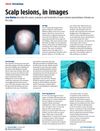
 Different scalp conditions can lead to hair loss or tumors, with treatments varying from creams to surgery; early detection is crucial.
 June 2010 in “Melanoma research”
 This study found that LDE225, a novel Smo antagonist, shows potential as a topical treatment for basal cell carcinoma due to its high affinity binding and effective inhibition of tumor growth in preclinical models.
 36 citations
,
May 2016 in “Biomaterials”
36 citations
,
May 2016 in “Biomaterials” This study demonstrated that an engineered human skin equivalent can generate follicle-like structures resembling fetal skin, highlighting the role of the dermal compartment in directing epithelial cell fate in vitro.