 7 citations
,
December 2004 in “Medicine”
7 citations
,
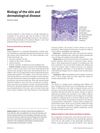
December 2004 in “Medicine” This article reviews the anatomy and pathology of skin and hair to aid in diagnosing skin diseases and discusses potential therapies, without reporting new clinical results.
6 citations
,
April 2012 in “PloS one” This study used transgenic mice to show that disrupting TGF-β signaling in K14+ progenitor cells led to increased stem cell proliferation in the tongue.
 1 citations
,
September 2015 in “Elsevier eBooks”
1 citations
,
September 2015 in “Elsevier eBooks” This review discusses the role of Sox2 in skin development, hair follicle regeneration, cancer, and wound healing, and reports no new experimental results.
 March 2026 in “Frontiers in Cell and Developmental Biology”
 This review reports that transcriptional and epigenetic mechanisms in epithelial stem cells guide their fate in the epidermis and hair follicles, crucial for skin homeostasis, but disruptions can lead to disease.
 65 citations
,
February 2017 in “Pflügers Archiv - European Journal of Physiology”
65 citations
,
February 2017 in “Pflügers Archiv - European Journal of Physiology” This review examines the roles of macrophages and Langerhans cells in skin homeostasis and suggests that understanding these functions can aid in developing therapies for skin and hair regeneration, but it reports no new research findings.
54 citations
,
September 1999 in “PubMed” This study suggests that immunostaining for Keratin 15 may be a useful tool for differentiating between basal cell carcinoma and trichoepithelioma.
31 citations
,
February 2007 in “Molecular Carcinogenesis” This study found that transgenic mice overexpressing human ATF3 showed hyperplastic and dysplastic changes in epithelial tissues, with a high incidence of oral cancer, suggesting potential oncogenic properties of ATF3.
 27 citations
,
December 2014 in “Current problems in dermatology”
27 citations
,
December 2014 in “Current problems in dermatology” This book reviews actinic keratosis from a multidisciplinary perspective, covering topics such as epidemiology, immunology, and clinical manifestations, but reports no new research results.
 27 citations
,
July 2015 in “International Journal of Dermatology”
27 citations
,
July 2015 in “International Journal of Dermatology” This study found that skin disorders are prevalent among elderly individuals and are often associated with underlying systemic diseases.
 8 citations
,
June 2014 in “PubMed”
8 citations
,
June 2014 in “PubMed” Men are more likely to have larger basal cell carcinomas and squamous cell carcinomas, while women have more superficial basal cell carcinomas and tumors on their legs and central face.
3 citations
,
April 2019 in “Stem cells international” This study found that CRABP1, Nestin, and Ephrin B2 are expressed in both the tumor stroma and invasive front of skin adnexal tumors and basal cell carcinomas.
 3 citations
,
April 2016 in “Dermatologic Surgery”
3 citations
,
April 2016 in “Dermatologic Surgery” This abstract provides author contact details but presents no study findings or results.
 43 citations
,
February 2008 in “Journal of cutaneous pathology”
43 citations
,
February 2008 in “Journal of cutaneous pathology” This study revealed that during fetal development, MITF and Mart-1 expressing melanocytes progress from the dermis to the epidermis and hair follicles, with MITF possibly marking follicular stem cells.
 18 citations
,
August 2021 in “PLoS ONE”
18 citations
,
August 2021 in “PLoS ONE” This study found that melanocyte progenitor cells are present in human subcutaneous adipose tissue and may differentiate into mature melanocytes, suggesting potential applications in treating skin diseases and rejuvenation.
2 citations
,
February 2021 in “Developmental Cell” This study reports that aging in human skin involves early photo- and inflammation-related cellular changes, and suggests restoring KLF6 and HES1 expression might reverse some of these age-associated changes.
 April 2017 in “Australasian Journal of Dermatology”
 This study observed that systemic acitretin improved symptoms in 75% of lichen planopilaris patients, despite varied responses and a dominant female prevalence.
176 citations
,
February 2006 in “Cancer Research” This study found that loss of Ptch1 function in mouse skin's basal cells is sufficient to rapidly induce tumors resembling human basal cell carcinoma, suggesting Ptch1 as a key tumor suppressor.
 156 citations
,
August 2016 in “Journal of controlled release”
156 citations
,
August 2016 in “Journal of controlled release” This review summarizes current knowledge on tight junctions in mammalian skin and their role in drug delivery and interaction with other barrier components, but reports no new experimental results.
 69 citations
,
August 1999 in “Developmental biology”
69 citations
,
August 1999 in “Developmental biology” This study found that ectopic expression of Whn in transgenic mice caused impaired differentiation in epidermis and hair follicles, with hair growth defects and severe urinary tract issues leading to hydronephrosis.
 39 citations
,
March 2008 in “Journal of biological chemistry/The Journal of biological chemistry”
39 citations
,
March 2008 in “Journal of biological chemistry/The Journal of biological chemistry” This study found that GLI2 plays a key role in activating follistatin, an activin/BMP antagonist, in response to hedgehog signaling in human epidermal cells, with implications for hair follicle development and basal cell carcinoma.
 9 citations
,
July 2010 in “British Journal of Dermatology”
9 citations
,
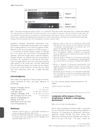
July 2010 in “British Journal of Dermatology” This article reports on lentiginosis observed within plaques of linear atrophoderma of Moulin and discusses its potential classification as a twin-spotting phenomenon but provides no new clinical research results.
 7 citations
,
November 2014 in “Histochemistry and Cell Biology”
7 citations
,
November 2014 in “Histochemistry and Cell Biology” This study found that mutant mice with the we/we wal/wal genotype exhibit significant defects in hair shaft structure and epidermis stratification, correlating with postnatal alopecia symptoms.
 1 citations
,
January 2021
1 citations
,
January 2021 In this study, CD4+ non-haematopoietic, skin-resident stem cell-like populations were identified in both murine and human epidermis, suggesting they may serve as potential basal cell carcinoma precursors.
 1 citations
,
July 2020 in “bioRxiv (Cold Spring Harbor Laboratory)”
1 citations
,
July 2020 in “bioRxiv (Cold Spring Harbor Laboratory)” This study found that centrosome ablation in developing epidermis triggers cell surveillance pathways, resulting in thinner skin and halted hair follicle growth, while later stages of epidermal growth may operate independently of basal progenitor division orientation.
 1 citations
,
January 2016 in “Elsevier eBooks”
1 citations
,
January 2016 in “Elsevier eBooks” This review examines the origins and mechanisms of tumor initiation in common skin cancers, but does not present new experimental findings; it emphasizes the need for further research on cancer stem cells.
 359 citations
,
September 2017 in “European Journal of Epidemiology”
359 citations
,
September 2017 in “European Journal of Epidemiology” This article discusses the rationale, design, and significant findings of the long-running Rotterdam Study but reports no new clinical results.
 249 citations
,
April 2002 in “The FASEB journal”
249 citations
,
April 2002 in “The FASEB journal” This study provides evidence that human skin contains genes and enzymes necessary for producing serotonin and melatonin.
 86 citations
,
October 2017 in “Clinics in Dermatology”
86 citations
,
October 2017 in “Clinics in Dermatology” This review discusses the incidence, prevalence, and risk factors for epidermal cancer and premalignant epidermal neoplasia, and it reports no new clinical findings.
 75 citations
,
October 2016 in “Genes & Development”
75 citations
,
October 2016 in “Genes & Development” This study found that Sonic Hedgehog secreted by hair follicle transit-amplifying cells is essential for dermal adipogenesis and hair follicle growth by acting on adipocyte precursors.
 70 citations
,
February 2015 in “Expert Opinion on Drug Discovery”
70 citations
,
February 2015 in “Expert Opinion on Drug Discovery” This review discusses current knowledge on the biological mechanisms of different types of alopecia but reports no new clinical findings; the authors highlight future research directions, especially regarding epidermal stem cells and immune pathways.