This review discusses the various medicinal properties attributed to the banana plant and reports no new clinical results; the authors suggest its potential in herbal medicine.
August 2025 in “International Journal of Ayurveda360” In this randomized controlled trial, the combination of Bhringaraja Taila Shiroabhyanga and Yastimadhuka Taila Nasya was found to significantly improve hair density, reduce hair fall, and decrease scalp visibility in females with Khalitya compared to Nasya alone, with no reported adverse effects.
 30 citations
,
October 2014 in “PLOS ONE”
30 citations
,
October 2014 in “PLOS ONE” This study found that BAF200, a subunit of the PBAF chromatin remodeling complex, is crucial for heart development and coronary artery formation in mice, as its absence led to embryonic lethality with severe cardiac defects.

Baricitinib helps regrow hair in teens with severe alopecia areata.
 1 citations
,
January 2018 in “Acta dermato-venereologica”
1 citations
,
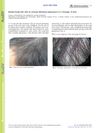
January 2018 in “Acta dermato-venereologica” A teenager's hair with alternating white and dark bands, known as Pili annulati, is a genetic condition that is usually harmless and often considered attractive.
July 2026 in “Journal of Ayurveda and Holistic medicine.” In this case report, a 36-year-old woman with alopecia areata experienced significant clinical improvement, including complete hair regrowth, after undergoing a 60-day Ayurvedic treatment regimen that included Panchakarma procedures and herbal medications.
July 2026 in “International Journal for Research in Applied Science and Engineering Technology” This study explored the use of Kasisadi Lepa, a classical herbo-mineral formulation, and found its components could reduce dandruff by addressing scalp inflammation, microbial growth, and tissue damage with potential integration into long-term scalp health strategies.
3 citations
,
December 2021 in “Frontiers in Pharmacology” This study found that Ficus benghalensis leaf extracts reduced the activity of 5 α-reductase II and promoted hair growth in rabbits by elongating the hair follicle's anagen phase, suggesting potential for treating hair loss.
 1 citations
,
January 2024 in “Annals of Dermatology”
1 citations
,
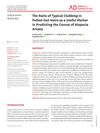
January 2024 in “Annals of Dermatology” This study suggests that analyzing microscopic hair morphology, particularly loss of typical clubbing and proximal tapering, may help predict the clinical course of alopecia areata.
 1 citations
,
June 2021 in “Cureus”
1 citations
,
June 2021 in “Cureus” This case report describes the first known instance of hereditary choreiform disorder associated with and aggravated by systemic lupus erythematosus, highlighting the need for vigilance in diagnosing co-existing autoimmune conditions.
 January 2026 in “Journal of Ayurveda and Integrated Medical Sciences”
 In this case report, a multimodal Ayurvedic treatment combining Gunjadi Taila, Rasayana therapy, and Prachhanna Karma successfully reduced hair fall, scalp itching, dandruff, and dryness in a 32-year-old male, suggesting its effectiveness for managing these scalp disorders.
This abstract provides contact information for Dr. Ban Kamoona at the Medical University – Sofia and contains no research findings.
 42 citations
,
May 2013 in “Oral Diseases”
42 citations
,
May 2013 in “Oral Diseases” Kennedy's disease leads to muscle weakness without a cure, but exercise and managing symptoms may help patients live a normal lifespan.
 July 2025 in “International Journal of Ayurvedic Medicine”
 In this pilot study, Kantavallabha rasa, an Ayurvedic medicine, showed significant improvements in PCOS symptoms such as menstrual irregularities, pain, unwanted hair growth, skin issues, and ovarian conditions among 10 women with PCOS.
 1 citations
,
September 2022 in “Journal of The American Academy of Dermatology”
1 citations
,
September 2022 in “Journal of The American Academy of Dermatology” In this analysis of two trials, baricitinib showed eyebrow and eyelash regrowth in severe alopecia areata patients with greater than 20% scalp hair loss at Week 36, compared to placebo.
 September 2024 in “Journal of the American Academy of Dermatology”
 In this study, patients with severe alopecia areata treated with baricitinib showed continued improvement in scalp hair regrowth from weeks 52 to 152, particularly among those initially responding with eyelash or eyebrow regrowth but not scalp hair, with 39% achieving substantial regrowth by week 104.
 July 2023 in “Developmental medicine and child neurology/Developmental medicine & child neurology”
 This study found that patients with Bachmann-Bupp syndrome treated with DFMO showed improvements in hair growth, muscle tone, and development.
 September 2023 in “Journal of The American Academy of Dermatology”
 This announcement discusses the recent FDA approval of baricitinib for treating severe alopecia areata in adults and reports no new clinical results.
 April 2017 in “Advances in Tissue Engineering & Regenerative Medicine Open Access”
 This study found that hydro alcoholic extract from the stem of Musa paradisiacal inhibited alpha amylase and alpha glucosidase enzymes in vitro, suggesting potential antidiabetic benefits.
 1 citations
,
May 2023 in “Jurnal Farmasi Galenika (Galenika Journal of Pharmacy) (e-Journal)”
1 citations
,
May 2023 in “Jurnal Farmasi Galenika (Galenika Journal of Pharmacy) (e-Journal)” This study explored the traditional use of 18 plant-based remedies by the Amarasi people in Indonesia for treating dandruff and hair loss, detailing plant types, parts used, and processing methods, highlighting their potential as anti-dandruff and anti-baldness treatments.
 September 2023 in “Journal of The American Academy of Dermatology”
 This study aimed to describe the distribution of eyebrow and eyelash hair loss in patients with varying severities of scalp hair loss from alopecia areata but does not report results.
 1 citations
,
March 2023 in “Skin”
1 citations
,
March 2023 in “Skin” This study describes the patterns of clinical response in patients with severe alopecia areata treated with baricitinib over 52 weeks, based on integrated data from two Phase 3 trials.
 January 2025 in “SKIN The Journal of Cutaneous Medicine”
 In this analysis of the BRAVE-AA trials, a significant number of patients with severe alopecia areata treated with baricitinib reached complete or nearly complete scalp coverage (SALT score ≤10 or ≤5) over 52 weeks, particularly among those with less severe baseline characteristics.
December 2018 in “Jurnal Farmamedika (Pharmamedica Journal)” This study found that a combination of ethanol extract from watermelon white skin and liquid from kepok banana tree trunk resulted in greater hair growth length in rats compared to Minoxidil.
April 2012 in “The FASEB Journal” In this study, researchers observed that knocking down the LPA 4 receptor in zebrafish embryos led to vascular and lymph vessel development abnormalities, including edema and decreased heartbeats.
 August 2020 in “International journal of research in ayurveda and pharmacy”
 This article discusses the use of Maltadya tail for treating forms of alopecia in Ayurvedic medicine but presents no clinical results, emphasizing the oil's potential scalp and hair health benefits.
 125 citations
,
May 2007 in “Journal of The American Academy of Dermatology”
125 citations
,
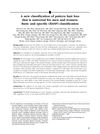
May 2007 in “Journal of The American Academy of Dermatology” This study describes the development of the BASP classification system, providing a universal and systematic approach for classifying pattern hair loss in both men and women.
49 citations
,
January 2024 in “Regenerative Biomaterials” In this study, a novel electrospun dressing patch made with radially oriented PHBV nanofibers and loaded with berberine was shown to significantly accelerate diabetic wound healing in mice, achieving 100% wound closure in 18 days while also demonstrating improved mechanical and anti-inflammatory properties.
 January 2024 in “Journal of Clinical Images and Medical Case Reports”
 This article discusses frontal fibrosing alopecia as a type of Lichen planopilaris marked by gradual hair loss at the front of the scalp but reports no new clinical results.
 November 2025 in “Mendeley Data”
 This study observed that JAK inhibitor therapy may be safely administered to patients with alopecia areata and latent HBV or stable TB, without reactivation of these infections, when appropriate monitoring and prophylaxis are used.