22 citations
,
September 2003 in “Journal of Investigative Dermatology” This study analyzed patients with X-linked dominant chondrodysplasia punctata and identified novel mutations in the emopamil-binding protein gene, highlighting the need for genetic testing alongside biochemical analysis for accurate diagnosis.
 20 citations
,
July 2013 in “European Journal of Oral Sciences”
20 citations
,
July 2013 in “European Journal of Oral Sciences” This study found a novel PAX9 gene mutation that may cause tooth agenesis and trichodysplasia in a studied family.
18 citations
,
November 2009 in “Calcified tissue international” A genetic mutation caused severe rickets and alopecia in an Indian patient, but high-dose calcium and phosphate treatment improved their condition.
 16 citations
,
August 2014 in “Colloids and surfaces. B, Biointerfaces”
16 citations
,
August 2014 in “Colloids and surfaces. B, Biointerfaces” This study found that hydrophobic lipid-coated silica nanoparticles penetrated deeper into human stratum corneum compared to their hydrophilic counterparts, highlighting the influence of surface polarity on skin penetration.
 8 citations
,
December 2020 in “Scientific reports”
8 citations
,
December 2020 in “Scientific reports” This study examined the genetic basis for the curly hair trait in Mangalitza pigs, finding two specific genetic variants that contribute to this distinctive phenotype through autosomal dominant inheritance.
 2 citations
,
July 2015 in “Archives of Dermatological Research”
2 citations
,
July 2015 in “Archives of Dermatological Research” This study reports the first familial case of alopecia linked to a novel homozygous variant in the DSP gene, which did not coincide with heart abnormalities despite prior associations.
 2 citations
,
January 2013 in “Elsevier eBooks”
2 citations
,
January 2013 in “Elsevier eBooks” The document explains the genetic causes and characteristics of inherited hair disorders.
 1 citations
,
May 2026 in “Nature Communications”
1 citations
,
May 2026 in “Nature Communications” This study demonstrated that CD19-CAR T cell therapy may promote structural regeneration in the skin of systemic sclerosis patients, as evidenced by histological improvements and fibroblast population changes, suggesting its potential for tissue remodeling in fibrotic diseases.
 April 2026 in “Laboratory Animal Research”
 This study developed a novel Hairless Rag2/Jak3 KO mouse model, which provides superior optical properties and thinner skin compared to existing models, enhancing its utility for noninvasive tumor monitoring and evaluation of anticancer therapies.

This study examined the molecular communication in psoriasis cells, highlighting unique immune cell interactions and identifying new features of the hair follicle cell-psoriasis axis. It suggests the potential for targeted therapies at the single-cell level to improve psoriasis treatment.

This genetic study identified a potential interval for the Marie Unna hypotrichosis gene but found no mutations in the nearby hr gene, suggesting its involvement remains unconfirmed.
 November 2020 in “International journal of contemporary pediatrics”
 This study reports two siblings with severe combined immunodeficiency due to a mutation in the FOXN1 gene, characterized by T-cell immunodeficiency, alopecia totalis, and nail dystrophy.
 74 citations
,
July 1979 in “Lancet”
74 citations
,
July 1979 in “Lancet” This case report describes a 10-month-old boy with dermatitis, alopecia, and hypotonia who showed dramatic improvement with oral biotin, suggesting a possible defect in biotin absorption or transport.
 65 citations
,
October 2018 in “Frontiers in cellular and infection microbiology”
65 citations
,
October 2018 in “Frontiers in cellular and infection microbiology” This study observed that dandruff in Indian women is associated with a distinct scalp microbiome, including specific bacterial and unknown Malassezia species, with implications for nutrient homeostasis and cell-host adhesion pathways.
 55 citations
,
October 1992 in “Archives of Dermatology”
55 citations
,
October 1992 in “Archives of Dermatology” In this study, researchers observed that loose anagen hair syndrome is an autosomal dominant disorder characterized by abnormal hair follicle structure and premature keratinization, possibly due to signaling and desmosomal component disturbances.
 42 citations
,
September 2000 in “British Journal of Dermatology”
42 citations
,
September 2000 in “British Journal of Dermatology” This report describes two children with congenital hypotrichosis and found their short hair is due to a shortened anagen phase, with the condition resolving spontaneously during puberty.
 38 citations
,
September 2011 in “PLOS ONE”
38 citations
,
September 2011 in “PLOS ONE” This study found that activin B promotes epithelial wound healing in mice through the RhoA-Rock-JNK-cJun signaling pathway, suggesting a potential therapeutic role for activin B in wound repair.
26 citations
,
September 2012 in “Cell Reports” In this study, knockout of B-raf and C-raf genes in mice showed they are not needed for early melanocyte development, but are crucial for maintaining melanocyte stem cells, as evidenced by hair graying due to stem cell depletion.
 25 citations
,
October 1996 in “Dermatologic Clinics”
25 citations
,
October 1996 in “Dermatologic Clinics” This article discusses loose anagen syndrome, highlighting its characteristics, diagnostic methods, and spontaneous improvement over time, but provides no new clinical results.
22 citations
,
February 2012 in “Journal of Investigative Dermatology” A specific gene mutation causes severe skin and nail issues and hair loss.
 10 citations
,
December 1997 in “Plastic and Reconstructive Surgery”
10 citations
,
December 1997 in “Plastic and Reconstructive Surgery” This text provides contact information and no new research findings are reported.
 7 citations
,
September 2011 in “International Journal of Dermatology”
7 citations
,
September 2011 in “International Journal of Dermatology” This study investigated demographic and clinical characteristics of twenty-nail dystrophy in Korea, identifying differences in subtype and gender predominance between children and adults.
6 citations
,
July 2021 in “Frontiers in Genetics” This study identified a new heterozygous missense variant in CST6 associated with autosomal dominant keratosis follicularis spinulosa decalvans in an Austrian family, affecting epidermal differentiation and hair formation.
 6 citations
,
January 2013 in “The Journal of Dermatology”
6 citations
,
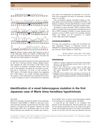
January 2013 in “The Journal of Dermatology” Researchers found a new genetic mutation causing a rare hair loss condition in the first Japanese child studied.
 6 citations
,
March 1996 in “The American Journal of Cosmetic Surgery”
6 citations
,
March 1996 in “The American Journal of Cosmetic Surgery” This article discusses a strip donor harvesting technique for hair transplantation and reports no clinical results; the author highlights the importance of anatomical knowledge for successful scar excision.
 5 citations
,
September 1986 in “Pediatric Dermatology”
5 citations
,
September 1986 in “Pediatric Dermatology” This study reported a previously undescribed form of hereditary hypotrichosis in a family, characterized by childhood-onset hair loss, morphea, and probable autosomal dominant inheritance.
 4 citations
,
July 2012 in “Dermatologic Clinics”
4 citations
,
July 2012 in “Dermatologic Clinics” This article reviews advances in the histologic evaluation of alopecia and hair-related disorders, without presenting new clinical results.
 4 citations
,
January 2014 in “International Journal of Trichology”
4 citations
,
January 2014 in “International Journal of Trichology” This report presents a 12-year-old male with symptoms indicative of Marie-Unna type hereditary hypotrichosis, characterized by a specific pattern of hair loss evolving with age.
 4 citations
,
July 1992 in “Clinics in Dermatology”
4 citations
,
July 1992 in “Clinics in Dermatology” Skin surgery has significantly advanced since 1950, with improvements in chemical peels, hair restoration, lasers, and Mohs surgery, and the development of less invasive techniques and specialized training.
 3 citations
,
June 2020 in “Developmental Cell”
3 citations
,
June 2020 in “Developmental Cell” This study observed that in chicken skin, large-scale differences in gene expression between feathered and scaly skin are controlled by enhancer-driven uniform expression, while small-scale differences within individual feathers are associated with chromatin looping.