May 2025 in “CPT Pharmacometrics & Systems Pharmacology” This study examined the safety profile of ritlecitinib, a drug for alopecia areata, and found that it does not cause significant QTc prolongation or severe lymphopenia, with no unique safety risks expected in adolescents.
This article lists the clinically important interactions and skin reactions of several drugs and substances, including THA, FK506, tamoxifen, tamsulosin, tartrazine, tea tree oil, temazepam, and temozolomide, but provides no new clinical results.
15 citations
,
December 2019 in “European Journal of Dermatology” This study identified new and recurrent missense mutations in the PHGDH and PSAT1 genes, implicating them in the pathogenesis of Neu-Laxova syndrome in Chinese patients.
 July 2023 in “Annals of King Edward Medical University”
 This randomized clinical trial compared bimatoprost 0.03% solution and mometasone furoate 0.1% cream for treating alopecia areata in 60 patients, finding that mometasone furoate led to better hair regrowth, while both treatments showed significant effectiveness.
 1 citations
,
July 2025 in “SKIN The Journal of Cutaneous Medicine”
1 citations
,
July 2025 in “SKIN The Journal of Cutaneous Medicine” In this study, ritlecitinib 50-mg showed clinically meaningful efficacy, with improvements in the Severity of Alopecia Tool score observed in patients with alopecia areata over a 3-year period, demonstrating long-term benefit in both clinician- and patient-reported outcomes.
November 2025 in “SKIN The Journal of Cutaneous Medicine” This study evaluated the long-term safety of ritlecitinib in adolescents with alopecia areata and found it to be well-tolerated without new safety concerns over approximately five years, with common adverse events including positive SARS-CoV-2 tests, acne, headache, and nasopharyngitis.
This study observed that antifungal treatment in fungal asthma patients led to a significant decrease in oral corticosteroid use, though the clinical importance remains unclear due to potential confounders.
1 citations
,
October 2022 in “Iet Nanobiotechnology” This study explored a new dutasteride nanocarrier for alopecia therapy, concluding that ingredient concentration is key to achieving the optimal particle size, stability, and skin permeation for extended drug release.
 October 2025 in “Dermatology and Therapy”
 This study evaluates the efficacy and safety of a higher dose (100-mg) of ritlecitinib for treating severe alopecia areata, comparing it to external and synthetic placebo control groups.
April 2010 in “PubMed Central” This abstract discusses the FDA approval of Latisse (bimatoprost) for increasing eyelash growth in patients with eyelash hypotrichosis and highlights its efficacy while noting unresolved effectiveness in certain conditions and potential side effects.
 43 citations
,
July 2013 in “Pharmacological reviews”
43 citations
,
July 2013 in “Pharmacological reviews” This article reviews the pharmacology of bimatoprost and prostamide F2α, highlighting bimatoprost's therapeutic applications in glaucoma, hair growth, and potential fat reduction, without reporting new experimental results.
 30 citations
,
August 2009 in “Journal of the American Academy of Dermatology”
30 citations
,
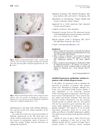
August 2009 in “Journal of the American Academy of Dermatology” This study found that while bimatoprost was safe for 16 weeks, it was not effective for eyelash growth in patients with significant loss due to alopecia areata, though some with less loss experienced growth.
 January 2023 in “Postępy Dermatologii i Alergologii”
 This review provides an overview of azelaic acid's dermatological uses, mechanisms, and its potential in skin cancer treatment, but reports no new clinical results.
December 2013 in “Cumhuriyet Tıp Dergisi/Cumhuriyet Üniversitesi Tıp Fakültesi dergisi” This case study highlights the importance of early diagnosis and treatment of acneiform eruptions associated with erlotinib in a 67-year-old male patient with non-small cell lung cancer to ensure patient compliance.
July 2026 in “Journal of the American Academy of Dermatology” Ritlecitinib helps adolescents with severe alopecia areata regrow scalp hair and normalize body hair and nails.
3 citations
,
May 2014 in “Journal of the Egyptian Women's Dermatologic Society /Journal of the Egyptian Women's Dermatologic Society” This study found that bimatoprost 0.03% solution may effectively reduce alopecia severity and promote cosmetically acceptable hair regrowth in some patients with scalp alopecia areata.
January 2013 in “Shiyong yixue zazhi” In this study with mouse follicle stem cells, astraglus polysaccharide increased markers of cell proliferation and gene expression, suggesting a potential mechanism for treating alopecia and promoting hair growth.
 November 2023 in “Dermatologica sinica/Zhōnghuá pífūkē yīxué zázhì”
 In this case report, upadacitinib was used to treat a 21-year-old female with severe alopecia areata, resulting in significant hair regrowth; however, rapid hair loss recurred soon after discontinuing the drug, illustrating its potential efficacy as well as the risk of relapse upon stopping treatment.
 May 2015 in “Journal of The American Academy of Dermatology”
 Both azathioprine and betamethasone treatments help with hair regrowth in alopecia areata, but azathioprine may have fewer side effects.
 115 citations
,
January 2001 in “American journal of clinical dermatology”
115 citations
,
January 2001 in “American journal of clinical dermatology” This study found that eflornithine 15% cream reduced unwanted facial hair growth more effectively than a placebo in women with hirsutism, but hair growth returned to pretreatment levels within 8 weeks of stopping treatment.
August 2017 in “Journal of the Dermatology Nurses' Association” This article reviews the usage, efficacy, side effects, and alternatives of topical bimatoprost 0.03% for dermatological applications but does not present new clinical findings.
September 2026 in “Portuguese Journal of Dermatology and Venereology” In this review, the researchers discuss the potential effectiveness of azelaic acid peels for treating acne vulgaris, melasma, and other skin conditions, while acknowledging that the precise role of these peels in dermatology is not yet fully established due to limited studies.
September 2023 in “Journal of the American Academy of Dermatology” CTP-543 significantly improved eyebrow and eyelash regrowth and patient satisfaction in adults with alopecia areata.
6 citations
,
October 2016 in “Pediatric Dermatology” This case report describes a unique instance of a 6-year-old girl developing angioedema after treatment with squaric acid dibutylester for alopecia areata.
 July 2025 in “SKIN The Journal of Cutaneous Medicine”
 This study reported that ritlecitinib was generally well tolerated over 72 months in patients aged 12 and older with alopecia areata, with adverse events like headache and nasopharyngitis observed, and safety outcomes consistent with previous studies.
 13 citations
,
September 2022 in “Materials & design”
13 citations
,
September 2022 in “Materials & design” This study found that astaxanthin-loaded mucoadhesive patches effectively promoted recovery of oral premalignant lesions in vivo without the side effects seen with clinical tretinoin cream.
21 citations
,
December 2014 in “Clinics in dermatology” This review discusses squaric acid dibutylester's use, effects, and safety in treating alopecia areata, but reports no new clinical results.
20 citations
,
January 2003 in “Dermatology online journal” This review discusses the potential of prostaglandin analogs for hair growth and forms of alopecia, and reports no new clinical results.
 11 citations
,
October 2018 in “Pediatric dermatology”
11 citations
,
October 2018 in “Pediatric dermatology” In this case report, the authors describe a child with treatment-resistant alopecia areata who successfully responded to leflunomide and anthralin, proposing this combination as a potentially cost-effective alternative for managing recalcitrant cases by possibly inhibiting the JAK/STAT pathway.
1 citations
,
November 2023 in “SKIN The Journal of Cutaneous Medicine”