8 citations
,
November 2009 in “The Neurologist/The neurologist” This case report highlights a 21-year-old woman with seizures, mental retardation, spastic diplegia, and ichthyosis consistent with Sjogren-Larsson syndrome, and emphasizes the importance of differential diagnosis when additional symptoms are present.
14 citations
,
March 2018 in “The American journal of case reports” This study highlights the phenotypic variability in 5 patients with Woodhouse-Sakati syndrome carrying the c.436delC mutation, suggesting a broader range of clinical presentations than previously recognized.
 6 citations
,
August 2023 in “Behavioural and Cognitive Psychotherapy”
6 citations
,
August 2023 in “Behavioural and Cognitive Psychotherapy” This study observed that an 8-session mindfulness-based cognitive therapy reduced social anxiety and improved wellbeing in some individuals with alopecia areata, though effectiveness may depend on regular mindfulness practice.
November 2024 in “SKIN The Journal of Cutaneous Medicine” In this observational study, researchers examined U.S. and Canadian patients with alopecia areata and found that while comorbid anxiety/depression correlated with increased patient-reported disease severity, other comorbidities like atopic dermatitis and vitiligo showed no statistically significant differences in clinician-reported AA severity or hair involvement.
37 citations
,
January 2003 in “Journal of the European Academy of Dermatology and Venereology” This case report describes the co-occurrence of alopecia areata and psoriasis in an 18-year-old girl with Turner's syndrome, suggesting a potential genetic link to immunological diseases in these patients.
January 2020 in “SSRN Electronic Journal” This study observed distinct clusters of autoantibodies in children with pSLE, with significant differences in several clinical manifestations like hair loss, oral ulcers, arthritis, neurological symptoms, renal issues, and AIHA among the clusters.
 February 2026 in “Medico Research Chronicles”
 In this case study, a 7-year-old boy with Down syndrome and alopecia areata experienced notable hair regrowth, improved gut function, and emotional stability with individualized homeopathic treatment, whereas prior allopathic approaches were ineffective.
1 citations
,
April 2024 in “JAAD International” This study found that patients with alopecia areata have significantly higher medication adherence than those with atopic dermatitis, potentially due to the stability and controllability of alopecia areata symptoms.
 September 2025 in “Cyprus Journal of Medical Sciences”
 In this study, patients with acute alopecia areata experienced significantly higher anxiety and depression levels, along with a worsened quality of life, compared to a control group, underscoring the importance for clinicians to address these psychiatric issues early in the condition.
17 citations
,
June 2024 in “Journal of the European Academy of Dermatology and Venereology” This study suggests that using an appropriate tool for measuring quality of life is vital, particularly as factors like severity, female sex, and eyebrow involvement may increase the psychosocial burden of alopecia areata.
 February 2010 in “Journal of The American Academy of Dermatology”
 This study observed that Chinese patients with alopecia totalis or universalis had an earlier onset, longer duration, and more severe impact on quality of life compared to those with patchy alopecia areata.
 7 citations
,
January 2012 in “International Journal of Trichology”
7 citations
,
January 2012 in “International Journal of Trichology” This article highlights differences in childhood alopecia areata compared to adult cases but reports no new clinical findings.
 10 citations
,
January 2023 in “Journal of the European Academy of Dermatology and Venereology”
10 citations
,
January 2023 in “Journal of the European Academy of Dermatology and Venereology” This review highlights the significant negative impact of alopecia areata on quality of life, mental health, and work, calling for individualized approaches and effective treatments to mitigate these effects.
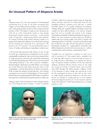 January 2014 in “International Journal of Trichology”
 A man had an unusual type of hair loss that didn't match known patterns and didn't improve with treatment.
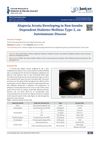 January 2019 in “Current research in diabetes & obesity journal”
 A woman with type 2 diabetes developed alopecia areata, suggesting a link between the two autoimmune conditions.
November 2025 in “Indian Journal of Dermatology” This study reports a rare cluster of four patients with ectodermal dysplasia, highlighting its typical dental and dermatological manifestations and the necessity of multidisciplinary management.
 January 2023 in “Asian Journal of Pediatric Research”
 This study identified black dots as the most common trichoscopic sign in children with alopecia areata, which is crucial for diagnosis and understanding disease severity and prognosis.
 August 2023 in “Revista Ibero-Americana de Humanidades, Ciências e Educação”
 This systematic review found that anxiety disorders are significantly more prevalent among patients with various psychodermatoses compared to the general population.
 12 citations
,
March 2015 in “Pediatric Dermatology”
12 citations
,
March 2015 in “Pediatric Dermatology” This review discusses diagnostic and management challenges of polycystic ovary syndrome in children and adolescents and reports no new clinical results; it emphasizes early intervention when a provisional diagnosis is suspected.
 July 2025 in “Clinical Cosmetic and Investigational Dermatology”
 This study found a bidirectional causal association between major depression disorder and alopecia areata, but no association between mental disorders and androgenetic alopecia, suggesting a focus on mental health strategies for alopecia areata management.
March 2024 in “International Seven Journal of Health Research” In this study, the authors synthesized recent literature on childhood alopecia areata, highlighting its clinical manifestations and management strategies, which include individualized treatments and psychosocial support to mitigate emotional and social impacts on affected children.
 1 citations
,
August 2021 in “Canadian journal of neurological sciences”
1 citations
,
August 2021 in “Canadian journal of neurological sciences” This article offers HTML content and a downloadable PDF but does not provide an abstract or new findings for summary.
 September 1997 in “Journal of The European Academy of Dermatology and Venereology”
 Alopecia linked to higher anxiety and personality disorders.
15 citations
,
November 2015 in “International Journal of Dermatology” This study found that keratin 14 may serve as an autoantigen in autoimmune skin diseases, indicated by its altered expression in affected skin and reactivity of patient sera.
8 citations
,
January 2011 in “International journal of trichology” This report discusses the accurate diagnosis of atrichia with papular lesions, emphasizing its distinction from alopecia universalis to prevent unnecessary steroid treatment, and presents a case matching APL diagnostic criteria.
2 citations
,
February 2024 in “Journal of the European Academy of Dermatology and Venereology” Diffuse alopecia areata in children has unique features and needs specific treatment.
 February 2026 in “Journal of Dermatology and Skin Science”
 This review highlights that obsessive-compulsive disorder and body-focused repetitive behaviors are increasingly encountered in dermatology, often going undetected, and emphasizes the role of dermatologists in early identification and interdisciplinary treatment to address both physical and psychological aspects for improved outcomes.
 April 2024 in “International Journal of Research Publication and Reviews”
 This source highlights that alopecia areata is a complex autoimmune disorder leading to patchy, nonscarring hair loss with variable treatment responses, reflecting unmet clinical needs. Advances in genetic research are improving understanding, yet current treatments often lead to persistent relapses.
1 citations
,
June 2025 in “The Journal of Dermatology” This study demonstrated that individuals with alopecia areata in Japan experience significant stigma and mental health issues, with perceived stigma and dissatisfaction with hair growth negatively correlated with disease severity.
 May 2023 in “Clinical and Experimental Dermatology”
 Alopecia areata has a high chance of persisting and relapsing, with a significant risk of total hair loss, especially if it starts in childhood.