 131 citations
,
March 2004 in “The American journal of pathology”
131 citations
,
March 2004 in “The American journal of pathology” This study found that modulating BMP activity in transgenic mice affects the development and characteristics of several ectodermal organs, such as skin, hair, and claws, highlighting a stage-dependent influence on organogenesis.
 129 citations
,
November 2005 in “Internal Medicine Journal”
129 citations
,
November 2005 in “Internal Medicine Journal” This article reviews the recognition and management of Staphylococcus aureus toxin-mediated diseases, but it does not present new research findings.
 128 citations
,
January 1996 in “Journal of analytical toxicology.”
128 citations
,
January 1996 in “Journal of analytical toxicology.” This study suggests that while hair analysis using GC-MS is a sensitive method for detecting cocaine ingestion, it may not reliably indicate the amount, timing, or duration of drug use due to interindividual variability and multiple incorporation mechanisms.
 126 citations
,
January 2001 in “World Journal of Surgery”
126 citations
,
January 2001 in “World Journal of Surgery” This review discusses current treatment options for liver hydatidosis, noting the potential benefits and limitations of chemotherapy and highlighting the need for more clinical trials to prevent recurrent disease; it reports no new findings.
 124 citations
,
June 2020 in “Cell Stem Cell”
124 citations
,
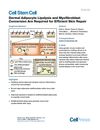
June 2020 in “Cell Stem Cell” This study found that in mice, dermal adipocytes initiate inflammation and aid repair after skin injury by releasing lipids, suggesting a role in managing inflammatory diseases and impaired wound healing.
 124 citations
,
March 2012 in “JAMA”
124 citations
,
March 2012 in “JAMA” This abstract discusses the unclear role of dihydrotestosterone (DHT) in postembryonic life in marsupials and possibly humans, reporting no new findings.
 122 citations
,
July 2005 in “The FASEB journal”
122 citations
,
July 2005 in “The FASEB journal” This study found that hair follicles in both mice and humans may serve as an important site for melatonin synthesis and signaling, potentially influencing hair cycle regulation by modulating keratinocyte apoptosis.
 122 citations
,
June 2002 in “Genes & Development”
122 citations
,
June 2002 in “Genes & Development” This study found that K17 is crucial for the structural integrity and survival of hair-producing cells, with K17 null mice developing alopecia due to hair fragility and follicular alterations.
 119 citations
,
October 1992 in “Fundamental & Clinical Pharmacology”
119 citations
,
October 1992 in “Fundamental & Clinical Pharmacology” This review discusses the pharmacological properties and therapeutic potential of K+ channel opening compounds, noting their prospective use in treating cardiovascular and respiratory conditions, but reports no new results.
 118 citations
,
May 2003 in “Toxicological Sciences”
118 citations
,
May 2003 in “Toxicological Sciences” This study found that prenatal exposure to finasteride in rats led to permanent changes in developmental endpoints like anogenital distance and nipple retention, which were predictive of further reproductive tract malformations.
 118 citations
,
February 2009 in “Fertility and Sterility”
118 citations
,
February 2009 in “Fertility and Sterility” This study found that approximately 75% of women with PCOS exhibited hyperandrogenemia, with free testosterone being the most frequently elevated marker.
 117 citations
,
May 2017 in “Human Reproduction Update”
117 citations
,
May 2017 in “Human Reproduction Update” This review examines the epidemiology, pathophysiology, diagnosis, and management strategies for non-classic congenital hyperplasia due to 21-hydroxylase deficiency, and provides evidence-based recommendations for its treatment and genetic counseling.
 116 citations
,
December 2017 in “International Journal of Women's Dermatology”
116 citations
,
December 2017 in “International Journal of Women's Dermatology” This review discusses various treatment options for adult female acne, highlighting the need for tailored approaches due to individual patient needs and reports no clinical outcomes.
 115 citations
,
October 2009 in “The Journal of clinical endocrinology and metabolism/Journal of clinical endocrinology & metabolism”
115 citations
,
October 2009 in “The Journal of clinical endocrinology and metabolism/Journal of clinical endocrinology & metabolism” In this study, researchers identified novel LMNA mutations in patients with atypical progeroid syndrome, revealing clinical features distinct from other similar disorders, but unrelated to mutant prelamin A accumulation.
 113 citations
,
September 2005 in “Journal of Investigative Dermatology”
113 citations
,
September 2005 in “Journal of Investigative Dermatology” This study found that a topical hedgehog agonist can stimulate hair growth by promoting the transition from the resting to growth phase of the hair cycle in adult mouse skin.
 110 citations
,
August 2015 in “Neuropsychopharmacology”
110 citations
,
August 2015 in “Neuropsychopharmacology” In this study, high-dose dutasteride significantly reduced several core symptoms of PMDD compared to placebo, supporting the role of neurosteroids in this condition.
 109 citations
,
April 2000 in “European Urology”
109 citations
,
April 2000 in “European Urology” In this study, significantly fewer men treated with finasteride for moderate to severe BPH symptoms experienced acute urinary retention or required subsequent BPH-related surgery compared to placebo-treated patients.
 107 citations
,
September 2002 in “Journal of Investigative Dermatology”
107 citations
,
September 2002 in “Journal of Investigative Dermatology” This study identified a distinct "exogen" phase in the hair cycle during which hair shedding occurs, primarily coupled with the anagen phase, rather than as part of the telogen phase.
 105 citations
,
January 2009 in “Medicine”
105 citations
,
January 2009 in “Medicine” This study found that ethinylestradiol and high-dose cyproterone acetate significantly reduced hirsutism scores and were effective for treating acne and alopecia in women with hyperandrogenism.
 103 citations
,
November 2014 in “Journal of Cell Biology”
103 citations
,
November 2014 in “Journal of Cell Biology” This study found that overexpression of miR-214 in keratinocytes inhibits hair follicle development and cycling by targeting β-catenin in the Wnt signaling pathway.
 101 citations
,
October 2016 in “Nanomedicine: Nanotechnology, Biology and Medicine”
101 citations
,
October 2016 in “Nanomedicine: Nanotechnology, Biology and Medicine” This review reports on the dual aspect of fullerene in skincare, highlighting its beneficial antioxidant properties as well as potential toxicity and skin cell reactions, while identifying areas for future research.
 100 citations
,
June 2002 in “Diabetologia”
100 citations
,
June 2002 in “Diabetologia” This study found that parents of women with PCOS have a higher prevalence of insulin resistance and Type II diabetes than parents of healthy women.
 100 citations
,
September 2017 in “Molecular and Cellular Endocrinology”
100 citations
,
September 2017 in “Molecular and Cellular Endocrinology” This review discusses the molecular mechanisms of androgens and androgen receptors in skin disorders, particularly androgenetic alopecia, and reports no new clinical results; it highlights potential areas for future treatment development.
 100 citations
,
May 2011 in “Journal of Pediatric and Adolescent Gynecology”
100 citations
,
May 2011 in “Journal of Pediatric and Adolescent Gynecology” This review covers the pathophysiology, diagnosis, and treatment of congenital adrenal hyperplasia due to 21-hydroxylase deficiency and reports no new findings.
 98 citations
,
June 2008 in “Human mutation”
98 citations
,
June 2008 in “Human mutation” This study found that a genetic variant in the EDAR gene leads to typical East Asian hair characteristics by increasing signaling output, as shown in transgenic mice experiments.
 97 citations
,
March 2002 in “Molecular and cellular biology”
97 citations
,
March 2002 in “Molecular and cellular biology” This study found that mice with a mutant CDP/Cux protein lacking the homeodomain showed severely impaired growth, high postnatal mortality, and reduced fertility, highlighting CDP/Cux's role in developmental regulation.
 96 citations
,
December 2022 in “Pneumologie”
96 citations
,
December 2022 in “Pneumologie” This guideline review discusses current symptoms, diagnostic approaches, and treatments for Long- and Post-COVID, based on today's knowledge, and emphasizes its practical application with ongoing updates as new insights emerge.
 95 citations
,
July 2010 in “Genes & development”
95 citations
,
July 2010 in “Genes & development” In this study, the researchers reported that Notch/CSL signaling is crucial for hair follicle differentiation, with Wnt5a signaling and FoxN1 acting as mediators in mice.
 94 citations
,
July 2020 in “European Journal of Human Genetics”
94 citations
,
July 2020 in “European Journal of Human Genetics” This article provides guidelines for molecular genetic testing of congenital adrenal hyperplasia due to 21-hydroxylase deficiency, focusing on quality requirements, methodologies, and variant classification; it reports no new clinical results.
 94 citations
,
May 2011 in “BJCP. British journal of clinical pharmacology/British journal of clinical pharmacology”
94 citations
,
May 2011 in “BJCP. British journal of clinical pharmacology/British journal of clinical pharmacology” This study found that hair follicles contribute significantly to caffeine absorption shortly after topical application, with a faster absorption rate compared to the stratum corneum.