 6 citations
,
May 2008 in “Current Opinion in Oncology”
6 citations
,
May 2008 in “Current Opinion in Oncology” This review covers recent advances in prostate cancer risk assessment, diagnosis, and treatment but does not report new clinical results; further studies on androgen deprivation therapy's cardiovascular risks are particularly noted.
61 citations
,
June 2010 in “Journal of the European Academy of Dermatology and Venereology” This study highlights cases of alopecia areata that developed during anti-TNF-α therapy, suggesting a potential link or increased frequency, particularly among individuals with a personal or family history of autoimmune diseases.
 May 2025 in “Journal of Nanobiotechnology”
 This study reported that an ATRA-loaded nanostructured lipid carrier gel (ATRA-NLC-Gel) improved symptoms of alopecia areata in mice by enhancing transdermal drug delivery, reducing skin irritation, and promoting hair regrowth through targeted follicle enrichment and pathway activation.
 15 citations
,
February 2019 in “Journal of clinical medicine”
15 citations
,
February 2019 in “Journal of clinical medicine” In this animal study, atorvastatin co-administered with trastuzumab reversed trastuzumab-induced cognitive impairment (chemo-brain) and improved its anti-cancer efficacy without causing hair loss.
9 citations
,
April 2023 in “Experimental Dermatology” This study found that adding allergen immunotherapy to conventional treatment may reduce relapse-related hair loss in house dust mite-allergic alopecia areata patients over a 3-year period.
January 2026 in “British Journal of Dermatology” This study developed a rapid ATP assay that effectively measures microbial populations on the skin and tracks changes after microbiome dysbiosis, with findings suggesting that ethanol-cleansed skin takes longer to recover than tape-stripped skin.
April 2025 in “International Journal of Clinical & Medical Case Studies” This source explains that unlike genetic hormonal alopecia, alopecia areata is associated with inflammatory factors and may also involve psychological and genetic contributions.
 30 citations
,
January 2014 in “Dermatologic Clinics”
30 citations
,
January 2014 in “Dermatologic Clinics” This review discusses traction alopecia in individuals with Afro-textured hair and emphasizes the importance of education to prevent this condition, but it reports no new clinical results.
January 2025 in “International Journal of Pharmaceutics” In this study, gelatin-coated transferosomes were developed to deliver tofacitinib specifically to hair follicles, resulting in 80% hair regrowth in alopecia areata patients with recalcitrant lesions after 12 weeks of treatment.
 November 2020 in “Dubai medical journal”
 This case report described a 24-year-old with alopecia totalis who saw full scalp hair regrowth by the 9th month while using oral tofacitinib, which was well-tolerated and did not show serious adverse effects. Longer-term studies are needed to confirm its overall effectiveness for alopecia totalis.
November 2023 in “Ibrahim Cardiac Medical Journal” This study observed that patients with alopecia areata have a significantly higher prevalence of thyroid disorders and elevated levels of thyroid-stimulating hormone and thyroid auto-antibodies compared to healthy individuals, with a 4.7 times greater risk of thyroid dysfunction among alopecia areata patients.
 2 citations
,
September 2022 in “Dermatologic Therapy”
2 citations
,
September 2022 in “Dermatologic Therapy” In this study, tofacitinib showed a mixed response in treating refractory alopecia areata, with some patients experiencing complete or partial hair regrowth and others showing no response, particularly those with alopecia universalis.
 130 citations
,
February 2018 in “Journal of Investigative Dermatology”
130 citations
,
February 2018 in “Journal of Investigative Dermatology” This study found that tofacitinib led to ≥50% hair regrowth in eight out of twelve patients with moderate to severe alopecia areata, suggesting a potential benefit for using JAK inhibitors in treating this condition.
45 citations
,
April 2021 in “Current Treatment Options in Oncology” This review discusses cardiovascular risks associated with androgen deprivation therapy in prostate cancer patients and highlights ongoing research, including the potential reduced COVID-19 susceptibility, but reports no new results.
April 2026 in “Future Medicinal Chemistry” This article discusses the impact of PROTACs technology in transforming drug discovery with its novel degradation mechanism, but it reports no new experimental findings.
 41 citations
,
December 2015 in “JAMA Dermatology”
41 citations
,
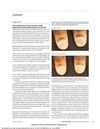
December 2015 in “JAMA Dermatology” Tofacitinib citrate improved nail dystrophy and pain in patients with alopecia universalis without causing side effects.
 9 citations
,
October 2021 in “International Journal of Dermatology”
9 citations
,
October 2021 in “International Journal of Dermatology” This study found that tofacitinib effectively induced hair regrowth in 62.2% of severe alopecia areata patients in Saudi Arabia after six months, with higher baseline Severity of Alopecia Tool scores and past steroid use linked to reduced response.
June 2026 in “Advanced Healthcare Materials” In this study, a taurine-based ionic liquid was developed to effectively penetrate the skin barrier and deliver antioxidants to hair follicles, reducing oxidative stress and promoting hair regrowth in an androgenic alopecia animal model.
1 citations
,
September 2023 in “Journal of the American Academy of Dermatology” Mini pulse corticosteroid therapy with oral dexamethasone is effective and has fewer side effects for treating extensive alopecia areata.
 15 citations
,
July 2023 in “EClinicalMedicine”
15 citations
,
July 2023 in “EClinicalMedicine” This review discusses the toxicities associated with antibody-drug conjugates in breast cancer treatment and proposes strategies for monitoring and managing these adverse effects, but it reports no new clinical results.
 July 2022 in “Media Dermato Venereologica Indonesiana”
 In this case study, a 29-year-old man with alopecia areata experienced satisfactory hair regrowth after five months of combined intralesional triamcinolone acetonide and platelet-rich plasma therapy.
188 citations
,
October 2014 in “Thyroid” This study found that dabrafenib was well tolerated and led to durable responses in patients with BRAF-mutant differentiated thyroid carcinoma, with a median progression-free survival of 11.3 months.
1 citations
,
February 2025 in “Pediatric Dermatology” This study found that oral tofacitinib achieved significant hair regrowth in children with moderate to severe alopecia areata, with 72.2% reaching a 75% improvement and 52.8% achieving complete regrowth, though some patients did not respond and further research is needed on the treatment's long-term effects.
 June 2024 in “Indian Dermatology Online Journal”
 In this study, 40% of alopecia areata patients using topical 2% tofacitinib ointment achieved greater than 50% improvement in hair regrowth after six months, showing significant efficacy compared to controls, with no serious adverse effects reported.
 56 citations
,
March 2010 in “Journal of Dermatology”
56 citations
,
March 2010 in “Journal of Dermatology” This review provides a synopsis of 53 cases of temporal triangular alopecia, noting its frequent detection in early childhood and potential association with congenital diseases, but it reports no new clinical findings.
April 2021 in “Journal of Investigative Dermatology” A deep learning model was developed to help diagnose trichothiodystrophy by analyzing hair patterns.
2 citations
,
May 2025 in “Diagnostics” This study found that ATR-FTIR spectroscopy combined with machine learning effectively differentiated alopecia areata patients from healthy controls with an AUC of 0.85, and also showed promise in predicting treatment response, particularly through alterations in the Amide I band.
 12 citations
,
February 2010 in “Journal of the European Academy of Dermatology and Venereology”
12 citations
,
February 2010 in “Journal of the European Academy of Dermatology and Venereology” Some people with chronic hair loss may have thyroid autoimmunity.
This study found that tenuazonic acid from Alternaria alternata can cause significant damage to vital organs in mice at low doses and highlights the need for regulatory measures to manage its risk in agricultural products.
7 citations
,
August 2024 in “Clinical and Experimental Dermatology” In this retrospective study conducted at a trichology clinic, the off-label use of upadacitinib for at least 24 weeks was found to have a promising efficacy and safety profile for treating severe alopecia areata in adolescents.