 September 2018 in “Asian journal of pharmacy and pharmacology”
 This review discusses the nutritional and therapeutic benefits of honey based on its botanical origin, and it reports no new clinical results, instead calling attention to its varied uses and potential health impacts.
 June 2018 in “International journal of trend in scientific research and development”
 This review discusses the formulations, mechanisms, and physiological aspects of hair cosmetics and types, but reports no new results, suggesting a foundation for future hair research.
This study found that 4-(ethoxycarbophenyl) retinamide (RI) exhibited significantly lower acute, subacute, and chronic toxicity compared to other retinoids in mouse and rat models.
 August 2025 in “Current Botany”
 This study suggests that Acrotrema arnottianum, a herb used in traditional medicine, contains biologically active metabolites like squalene and α-Tocopherol. It showed antibacterial effects against Staphylococcus aureus and antifungal properties against Candida albicans, while demonstrating antioxidant activity.
1 citations
,
June 2016 in “Annals of the rheumatic diseases” In this study, researchers found that retinoids might improve lupus nephritis resistant to conventional treatments, but the sample size was too small for significant results, and side effects were noted.
 65 citations
,
April 2002 in “Journal of Alternative and Complementary Medicine”
65 citations
,
April 2002 in “Journal of Alternative and Complementary Medicine” This study found that 60% of men with mild to moderate androgenetic alopecia showed improvement after treatment with botanically derived 5AR inhibitors, suggesting these compounds may be effective, though larger trials are needed.
 December 2022 in “Acta Ophthalmologica”
 In this study, dutasteride treatment in retinitis pigmentosa mice increased photoreceptor survival and reduced glial activation, suggesting it may offer a neuroprotective effect.
 68 citations
,
April 2002 in “Journal of Alternative and Complementary Medicine”
68 citations
,
April 2002 in “Journal of Alternative and Complementary Medicine” This study suggests that botanical 5AR inhibitors like Serenoa repens and β-sitosterol may improve symptoms of androgenetic alopecia, with 60% of treated subjects showing improvement compared to placebo.
 January 2022 in “Current Enzyme Inhibition”
 This study found that two novel nonsteroidal derivatives inhibited specific enzymes in vitro and in vivo, leading to dihydrotestosterone accumulation in androgen-dependent glands, suggesting potential therapeutic use for mood improvement in the elderly.
 17 citations
,
April 2015 in “Tropical Journal of Pharmaceutical Research”
17 citations
,
April 2015 in “Tropical Journal of Pharmaceutical Research” This review highlights the traditional use and potential therapeutic activities of Asiasari Radix in drug discovery, but it reports no new clinical results.
19 citations
,
June 2010 in “Journal of acupuncture and meridian studies” This study found that emodin from Polygonum multiflorum showed 5alpha-reductase inhibitory activity, which was more potent than alizarin but less potent than riboflavin.
 3 citations
,
June 1983 in “Archives of Dermatology”
3 citations
,
June 1983 in “Archives of Dermatology” This article discusses the effectiveness of adrenal cortex compounds E and F in treating connective tissue disorders like rheumatoid arthritis and lupus erythematosus, but it reports no new clinical results.
 13 citations
,
October 2017 in “Bioorganic & Medicinal Chemistry”
13 citations
,
October 2017 in “Bioorganic & Medicinal Chemistry” This study found that compound 3, a tetrahydropyridoindole carboxymethylated at position 5, significantly inhibited sorbitol accumulation in both rat eye lenses and tissues affected by diabetes, indicating its potential as a lead compound for ALR2 inhibition.
39 citations
,
May 2006 in “Molecular Plant-Microbe Interactions” This study suggests that fusaric acid at nontoxic concentrations may activate signal transduction in plants which could aid in the plant-defense responses against Fusarium spp.
 1 citations
,
September 2024 in “Frontiers in Pharmacology”
1 citations
,
September 2024 in “Frontiers in Pharmacology” In this real-world study, aumolertinib was found to improve patient-reported outcomes and maintain high disease control and objective response rates similar to those reported in the AENEAS trial for advanced NSCLC patients, supporting its use in first-line treatment.
 February 2025 in “International Journal of Molecular Sciences”
 This study found that melatonin may enhance hair follicle stem cell viability by downregulating the nuclear receptor RORA, which otherwise inhibits cell proliferation and promotes apoptosis.
 January 2025 in “bioRxiv (Cold Spring Harbor Laboratory)”
 This study identifies Armadillo Repeat Only proteins as crucial regulators of plant CNGC channels, influencing various plant functions and showcasing a unique plant-specific role in Ca2+ signaling.
44 citations
,
May 1998 in “PubMed” In this study, a specific retinoic acid receptor antagonist caused severe craniofacial anomalies in mouse fetuses when administered early in pregnancy, but not limb anomalies, highlighting developmental stage-specific roles of retinoic acid.
In this study, introducing the rat OTC gene into spf-ash mice led to increased OTC activity and normalized hair growth and biochemical markers like urinary orotic acid and serum citrulline, partially correcting the symptoms of OTC deficiency.
 142 citations
,
March 2019 in “Frontiers in Cellular Neuroscience”
142 citations
,
March 2019 in “Frontiers in Cellular Neuroscience” This review discusses the development and potential therapeutic applications of adenosine receptor agonists and positive allosteric modulators, noting that while many clinical trials have been unsuccessful, initial results for new compounds are promising.
February 2022 in “DOAJ (DOAJ: Directory of Open Access Journals)” In this study, all-trans retinoic acid was found to protect against oxidative stress-induced apoptosis in cultured hair cell-like cells.
 April 2017 in “Actas urológicas españolas”
 This review analyzes existing literature on prognostic factors for renal cell carcinoma, highlighting the need for continuous updates of prognostic models to reflect advancement in molecular pathway knowledge and targeted therapies.
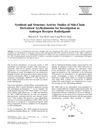 18 citations
,
April 2001 in “Bioorganic & Medicinal Chemistry Letters”
18 citations
,
April 2001 in “Bioorganic & Medicinal Chemistry Letters” This study identified the N-(iodopropenyl) derivative 13 as a promising candidate for development as a radioiodinated androgen receptor ligand due to its binding affinity.
5-ARI therapy may help prevent prostate cancer progression.
 February 2024 in “The Journal of Sexual Medicine”
 This study suggests that 5α-reductase inhibitors do not significantly affect male reproductive function but may require caution in men with oligospermia or ejaculatory issues.
 January 2024 in “Journal of dermatology and skin science”
 In this study, researchers found that applying topical aprepitant, which blocks substance P receptors, significantly reduced facial dermatitis and hair loss in rats experiencing erlotinib-induced skin side effects, highlighting the neurogenic inflammation's role and the protective effect of ROS inhibition.
 January 2010 in “Yearbook of Endocrinology”
 Two new compounds can block androgen receptor activity in different ways and may lead to new treatments for androgen-related diseases.
This study investigated the potential mechanisms of Curcuma aeruginosa in treating androgenetic alopecia and identified 66 bioactive compounds interacting with proteins involved in the disorder, suggesting its involvement in hormone response and specific signaling pathways.
 2 citations
,
July 1982 in “British Journal of Dermatology”
2 citations
,
July 1982 in “British Journal of Dermatology” This study reports that retinol acetate inhibited the pro-oxidant effects of benoxaprofen on polymorphonuclear leucocytes in vitro.
 21 citations
,
January 2010 in “JOURNAL OF HEALTH SCIENCE”
21 citations
,
January 2010 in “JOURNAL OF HEALTH SCIENCE” This study found that abietic acid from pine resin more effectively inhibits testosterone 5α-reductase than several plant extracts, suggesting potential for treating androgen-dependent diseases.