20 citations
,
August 2003 in “Clinical and Experimental Dermatology” In this study, a novel E583V missense mutation in the hairless gene was identified in an Italian family with atrichia with papular lesions, reinforcing the significance of zinc-finger and LXXLL domains in this condition.
3 citations
,
November 2021 in “Skin Appendage Disorders” This study found that home-use diphenylcyclopropenone (H-DPCP) is a cost-effective alternative to office-use for severe alopecia areata, showing similar effectiveness with reduced costs.
 28 citations
,
January 2014 in “Indian Journal of Dermatology, Venereology and Leprology”
28 citations
,
January 2014 in “Indian Journal of Dermatology, Venereology and Leprology” This study found that dermatoscopy is useful for diagnosing and assessing primary cicatricial alopecias in Chinese patients, with alopecia mucinosa having a distinct feature of patulous follicular openings.
July 2012 in “Alzheimer s & Dementia” This case report describes a 57-year-old Navy veteran with mild cognitive impairment who showed cognitive improvement and reported better mood after CPAP treatment and medication adjustments.
June 2024 in “Journal of the European Academy of Dermatology and Venereology” This abstract provides information on potential conflicts of interest and acknowledges sources of support for the findings, but does not report specific study results.
23 citations
,
July 2003 in “Journal of Investigative Dermatology” Genetic testing for hairless gene mutations is crucial to correctly diagnose and treat atrichia with papular lesions.
13 citations
,
January 2010 in “Immunopharmacology and immunotoxicology” This study found that increased Bcl-2 protein expression after DPCP treatment was associated with hair regrowth in alopecia areata patients, suggesting its role in inhibiting apoptosis.
36 citations
,
May 2005 in “BMC dermatology” This study found that topical diphenylcyclopropenone was effective in treating severe alopecia areata but had a high relapse rate and was often accompanied by side effects like eczema and lymphadenopathy.
 May 2023 in “Sučasna pedìatrìâ. Ukraïna”
 In a clinical observation study, researchers documented a case of total alopecia in an 11-year-old child, highlighting a potential link to genetic conditions such as autoimmune polyendocrinopathy candidiasis-ectodermal dystrophy (APECED syndrome) requiring further genetic and serological testing to verify the diagnosis.
22 citations
,
September 2003 in “Journal of Investigative Dermatology” This study analyzed patients with X-linked dominant chondrodysplasia punctata and identified novel mutations in the emopamil-binding protein gene, highlighting the need for genetic testing alongside biochemical analysis for accurate diagnosis.
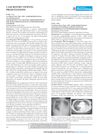 May 2025 in “The Journal of Rheumatology”
 This case report describes a 47-year-old woman with dilated cardiomyopathy as the first sign of primary antiphospholipid syndrome, highlighting the need for APS screening in similar patient presentations.
 January 2017 in “IMC Journal of Medical Science”
 This case report describes a 26-year-old man from Bangladesh diagnosed with autoimmune polyendocrine syndrome type 1, a rare endocrine disorder involving adrenocortical insufficiency, hypoparathyroidism, and mucocutaneous candidiasis.
 4 citations
,
September 2019 in “Biomedical Papers/Biomedical Papers of the Faculty of Medicine of Palacký University, Olomouc Czech Republic”
4 citations
,
September 2019 in “Biomedical Papers/Biomedical Papers of the Faculty of Medicine of Palacký University, Olomouc Czech Republic” This study found that CD2 could be a potential new therapeutic target for treating patchy-type alopecia areata, suggesting the need for further research into its role.
 19 citations
,
August 2011 in “Archives of Dermatology”
19 citations
,
August 2011 in “Archives of Dermatology” This abstract contains no research findings but is a snippet of a website interface for JAMA Dermatology.
 3 citations
,
June 2022 in “European journal of human genetics”
3 citations
,
June 2022 in “European journal of human genetics” This study reports the first cases of recessive KRT17-related pachyonychia congenita involving all ectodermal derivatives in seven members of two consanguineous Pakistani families.
 2 citations
,
May 2023 in “JAAD Case Reports”
2 citations
,
May 2023 in “JAAD Case Reports” This article discusses the lack of information on central centrifugal cicatricial alopecia's manifestations in Black men and reports no new clinical findings; the authors emphasize the need for further study in this population.
 3 citations
,
March 2010 in “Dermatologica Sinica”
3 citations
,
March 2010 in “Dermatologica Sinica” This study reports the first case of atrichia with papular lesions in a Taiwanese family without a detectable mutation in the HR gene.
January 2026 in “JCEM Case Reports” This case report presents a rare instance of recurrent ACTH-independent Cushing’s syndrome due to PBMAH, coinciding with the development of a pheochromocytoma, highlighting the need for thorough reevaluation in similar recurring cases.
February 2020 in “Oncology Times” This article reviews antibody drug conjugates for cancer treatment, describing their mechanism, recent approvals, and ongoing research efforts, but reports no new clinical results.
 December 2024 in “Indian Journal of Dermatology”
 This case report describes a 3-year-old boy with atrichia with papular lesions, emphasizing that dermoscopy, showing the 'cluster of stars' appearance, facilitated diagnosis without needing a skin biopsy.
 September 2018 in “Journal of the American Academy of Dermatology”
 Elderly patients with CCCA were all African American with low vitamin D, but no iron or zinc deficiencies, and no hormonal imbalances compared to younger patients.
9 citations
,
January 2015 in “Medical hypotheses” This report suggests that TCDD may alter human epidermal stem cell populations by upregulating c-Myc, potentially leading to increased stem cell turnover during chloracne development.
January 2026 in “Applied Sciences” In this study, cyclic ADP-ribose (cADPR) treatment in human hair follicle dermal papilla cells was associated with increased intracellular calcium retention and activated anagen-related signaling without causing significant cytotoxicity, indicating its potential impact on hair growth processes.
28 citations
,
November 2018 in “American Journal of Medical Genetics Part A” This report describes a neurometabolic disorder linked to gain-of-function variants in the ODC1 gene, characterized by developmental delay, ectodermal abnormalities, and notable facial and neuroimaging features.
This study suggests that pseudopelade may be an autonomous disease based on its distinctive clinical and histopathological features not present in other scarring alopecias.
 5 citations
,
February 2019 in “The New England Journal of Medicine”
5 citations
,
February 2019 in “The New England Journal of Medicine” This article discusses the composition and function of the dermal papilla in hair follicles, focusing on its role in hair shaft generation and suggesting that cell loss in this area may contribute to hair loss.
 3 citations
,
February 2022 in “Journal of the American Academy of Dermatology”
3 citations
,
February 2022 in “Journal of the American Academy of Dermatology” This article highlights a lack of published data on vitamin D deficiency prevalence among individuals with central centrifugal cicatricial alopecia, despite its known link to other forms of hair loss.
14 citations
,
May 2016 in “International Journal of Molecular Sciences” This study showed that knocking out the Ppp2ca gene in the epidermis of mice led to significant hair loss and disrupted hair follicle morphogenesis and regeneration.
70 citations
,
August 2006 in “Cancer Research” This study found that inhibiting AP-1 activity in mice modified tumor development, leading to transdifferentiation between squamous and sebaceous tumors, with molecular analysis suggesting AP-1's role in maintaining tumor cell identity.
 11 citations
,
June 2017 in “Journal of cell science”
11 citations
,
June 2017 in “Journal of cell science” In this study, researchers found that AGD1 is crucial for membrane recruitment during root hair development in Arabidopsis thaliana, with its pleckstrin homology domain essential for targeting specific plasma membrane regions.