 11 citations
,
June 2019 in “Tissue & Cell”
11 citations
,
June 2019 in “Tissue & Cell” This study indicates that COL17A1 plays a crucial role in the differentiation process of hair-follicle-associated pluripotent stem cells.
 6 citations
,
May 2022 in “Aging”
6 citations
,
May 2022 in “Aging” This study found that Si Jun Zi Tang may have anti-aging effects in mice, linked to inhibition of the PI3K-AKT and P38 MAPK signaling pathways.
3 citations
,
October 2023 in “Cosmetics” This narrative review concluded that lifestyle factors such as nutrition, sleep, exercise, and social interactions play key roles in improving skin health and well-being with aging, and suggests social media campaigns could promote beneficial lifestyle changes in the future.
 3 citations
,
October 2007 in “Expert Review of Dermatology”
3 citations
,
October 2007 in “Expert Review of Dermatology” This review discusses the biological and cosmetic aspects of hair aging and reports no new clinical results; it highlights current treatments and future research directions to address both aging factors.
 January 2026 in “Zenodo (CERN European Organization for Nuclear Research)”
 This study found that formulation F6 of the tested creams had superior stability and antioxidant potential, making it the most effective among the formulations.
 January 2026 in “Zenodo (CERN European Organization for Nuclear Research)”
 In laboratory tests, this study evaluated several skin cream formulations and reported that formulation F6 showed superior stability and strong antioxidant potential, while all formulations were stable, of uniform consistency, had a suitable pH, and were non-irritant to the skin.
 September 2025 in “Cureus”
 This narrative review highlights recent advancements in anti-ageing cosmetic procedures, emphasizing personalized interventions that improve patient outcomes and quality of life. The review synthesized evidence from 144 articles to assess the effectiveness and potential side effects of surgical and non-surgical techniques for facial rejuvenation.
July 2024 in “Journal of Investigative Dermatology” This study found that topically applied melatonin exerts significant anti-aging effects on human scalp skin ex vivo, including increased SIRT1 expression and reduced mTORC1 pathway activity.
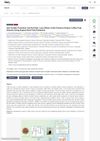
In this study, the SFE-4 extract from coffee pulp demonstrated potential effects for treating androgenetic alopecia by enhancing cell proliferation and gene expression related to hair growth pathways in vitro, using human hair follicle dermal papilla and prostate cancer cells.
July 2023 in “Ageing & Longevity” This review discusses two approaches to address aging: a tactical method to delay and slow age-related issues, and a strategic method aiming to eliminate aging altogether by targeting its root cause.
 June 2020 in “International journal of research in dermatology”
 This study found that oral intake of choline-stabilized orthosilicic acid (ch-OSA®) significantly improved hair, skin, and nail health in the Indian population, with no reported side effects.
 April 2016 in “The journal of investigative dermatology/Journal of investigative dermatology”
 This study found that topical bortezomib increased cell proliferation in hair follicles and sebaceous glands in mice and may activate hair keratin gene expression through GATA-3 transcription factors.
 1 citations
,
September 2023 in “Stem cell research & therapy”
1 citations
,
September 2023 in “Stem cell research & therapy” This review discusses how mesenchymal stromal cell-based therapy holds promise for treating age-related diseases, given its potential to target aging's pathological features, although significant challenges remain for its clinical application.
 January 2026 in “Dermatology Practical & Conceptual”
 This systematic review found that exosome-based therapies significantly improve skin elasticity, reduce wrinkle depth, enhance hydration, and modulate pigmentation, with minimal adverse events reported across multiple studies. However, further clinical trials are necessary to confirm long-term efficacy and safety.
 23 citations
,
August 2018 in “Facial Plastic Surgery Clinics of North America”
23 citations
,
August 2018 in “Facial Plastic Surgery Clinics of North America” This review discusses the role of defensin peptides in stem cell activation for potential skin rejuvenation therapies and reports no new clinical findings, emphasizing the need for further studies.
9 citations
,
June 2022 in “Microorganisms” This review outlines the urgent need for effective therapeutic interventions against coronaviruses, as current vaccines are challenged by virus mutations, and emphasizes developing safe, affordable, and broad-spectrum antivirals for both human and porcine coronaviruses.
4 citations
,
May 2025 in “Journal of Controlled Release”  February 2026 in “MedScien”
 This study found that mesenchymal stem cells mainly promote skin regeneration and delay aging through paracrine activity, releasing growth factors and cytokines that protect against oxidative stress and stimulate healing.
 January 2026 in “Food Science and Human Wellness”
 This study found that oral administration of Flammulina velutipes polysaccharide reduced tumor volume and improved survival in mice by modulating macrophage polarization and enhancing antitumor immune responses.

This review explores the potential of regenerative cosmetics, specifically engineered skin tissues, for rejuvenating aging skin, healing wounds, and restoring hair, offering promising alternatives to traditional dermocosmetic treatments by promoting collagen production, reducing wrinkles, and regenerating hair follicles.
 January 2023 in “International Journal of Research Publication and Reviews”
 This review details the causes, symptoms, and treatments for dandruff, emphasizing herbal ingredients with anti-dandruff properties used in shampoos and exploring their antifungal and anti-inflammatory mechanisms. It highlights dandruff's exploitation by personal care companies due to the lack of medical interventions.
 6 citations
,
January 2015 in “Evidence-based Complementary and Alternative Medicine”
6 citations
,
January 2015 in “Evidence-based Complementary and Alternative Medicine” This study found that saw palmetto extract inhibits glioma cell proliferation and angiogenesis via the STAT3 pathway, suggesting its potential use as a complementary therapy for cancers with activated STAT3 signaling.
43 citations
,
January 2016 in “Oxidative medicine and cellular longevity” This review discusses the biological effects and mechanisms of THSG in antiaging and related disease treatments but reports no new experimental findings.
13 citations
,
May 2021 in “FASEB bioAdvances” This review discusses plant-based alternatives to retinoids for dermal antiaging and hair health, highlighting roles for cytokinins and phytoestrogens and reports no new results.
1 citations
,
October 2025 in “Beni-Suef University Journal of Basic and Applied Sciences” This study reviews lipid-based nanocosmeceuticals and reports that they enhance therapeutic effectiveness in dermatological applications by improving skin hydration, reducing wrinkles, and effectively managing conditions like psoriasis and eczema, though further large-scale trials and regulatory alignment are needed for clinical use.
7 citations
,
October 2024 in “Cells” This review discusses the potential of platelet-rich plasma in regenerative medicine and aging-related diseases but notes that clinical efficacy remains unclear due to varying study results and preparation inconsistencies.
September 2025 in “Global Journal of Pharmacy & Pharmaceutical Sciences” This review analyzes PDRN's molecular mechanisms and therapeutic applications in anti-aging dermatology but reports no new clinical results, highlighting the need for more standardized protocols and long-term evaluations.
 November 2022 in “Journal of Investigative Dermatology”
 This study reported that an ex vivo organ culture system effectively induced aging-related changes in healthy human skin, allowing testing of senolytics like tretinoin, resveratrol, and caffeine.
This article reviews the potential benefits of GHK-Cu, EAA, and water-soluble propolis for wound healing, skin tightening, and anti-aging effects, but reports no new clinical results.
1 citations
,
April 2025 in “Journal of Cosmetic Dermatology” This study found that using Alastin Restorative Skin Complex Serum 2.0 with TriHex Technology for 12 weeks significantly improved facial skin hydration, elasticity, and overall quality in individuals with moderate to severe skin aging, with histological evidence showing new collagen and elastin fibers.