20 citations
,
April 2017 in “Journal of the American Academy of Dermatology” In this study, 55.6% of granuloma annulare patients improved on hydroxychloroquine, with a higher prevalence of thyroid disease observed in the patient cohort.
 November 2017 in “Asian journal of pharmaceutical and clinical research”
 This study predicted that 6-hydroxy genistein, coreximine, and scoulerine from Dadap leaves may act as anti-alopecia agents by interacting with JAK2, but further in-vivo testing is needed.
 4 citations
,
January 2021 in “Postępy Dermatologii i Alergologii”
4 citations
,
January 2021 in “Postępy Dermatologii i Alergologii” This study found that hydroxychloroquine significantly reduced disease activity in women with frontal fibrosing alopecia and lichen planopilaris, particularly benefitting patients after 12 months of treatment.
 5 citations
,
May 2025 in “Scientific Reports”
5 citations
,
May 2025 in “Scientific Reports” This study found that extracts from Indian gooseberry leaves showed strong antimalarial activity against Plasmodium falciparum, with low cytotoxicity, suggesting potential for developing new antimalarial drugs.
 April 2016 in “Journal of Investigative Dermatology”
 This study identified mefloquine as a potent inducer of lethal ER stress that effectively eliminated vemurafenib-resistant and sensitive melanoma cells, suggesting its potential for repurposing as a melanoma treatment.
 January 2025 in “Current Issues in Molecular Biology”
 This study explored the anti-hair loss potential of plant extracts like licorice, salvia miltiorrhiza, and others, finding they increased ALP and β-catenin expression and reduced TGF-β1 and IL-6 in human dermal papilla cells without cytotoxicity.
October 1977 in “Munich Personal RePEc Archive (Ludwig Maximilian University of Munich)” This study found that telogen effluvium occurred in two subjects taking 500 mg of mefloquine weekly, and gastrointestinal intolerance was observed at higher doses in additional acute studies.
 16 citations
,
June 2017 in “JAMA Dermatology”
16 citations
,
June 2017 in “JAMA Dermatology” Thalidomide works best for skin lupus not helped by antimalarials, but has many side effects; other treatments are less effective, especially if patients also have systemic lupus.
 May 2025 in “Scientific and Technical Bulletin оf State Scientific Research Control Institute of Veterinary Medical Products and Fodder Additives аnd Institute of Animal Biology”
 In this study, researchers developed "Akaro Spectra," an antiparasitic tablet for dogs using cryodestruction of plant materials, which showed 100% efficacy against Otodectes cynotis ticks by the second day and 93.76% efficacy against Ixodes, Dermacentor, and Rhipicephalus ticks.
 11 citations
,
March 2017 in “Journal of Biomedical Semantics”
11 citations
,
March 2017 in “Journal of Biomedical Semantics” This study expands the Drug Ontology to include therapeutic indications for resistant hypertension, malaria, and opioid abuse research, providing a framework for additional drug use representations beyond their original design.
2 citations
,
November 2025 in “International Journal of Molecular Sciences” This review reports that chitosan, a versatile polysaccharide, shows potential for various therapeutic applications due to its chemical modifications, notably in treating non-communicable diseases and wound healing, though further clinical study is needed to confirm these benefits.
 January 2024 in “Elsevier eBooks”
 In this chapter, the authors discuss various plant biomass sources, such as Aloe vera and cocoa, highlighting their potential benefits in cosmetics for addressing skin and hair issues like aging, inflammation, and dandruff.
 August 2013 in “Han'gug saengmul gonghag hoeji/KSBB journal”
 This study found that callus extracts from apple 'Hirosaki' may improve collagen synthesis, hair follicle cell proliferation, and possess significant anti-inflammatory properties.
 1 citations
,
June 2017 in “Skin”
1 citations
,
June 2017 in “Skin” This study is the first to report that apremilast may be effective in treating refractory lichen planopilaris and frontal fibrosing alopecia, though some patients experienced adverse effects leading to discontinuation.
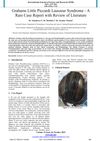 October 2023 in “International Journal of Science and Research (IJSR)”
 This paper describes Grahams Little Piccardi Lassueur Syndrome, a rare type of Lichen Planopilaris that causes different types of alopecia and distinctive skin papules, primarily affecting females aged 40 to 70, and notes the current challenges in treatment options, particularly once scarring occurs.
 April 2026 in “Journal of Pharmaceutical Investigation”
 This review discusses recent advancements in nanotechnology for treating hypertrophic scarring and atopic dermatitis, highlighting the potential of nanotherapeutic platforms in enhancing therapeutic effects by modulating the skin's microenvironment.
 329 citations
,
January 1997 in “Journal of the American Academy of Dermatology”
329 citations
,
January 1997 in “Journal of the American Academy of Dermatology” This study reports that progressive frontal fibrosing alopecia, a distinct and gradually stabilizing form of lichen planopilaris affecting elderly women and often involving eyebrow hair loss, lacks effective treatments.
254 citations
,
December 2003 in “Journal of the American Academy of Dermatology” This study reviewed the epidemiology and treatment of inflammatory cicatricial alopecias and highlighted the importance of scalp biopsies for accurate diagnosis in a mixed ethnic population at a university hair clinic.
 213 citations
,
June 2017 in “Rheumatology”
213 citations
,
June 2017 in “Rheumatology” This guideline outlines the management of systemic lupus erythematosus in adults but reports no new clinical findings.
 144 citations
,
September 2006 in “Clinics in Dermatology”
144 citations
,
September 2006 in “Clinics in Dermatology” This article outlines manifestations of systemic lupus erythematosus, noting rapid joint symptom improvement with corticosteroids and antimalarial drug responsiveness for skin symptoms, and links anti-Ro with photosensitive rash and subacute lupus.
 98 citations
,
May 2008 in “British Journal of Dermatology”
98 citations
,
May 2008 in “British Journal of Dermatology” This review discusses evidence-based guidance for managing primary cicatricial alopecias but reports no new clinical results, highlighting significant gaps in knowledge and the need for more quality trials.
 95 citations
,
November 2016 in “Journal of The American Academy of Dermatology”
95 citations
,
November 2016 in “Journal of The American Academy of Dermatology” This article reviews primary cicatricial alopecias, focusing on lymphocytic forms such as chronic cutaneous lupus erythematosus, according to a classification by the North American Hair Research Society, and reports no new clinical results.
 74 citations
,
March 2001 in “Seminars in Cutaneous Medicine and Surgery”
74 citations
,
March 2001 in “Seminars in Cutaneous Medicine and Surgery” This review summarizes the cutaneous manifestations of lupus erythematosus, noting both non-specific and disease-specific lesions, and highlights the role of skin biopsies and treatments available for cutaneous LE.
 61 citations
,
March 2009 in “The Journal of the American Board of Family Medicine”
61 citations
,
March 2009 in “The Journal of the American Board of Family Medicine” This article reviews current diagnostic and treatment approaches for discoid lupus erythematosus, emphasizing the importance of early treatment and photoprotection, but reports no new clinical findings.
 55 citations
,
October 2003 in “Dermatologic Clinics”
55 citations
,
October 2003 in “Dermatologic Clinics” This article discusses the complexities of treating hair and scalp disorders in African American patients, emphasizing the importance of understanding their specific hair care practices and the unique impact on quality of life, but reports no new empirical findings.
 46 citations
,
June 2018 in “American Journal of Clinical Dermatology”
46 citations
,
June 2018 in “American Journal of Clinical Dermatology” This review summarizes the clinical, trichoscopic, and histopathological features of alopecia types associated with cutaneous and systemic lupus erythematosus and explores their links to disease activity, but it reports no new clinical results.
 44 citations
,
August 2010 in “Lupus”
44 citations
,
August 2010 in “Lupus” This article reviews the characteristics and classification criteria of cutaneous lupus erythematosus and reports no new clinical findings.
 37 citations
,
October 2015 in “Anais Brasileiros de Dermatologia”
37 citations
,
October 2015 in “Anais Brasileiros de Dermatologia” This study found diverse clinical presentations of lichen planopilaris, with classic lichen planopilaris being the most common, highlighting the importance of recognizing this variability for accurate diagnosis.
36 citations
,
May 2020 in “Journal of the European Academy of Dermatology and Venereology” Dermatologists should watch for skin symptoms in COVID-19 patients, prioritize urgent cases, and use telemedicine.
 35 citations
,
October 2012 in “Dermatologic Clinics”
35 citations
,
October 2012 in “Dermatologic Clinics” This article reviews the impact of different forms of alopecia on patients with systemic autoimmune diseases and reports no new clinical findings; it emphasizes the need for attentive management of alopecia-related symptoms.