 January 2026 in “Frontiers in Bioscience-Landmark”
 This study reported that, in a laboratory setting, araliadiol derived from Centella asiatica activated antioxidant pathways, mitigating urban particulate matter-induced oxidative stress and skin damage.
 October 2023 in “International journal of science and research”
 In a case study, Ayurvedic treatments of leech therapy and topical application of Jayapala beej churna reportedly addressed dosha imbalances associated with Indralupta (Alopecia areata), resulting in new hair growth after several sessions.
 December 2023 in “Curēus”
 In this case study, researchers reported the first instance of keratoacanthoma on the scalp of an elderly patient in Saudi Arabia, highlighting the diagnostic challenge due to its resemblance to squamous cell carcinoma.
 December 2015 in “International Journal of Ayurvedic Medicine”
 This article reviews various Keshya drugs described in Bhava Prakasha Nighantu for hair care and reports no new research findings.
 January 2020 in “bioRxiv (Cold Spring Harbor Laboratory)”
 This study found that the ethyl acetate extract of Semecarpus anacardium leaves demonstrated cytotoxicity against MCF-7 cancer cells and induced apoptosis, suggesting potential as a cancer treatment with fewer side effects.
December 2025 in “Zenodo (CERN European Organization for Nuclear Research)” In this article, the authors discuss Ayurvedic concepts and treatments for Indralupta (Alopecia Areata), highlighting a case successfully managed with Ayurvedic medicine, while contrasting it with modern therapies like corticosteroids and immunosuppressants, which have significant side effects.
 20 citations
,
June 2020 in “Stem Cell Research & Therapy”
20 citations
,
June 2020 in “Stem Cell Research & Therapy” This study found that treating acute and chronic canine skin wounds with adipose-derived mesenchymal stem cells significantly improved healing and reduced inflammation, suggesting potential benefits for human wound care.
1 citations
,
December 2005 in “Journal of Biological Research - Bollettino della Società Italiana di Biologia Sperimentale” This study used Scanning Electron Microscopy to analyze South American mummy hair, revealing high levels of sulfur, calcium, and potassium, highlighting SEM's utility in anthropological investigations.
September 2025 in “Stem Cell Research & Therapy” This study found that TAZ promotes adipogenesis in goat adipose-derived mesenchymal stem cells by enhancing PI3K/AKT pathway activity, with overexpression boosting adipocyte formation and knockdown inhibiting it.
 December 2025 in “International Journal of Research in Ayurveda and Pharmacy”
 In this study, an 18-year-old female with vitiligo underwent Pracchana Karma and Ayurvedic treatments, resulting in progressive skin re-pigmentation and improved quality of life without adverse effects.
 August 2022 in “JAAD case reports”
 This case report describes a 36-year-old woman with hidradenitis suppurativa whose condition progressed to rapidly fatal squamous cell carcinoma, highlighting the potential for aggressive tumor development linked to specific protein markers.
 December 2025 in “Clinical & Experimental Dermatology and Therapies”
 This study reported that Cosmerna ARI significantly improved androgenetic alopecia in Europeans over a 6-month period compared to a placebo, according to a double-blind, randomized, placebo-controlled clinical trial.
 2 citations
,
December 2023 in “Journal of Ayurveda and Integrated Medical Sciences”
2 citations
,
December 2023 in “Journal of Ayurveda and Integrated Medical Sciences” In this case study, a 16-year-old boy with alopecia areata experienced complete hair regrowth after 4 months of Ayurvedic treatments, including Shamana Chikitsa and Raktamokshna, with no adverse effects reported.
 2 citations
,
February 2019 in “bioRxiv (Cold Spring Harbor Laboratory)”
2 citations
,
February 2019 in “bioRxiv (Cold Spring Harbor Laboratory)” This study provides the first draft of the male Asiatic lion's whole genome, revealing low genomic diversity and highlighting conservation concerns.
 1 citations
,
January 2023 in “International Research Journal of Ayurveda & Yoga”
1 citations
,
January 2023 in “International Research Journal of Ayurveda & Yoga” This review discusses Ayurvedic perspectives on premature greying of hair and reports no new clinical results, suggesting Ayurveda as a natural approach to this condition.
 48 citations
,
June 2014 in “Neurobiology of Disease”
48 citations
,
June 2014 in “Neurobiology of Disease” This study found that stem cells derived from spinal and bulbar muscular atrophy patients exhibited reduced androgen receptor levels and HDAC6, providing potential insights into the disease mechanism for future therapies.
November 2025 in “Archaeometry” This study analyzed animal hairs from 18th-century burial sites in Mazamet, France, reporting distinct hair morphologies consistent with the use of common local animal furs such as goat, badger, cow, or horse, reflecting the modest socioeconomic status of the individuals interred.
6 citations
,
February 1997 in “International Journal of Dermatology” In this study, the lack of cathepsin expression in Kaposi's sarcoma lesions suggests a benign hyperplastic origin for these lesions.
9 citations
,
September 2010 in “Journal of Radioanalytical and Nuclear Chemistry” The woman likely died from acute arsenic poisoning, not chronic exposure.
January 2025 in “Orvosi Hetilap” In this study, the authors reported that the laparoscopic single anastomosis sleeve ileal (SASI) bypass was associated with effective weight loss and improvement in obesity-related comorbidities within 6 months post-surgery.
 4 citations
,
July 2022 in “Veterinary medicine international”
4 citations
,
July 2022 in “Veterinary medicine international” This review discusses the nature, diagnosis, and control of mange in rabbits, focusing on its zoonotic implications and currently available treatment strategies, and reports no clinical results.
24 citations
,
July 2015 in “Molecular Medicine Reports” This study found that lysophosphatidic acid increases mesenchymal stem cell proliferation and migration through signaling pathways and reactive oxygen species, implicating potential applications in stem cell expansion.
June 2025 in “Histopathology” This study found that in superficial angiomyxomas, S100A4-positive mesenchymal niches may induce non-neoplastic adnexal epithelial growth, and highlighted evidence of mesenchymal-to-epithelial transition in eccrine duct branching, especially in Carney's complex cases.
 January 2024 in “Sanjeevani Darshan National Journal of Ayurveda & Yoga”
 This study aims to evaluate the efficacy of a treatment approach called Sthanika Chikitsa, involving Shiro Lepa and specific herbal and nasal preparations, for managing Indralupta, a condition akin to Alopecia Areata characterized by hair loss. Results are not provided in the abstract.
3 citations
,
September 2024 in “Brain and Behavior” This study found that combining ASA with conditioned medium from adipose tissue-derived MSCs may offer a promising approach for protecting against hippocampal injuries, suggesting potential synergistic therapeutic benefits that merit further investigation.
June 2025 in “Judi Clinical Journal” In this case report, researchers described an exceptionally rare occurrence of a 19-year-old female having three concurrent pilonidal sinuses at intermammary, umbilical, and sacrococcygeal locations, with surgical and conservative treatment leading to favorable healing outcomes.
January 2026 in “International Journal of Biology Pharmacy and Allied Sciences” This study observed that Varnadi Kashayam, a traditional Ayurvedic decoction, demonstrated anti-inflammatory, pancreatic lipase inhibition, and anti-obesity effects in high-fat diet-induced obese rats, with research also establishing analytical specifications for its quality control and standardization.
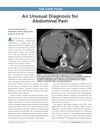 October 2018 in “Emergency medicine news”
 This case report describes a 65-year-old man diagnosed with atraumatic splenic rupture, which is rare and can occur without trauma, following sudden-onset left-sided abdominal pain.
16 citations
,
January 2010 in “Springer eBooks” 5-ARI therapy may help prevent prostate cancer progression.