8 citations
,
October 2014 in “The Journal of Dermatology” This paper reviews Satoyoshi syndrome and suggests diagnostic criteria to differentiate its subtypes, emphasizing the importance of testing alopecia areata patients for antinuclear antibodies, muscle spasms, and diarrhea.
May 2025 in “Journal of the ASEAN Federation of Endocrine Societies” This case study highlights a testosterone- and cortisol-secreting adrenal oncocytic neoplasm in an 18-year-old woman, illustrating the role of surgical excision in resolving hyperandrogenism and restoring menstruation.
July 2026 in “SKIN The Journal of Cutaneous Medicine” This case report details a 17-year-old male with Alopecic and Aseptic Nodules of the Scalp successfully treated with doxycycline and intralesional corticosteroids, highlighting the importance of thorough evaluation for accurate diagnosis.
 15 citations
,
June 2014 in “Integrative cancer therapies”
15 citations
,
June 2014 in “Integrative cancer therapies” This study found that an 8-week practice of pranic meditation was associated with improved quality of life and mental health scores in breast cancer survivors, though further research is needed for confirmation.
 February 2021 in “PDEAS International Journal of Research in Ayurved and Allied Sciences”
 This article reviews Ayurvedic concepts and treatments related to hair and reports no new clinical results.
 June 2026 in “Zenodo (CERN European Organization for Nuclear Research)”
 This study evaluated an Ayurvedic treatment protocol for Indralupta (similar to alopecia areata), finding significant clinical improvement with increased hair density and no adverse effects, suggesting it may be a safe, holistic alternative for managing alopecia areata.
 August 2026 in “Zenodo (CERN European Organization for Nuclear Research)”
 In this case report, a 30-year-old woman with alopecia areata experienced significant hair regrowth after undergoing Ayurvedic treatment, including internal medications and lifestyle modifications, with sustained improvement and no recurrence during a six-month follow-up.
 August 2026 in “Zenodo (CERN European Organization for Nuclear Research)”
 This case report observed significant hair regrowth and improved alopecia in a 30-year-old woman with alopecia areata after treatment with Ayurvedic medicine and lifestyle changes, with no recurrence during a six-month follow-up.
February 2021 in “PubMed” This case report presents a 2-year-old girl with type B loose anagen syndrome diagnosed through a painless hair pull test, avoiding unnecessary further tests or referrals.
48 citations
,
June 2000 in “Japanese Journal of Cancer Research” This study found that dimethylarsinic acid significantly accelerates skin tumor development in hair follicle-targeted K6/ODC transgenic mice.
40 citations
,
May 2010 in “American Journal of Clinical Dermatology” This study reports that four Indian patients with acne keloidalis nuchae also exhibited acanthosis nigricans, suggesting a potential link to metabolic syndrome, though further research is needed to confirm this association.
 May 2021 in “Journal of the Endocrine Society”
 This case report highlights the importance of timely biochemical and radiographic evaluation of adrenal masses, as illustrated by a rapidly progressing aggressive adrenal cortical carcinoma.
 July 2022 in “International journal of surgery science”
 This case report details a rare large epidermal cyst over the sacrumcoccygeal region in an elderly patient, which was successfully removed surgically.
 January 2024 in “International Ayurvedic medical journal”
 This study explores how Ayurveda concepts, specifically Prakruti, relate to male pattern baldness, suggesting that individual constitutional types may predict susceptibility to earlier hair loss when influenced by modern lifestyle factors.
January 2022 in “International Journal of Pharmacognosy and Pharmaceutical Sciences” This review examines the ethanomedicinal uses and pharmacological properties of Semecarpus anacardium, commonly used in traditional medicine, and does not provide new clinical results; it highlights a range of potential benefits including anti-inflammatory and antioxidant activities.
June 2026 in “International Journal of Ayurvedic Medicine” The study found that Asthimajjapachak Churna led to greater improvement in managing hair fall among young females compared to Shwadamshtradi Rasayana Churna, particularly through alleviation of Asthigata dosha.
1 citations
,
April 2022 in “Frontiers in Bioengineering and Biotechnology” This study found that mouse astrocytes formed cell spheres on agarose surfaces, acquired stem cell-like features, and their derived stem cells effectively differentiated into neurons that helped regenerate damaged nerves.
3 citations
,
January 2019 in “Case Reports in Ophthalmology” This case report describes a Japanese woman diagnosed with both Vogt-Koyanagi-Harada disease and sarcoidosis, suggesting a potential shared pathophysiology between the two conditions.
 April 2024 in “Cancer Research Statistics and Treatment”
 This personal narrative recounts Sreeparna Majumder's journey through a challenging battle with thymic carcinoma and other health issues while maintaining her engineering studies and later pursuing an MBA, highlighting her resilience and the unwavering support from her family and friends.
28 citations
,
June 2010 in “Pediatric dermatology” This review discusses short anagen syndrome, highlighting its symptom of abnormally short scalp hair without associated systemic diseases, and notes that hair length often improves spontaneously after puberty without treatment.
1 citations
,
December 2022 in “Pathogens” This case report describes a severe Sarcoptes scabiei infestation in a stray FIV-positive cat, which typically is a non-permissive host for the mite, leading to considerable clinical recovery after treatment.
1 citations
,
June 2023 in “Turkish Journal of Surgery” This case report described a rare combination of synchronous gallbladder and pancreatic cancers with an unusual initial symptom of complete loss of facial and scalp hair, marking a unique presentation never previously documented for abdominal malignancies in medical literature.
 February 2025 in “The Indian Journal of Animal Sciences”
 This study investigated a severe outbreak of mange in a goat herd in North Goa and found that treatment with Ivermectin and other supplements led to complete recovery, highlighting the need for preventive measures in hot, humid regions.
 August 2022 in “International Journal of Current Science Research and Review”
 This review discusses Ayurvedic detoxification methods for poisonous plants, known as Visha Dravyas, and reports no new clinical results.
36 citations
,
January 1994 in “Cell and Tissue Research” November 2020 in “Zenodo (CERN European Organization for Nuclear Research)” 
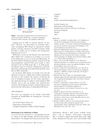
This study found that sarcoptic mange significantly decreased vicuña and guanaco populations in San Guillermo National Park, Argentina, likely originating from mange-infected llama introduced nearby, raising the risk of local extinction.
 6 citations
,
April 2013 in “International Journal of Dermatology”
6 citations
,
April 2013 in “International Journal of Dermatology” This correspondence describes the dermoscopic features of an osteonevus of Nanta but does not report new clinical findings.
 January 2026 in “Frontiers in Bioscience-Landmark”
 This study reported that, in a laboratory setting, araliadiol derived from Centella asiatica activated antioxidant pathways, mitigating urban particulate matter-induced oxidative stress and skin damage.