January 2026 in “International Journal of Molecular Sciences” This review suggests that topically applied peptides may offer a promising alternative for managing pain in chronic wounds, with additional potential benefits of anti-inflammatory and regenerative activities, but acknowledges the challenges of delivering these peptides across damaged skin barriers.
 December 2024 in “Journal of the International Society of Sports Nutrition”
 In this narrative review, researchers examined common misconceptions and questions about creatine monohydrate, addressing issues such as its potential effects on muscle benefits without exercise, interactions with caffeine, inflammatory properties, safety during pregnancy, and effects on adolescents, among others.
 August 2024 in “Drug Design Development and Therapy”
 This review explores the biological applications and pharmacokinetics of decursin, a compound isolated from Angelica gigas, highlighting its potential neuroprotective, anti-inflammatory, and anticancer properties based on in vitro and in vivo studies.
 January 2024 in “Future postharvest and food”
 This study reviewed the historical and current uses of frankincense, highlighting its potential antiviral, anti-inflammatory, and immunomodulatory effects, particularly noting some clinical evidence that suggests its use in treating COVID-19 symptoms, although more data is needed.
 May 2023 in “Endocrine, metabolic & immune disorders”
 This review describes the diverse pharmacological and phytochemical properties of Hibiscus rosa-sinensis, noting its wide range of traditional medicinal uses and safety at higher extract doses.
March 2017 in “Zenodo (CERN European Organization for Nuclear Research)” This study found that probiotics, specifically the L. plantarum MTCC 1325 strain, may have protective effects against Alzheimer's-like symptoms induced by D-Galactose in animal models, suggesting potential therapeutic use for neurodegenerative disorders.
 February 2025 in “Cermin Dunia Kedokteran”
 This article reviews acute disseminated encephalomyelitis, a neurological condition with demyelination of the central nervous system, and reports no new clinical findings; diagnosis is made by exclusion.
 1 citations
,
November 2023 in “Indian Journal of Science and Technology”
1 citations
,
November 2023 in “Indian Journal of Science and Technology” In this study, researchers identified several active metabolites in Eclipta alba, demonstrated strong interaction with Alzheimer's disease proteins, and found that 28 days of treatment improved memory without significant toxicity in rats, suggesting potential pathways for treating Alzheimer's.
 July 2023 in “Deleted Journal”
 In this case report from Cipto Mangunkusumo Hospital Jakarta, alopecia areata was identified as the most common type of baldness in the facility's skin and genital polyclinics from 2009 to 2011, representing 39.7% of cases.
 182 citations
,
June 2002 in “Journal of Neuroscience”
182 citations
,
June 2002 in “Journal of Neuroscience” This study suggests that apoE4 may contribute to cognitive decline by reducing androgen receptor levels in the brain, but androgen treatment improved memory deficits in female mice expressing human apoE4.
 April 2022 in “Medicinus”
 This article discusses the challenges of treating androgenetic alopecia due to limited approved medications, potential side effects, and unmet expectations and reports no new clinical results.
16 citations
,
December 2006 in “Chinese Medical Journal” This case report describes a 12-year-old boy with congenital insensitivity to pain with anhidrosis and progressing acro-osteolysis, highlighting the severe complications and the necessity for early intervention.
19 citations
,
February 2001 in “Journal of paediatrics and child health” This report documents a 14-year-old Chinese boy with mitochondrial encephalopathy, lactic acidosis, stroke-like episodes, and a de novo A3243G mitochondrial DNA mutation, highlighting the condition's multisystem involvement without ragged red fibers in muscle biopsy.
 August 2008 in “European Neuropsychopharmacology”
 This study identified significant correlations between self-esteem, psychiatric symptoms, and health-related quality of life in peritoneal dialysis patients.
In this study, young adult male albino rats treated with finasteride showed a 10% reduction in thickness of the CA1 layer of the hippocampus, suggesting that this atrophy may contribute to memory impairments linked to Post-Finasteride Syndrome.
 14 citations
,
November 2011 in “Journal of The American Academy of Dermatology”
14 citations
,
November 2011 in “Journal of The American Academy of Dermatology” This discussion highlights that alopecia areata incognita is challenging to diagnose and treat, with systemic corticosteroids potentially leading to remission when local treatments fail.
January 2026 in “European Journal of Dermatology” This article examines the use of legal amphetamines by French political figures from the Liberation to the 1960s, highlighting their impact on health and their prevalence among Communist activists, influenced by habits from the Resistance.
January 2025 in “Archivio istituzionale della ricerca (Alma Mater Studiorum Università di Bologna)” Accurate diagnosis is crucial to distinguish alopecia areata incognita from androgenetic alopecia in men for proper treatment.
December 2024 in “Ukrains kyi Visnyk Psykhonevrolohii” This study found that women with mixed alopecia experienced significant cognitive impairments, particularly those with adaptation disorders, with symptoms like rapid fatigue and impaired concentration being most prevalent. The cognitive patterns are complex and require further investigation to inform tailored rehabilitation strategies.
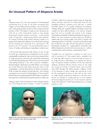 January 2014 in “International Journal of Trichology”
 A man had an unusual type of hair loss that didn't match known patterns and didn't improve with treatment.
January 2025 in “Pharmaceutical journal/The pharmaceutical journal” This abstract provides background information on alopecia areata, describing it as an autoimmune condition leading to non-scarring, patchy hair loss but does not report specific study results.
This article reviews the characteristics of alopecia areata, highlights the psychological factors involved, and discusses South American contributions to understanding the disease, but reports no new clinical results.
August 2025 in “EMC - AKOS - Trattato di Medicina” Non-scarring alopecia can regrow hair, but scarring alopecia is often permanent and needs quick treatment.
July 2012 in “Alzheimer s & Dementia” This case report describes a 57-year-old Navy veteran with mild cognitive impairment who showed cognitive improvement and reported better mood after CPAP treatment and medication adjustments.
219 citations
,
January 2006 in “Drug Metabolism Reviews” This review discusses how dehydroepiandrosterone (DHEA) may exert its biological effects through multiple receptors and reports no new clinical results.
63 citations
,
January 2010 in “Frontiers in Aging Neuroscience” This study found that 3alpha-diol, an androgen metabolite, improved cognitive and affective performance in aged male rats, suggesting its role in countering age-related decline in hippocampally-influenced behaviors.
11 citations
,
July 2015 in “Frontiers in Cellular Neuroscience” This study found that corticosterone promotes neurosteroid synthesis in hippocampal neurons, which can lead to ethanol-mediated synaptic dysfunction even at moderate ethanol levels, potentially contributing to stress-related cognitive impairment from alcohol.
3 citations
,
December 2021 in “Frontiers in Pharmacology” This study found that Ficus benghalensis leaf extracts reduced the activity of 5 α-reductase II and promoted hair growth in rabbits by elongating the hair follicle's anagen phase, suggesting potential for treating hair loss.
 31 citations
,
October 2010 in “Journal of the European Academy of Dermatology and Venereology”
31 citations
,
October 2010 in “Journal of the European Academy of Dermatology and Venereology” The authors concluded that some patients clinically diagnosed with telogen effluvium may actually have alopecia areata incognita, suggested by the presence of dystrophic hairs and development of alopecia patches.
 February 2021 in “Cureus”
 In this case report, the authors describe a rare presentation of alopecia areata mimicking frontal fibrosing alopecia, emphasizing the diagnostic value of trichoscopy and the need to consider alopecia areata in differential diagnoses.