 3 citations
,
May 2019 in “Australasian Journal of Dermatology”
3 citations
,
May 2019 in “Australasian Journal of Dermatology” This letter to the editors discusses the nature of alopecia in Cronkhite–Canada syndrome and questions whether it is truly telogen effluvium, but it reports no new clinical findings.
 1 citations
,
April 2024 in “International Research Journal of Modernization in Engineering Technology and Science”
1 citations
,
April 2024 in “International Research Journal of Modernization in Engineering Technology and Science” This study aimed to create an herbal shampoo that effectively removes oil, dirt, and dandruff while enhancing hair thickness, growth, and blackness, without causing side effects like conventional cosmetic shampoos can. Results are not reported.
 1 citations
,
July 2021 in “Chemical & pharmaceutical bulletin/Chemical and pharmaceutical bulletin”
1 citations
,
July 2021 in “Chemical & pharmaceutical bulletin/Chemical and pharmaceutical bulletin” This study found that rubbing significantly increased skin permeation of caffeine but not rhododendrol, with the direction of rubbing playing a crucial role in caffeine's enhancement.
1 citations
,
September 2016 in “Journal of Dermatological Science” In this study using tamoxifen-inducible claudin-1 knockout mice, researchers observed that tight junction barrier leakage induced stratum corneum barrier defects and skin inflammation, suggesting a possible cycle of barrier damage and inflammation in atopic dermatitis.
1 citations
,
January 2015 in “The Journal of Dermatology” This letter to the editor presents a case of non-Herlitz junctional epidermolysis bullosa associated with a COL17A1 mutation and reports no new clinical findings.
 1 citations
,
October 2013 in “The Journal of Dermatology”
1 citations
,
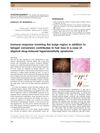
October 2013 in “The Journal of Dermatology” This letter to the editor discusses the immune response related to hair loss in a case of atypical drug-induced hypersensitivity syndrome but reports no new research findings.
This study conducted at a Moroccan tertiary dermatology center describes the characteristics of pediatric lichen, highlighting that dermoscopy can improve diagnostic accuracy by identifying distinct patterns across clinical variants, with lichen sclerosus being the most frequent subtype among the children studied.
April 2026 in “Our Dermatology Online”  July 2025 in “UCP Journal of Science & Technology”
 This research conducted in Narowal, Pakistan, found significant differences in hematological and renal function parameters between pregnant and non-pregnant women, suggesting that these tests could serve as biomarkers for pregnancy.
May 2025 in “Drug Delivery and Translational Research”  November 2023 in “The journal of investigative dermatology/Journal of investigative dermatology”
 This study suggests that hemoglobin α expression in the epidermis is induced by oxidative stress and may function as an antioxidant, contributing to skin barrier function.
 November 2022 in “The journal of investigative dermatology/Journal of investigative dermatology”
 This study found that hemoglobin α is upregulated in epidermal keratinocytes after UV exposure and may function as an antioxidant, particularly for hair follicle stem cells.
 January 2021 in “Journal of Cancer Therapy”
 This study described the safety profile of tyrosine kinase inhibitors in treating various solid tumors, finding that the observed toxicities were consistent with existing literature.
June 2020 in “Journal of Investigative Dermatology” This study found that spatial transcriptomics can reveal hidden inflammation patterns in atopic dermatitis by correlating epidermal and dermal gene expression levels, improving understanding of skin pathology.
 April 2018 in “Journal of Investigative Dermatology”
 This study found that keratin filament networks in SG1 cells of mice undergo dynamic changes during cornification, impacting the barrier function of the stratum corneum.
September 2016 in “Journal of Dermatological Science” This research suggests that hair follicle-derived cytokines IL-7 and IL-15 are crucial for maintaining resident memory T cells in the skin, which may be relevant for diseases like cutaneous T cell lymphoma.
September 2016 in “Journal of dermatological science” This study suggests that human induced pluripotent stem cells can be used to generate dermal papilla equivalent cells, potentially aiding hair follicle regeneration and drug discovery for hair diseases.
September 2016 in “Journal of dermatological science” This study suggested that differences in hair follicle development, indicated by the frequency of underdeveloped hairs, significantly contribute to the variation in hair loss severity among Japanese individuals with the LIPH c.736T>A mutation.
 December 2012 in “Journal of dermatological science”
 This study reveals that hair follicles in mice and humans recruit epidermal Langerhans cells during skin inflammation via specific chemokine signaling pathways.
5 citations
,
July 2022 in “Radiation Research” This study developed a mouse model to simulate chronic radiation-induced salivary dysfunction, revealing dose-dependent saliva reduction and glandular changes, which may help advance salivary regenerative therapies.
4 citations
,
July 2017 in “Journal of Medical Case Reports” This case report highlights a rare presentation of acute lupus hemophagocytic syndrome with initially negative antinuclear antibodies, underscoring the higher sensitivity of the 2012 Systemic Lupus International Collaborating Clinics criteria for diagnosis.
May 2026 in “International Journal of Creative and Open Research in Engineering and Management” This review highlights key considerations for developing effective herbal hair oils, focusing on carrier selection, bioactive extraction, and standardization, and suggests incorporating advanced delivery systems like nanoemulsions to improve global manufacturing practices.
 December 2021 in “Acta Marisiensis”
 This review discusses the clinical significance, mechanisms, and treatment options of insulin resistance, emphasizing its impact on endocrine diseases and the need for further research into inflammatory cytokines.
August 2021 in “International journal of advanced research” In this study, PRP therapy initially improved hair density in androgenetic alopecia, but effects decreased over time, suggesting additional treatment may be needed for sustained results.
August 2021 in “Zenodo (CERN European Organization for Nuclear Research)” This study observed that while platelet-rich plasma showed positive short-term effects on hair density in individuals with androgenic alopecia, its effectiveness declined after four months, suggesting possible need for additional treatment.
 December 2024 in “International Journal of Research in Ayurveda and Pharmacy”
 This review highlights the potential benefits of Sowbhagya Chundi Legiyam, a Siddha herbal formulation containing Zingiber officinale, for supporting women's health during the puerperal period, suggesting it may strengthen the uterus and prevent diseases due to improper postnatal care.
263 citations
,
February 2020 in “International journal of molecular sciences” This paper discusses the potential roles of adipose tissue derived stem cells in skin regeneration and wound healing but emphasizes the need for further research on their effectiveness in clinical settings.
72 citations
,
June 2017 in “Zenodo (CERN European Organization for Nuclear Research)” This article reviews conventional and alternative treatments for hair loss, noting FDA-approved drugs like Minoxidil and Finasteride, but reports no new clinical findings; the authors highlight concerns about side effects, spurring interest in herbal remedies.
17 citations
,
June 2016 in “Archives de Pédiatrie” This case report describes three pediatric cases of frontal fibrosing alopecia, a condition typically seen in postmenopausal women, including a unique instance involving female twins.
 September 2023 in “Frontiers in Medicine”
 This study observed that in the bald scalps of male patients with androgenetic alopecia, there was a significant downregulation of the PPAR signaling pathway, suggesting reduced adipogenesis potentially influencing hair cycling processes.