 January 2013 in “Journal of Siberian Medical Sciences”
 This study found that patients with androgenetic alopecia experienced higher treatment efficacy when using a combination of antler-based products "Pantogematogen" and "Chudopan" compared to other methods.
32 citations
,
September 2010 in “Stress” This study found that suppressing allopregnanolone production in late gestation fetal sheep altered CNS activity and behavioral responses to transient asphyxia, effects mitigated by an analog co-infusion.
 16 citations
,
July 2000 in “Dermatologic surgery”
16 citations
,
July 2000 in “Dermatologic surgery” This paper contains author contact information and disclosures without reporting new research findings or results.
 June 2023 in “International Journal of Clinical Research and Reports”
 This study found that higher concentrations of topical diphenylcyclopropenone, especially when prepared with acetone, showed better stability over 6 months compared to lower concentrations.
 6 citations
,
April 2004 in “Journal of Enzyme Inhibition and Medicinal Chemistry”
6 citations
,
April 2004 in “Journal of Enzyme Inhibition and Medicinal Chemistry” This study found that four new progesterone derivatives reduced prostate weight in gonadectomized hamsters, suggesting potent in vivo antiandrogenic effects similar to finasteride.
 January 2015 in “Current Opinion in Endocrinology, Diabetes and Obesity”
  May 2018 in “Más dermatología”
 In this study, among postmenopausal women with female androgenetic alopecia, the combination of Pygeum africanum and Serenoa repens extracts at higher doses plus MSM significantly increased total hair growth and hair resistance compared to a lower dose formulation after 16 weeks.
July 2025 in “Carbohydrate Polymers” This study investigated the extracellular polysaccharides from the edible green alga Parachlorella sp. BX1.5, finding that they have potential applications in cosmetics and health products due to their stability, antioxidant properties, and effects on hair growth in mice.
21 citations
,
March 2002 in “PubMed” This study found that monthly high-dose steroid pulse therapy for approximately six months was effective and well-tolerated in Taiwanese patients with severe multifocal alopecia areata.
 March 2022 in “International Journal of Health Sciences”
 In this animal study, topical pentoxifylline was associated with improved hair regrowth in cyclophosphamide-induced hair loss in male Swiss albino rats.
March 2015 in “DergiPark (Istanbul University)” This study concluded that topical psoralen and ultraviolet A photochemotherapy is an effective and safe treatment for alopecia areata, as it produced a good response in 43.8% of patients.
 18 citations
,
January 2002 in “Chemical & pharmaceutical bulletin/Chemical and pharmaceutical bulletin”
18 citations
,
January 2002 in “Chemical & pharmaceutical bulletin/Chemical and pharmaceutical bulletin” This study found that several new pregnane derivatives, especially steroids 16 and 19, demonstrated higher antiandrogenic activity on male hamster models than the commonly used finasteride.
 3 citations
,
September 2018 in “MOJ Toxicology”
3 citations
,
September 2018 in “MOJ Toxicology” This review discusses the medicinal properties of Alpinia zerumbet Roxb. and highlights its potential for further research, but provides no new clinical results.
 42 citations
,
February 1998 in “The Journal of Steroid Biochemistry and Molecular Biology”
42 citations
,
February 1998 in “The Journal of Steroid Biochemistry and Molecular Biology” This study found that PNU 157706 is a highly potent inhibitor of human 5α-reductase enzymes, showing a stronger and longer-lasting antiprostatic effect in rats compared to finasteride.
October 2017 in “Our Dermatology Online” This study reports that while DCP had similar treatment efficacy in propylene glycol and isopropanol for alopecia areata, the formulation in isopropanol was better tolerated.
 September 2016 in “Journal of the Society of Cosmetic Scientists of Korea”
 This study found that Resina Pini and its main component, abietic acid, significantly promoted hair growth in a mouse model of androgenic alopecia by inhibiting 5α-reductase activity.
19 citations
,
June 2010 in “Journal of acupuncture and meridian studies” This study found that emodin from Polygonum multiflorum showed 5alpha-reductase inhibitory activity, which was more potent than alizarin but less potent than riboflavin.
January 2002 in “Chinese Journal of Pharmaceuticals” This study reports the preparation of a key intermediate for finasteride and epristeride with a 69% overall yield from pregnenolone acetate.
83 citations
,
November 2006 in “European Journal of Neuroscience” This study found that progesterone protects rat Purkinje cells during oxygen-glucose deprivation by activating GABA A receptors through its metabolite, allopregnanolone.
January 2006 in “Benzina: Revista d'excepcions culturals” This study observed that new trienone compounds consistently showed higher 5alpha-reductase inhibitory activity compared to corresponding dienones across various biological models.
 3 citations
,
March 2017 in “Regulatory toxicology and pharmacology”
3 citations
,
March 2017 in “Regulatory toxicology and pharmacology” In this study, aleglitazar and its metabolite M6 were evaluated for safety in non-clinical settings, revealing organ-targeting effects common to PPAR agonists but no significant tumor increase in rat carcinogenicity studies, supporting progression to Phase 3 clinical trials.
October 2024 in “International Journal of Pharmaceutics” This study aimed to develop a new transdermal patch for treating androgenetic alopecia using finasteride, combined with chemical permeation enhancers to improve drug delivery through the skin, but results of pharmacokinetics and pharmacodynamics evaluations are not reported.
36 citations
,
July 2017 in “Journal of controlled release” In this study, a new formulation of all-trans retinoic acid bound to polyvinyl alcohol showed reduced skin inflammation and sustained drug release for up to six days compared to free ATRA in vitro and in vivo.
7 citations
,
May 2022 in “Indonesian Journal of Science and Technology” This study found that compounds isolated from the Etlingera alba rhizome exhibited cytotoxic and anti-metastatic activity, with potential for development against Triple-Negative Breast Cancer.
 44 citations
,
February 2015 in “Journal of the American Academy of Dermatology”
44 citations
,
February 2015 in “Journal of the American Academy of Dermatology” This study found that combination therapy with diphenylcyclopropenone and anthralin was more effective for complete hair regrowth in chronic extensive alopecia areata than diphenylcyclopropenone alone, despite more common side effects.
 2 citations
,
December 2020 in “American Journal of Dermatological Research and Reviews”
2 citations
,
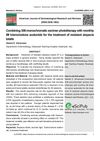
December 2020 in “American Journal of Dermatological Research and Reviews” This study found that combining 308-excimer phototherapy with intramuscular triamcinolone acetonide was effective and well tolerated for treating resistant alopecia totalis, showing a 90% overall response rate in the ten patients studied, with the best results observed in younger patients.
 July 2026 in “Zenodo (CERN European Organization for Nuclear Research)”
 This study evaluated Korean herbal compounds in silico and identified Biochanin A, Saponin Re, and Emodin as potential topical treatments for androgenetic alopecia, each with specific safety and efficacy considerations.
 September 2025 in “Tạp chí Da liễu học Việt Nam”
 This study found that both 2.5 mg/mL and 5 mg/mL concentrations of intralesional triamcinolone acetonide are effective for treating patchy alopecia areata, but the higher concentration promoted greater hair regrowth and density with more side effects.
 August 2016 in “Journal of Investigative Dermatology”
 This study found that among men unresponsive to finasteride for androgenic alopecia, 56.25% showed significant hair improvement after six months of dutasteride treatment with reasonable adverse effects.
 October 2025 in “Actualización en Medicina de Familia”
 This review discusses several new pharmacological products, including those for cardiovascular prevention and overactive bladder, but notes challenges in defining their therapeutic roles and provides safety updates on existing medications; it reports no new clinical results.