39 citations
,
October 2012 in “Headache The Journal of Head and Face Pain” This study reports cutaneous atrophy and alopecia in four patients following greater occipital nerve blockade with triamcinolone and lidocaine, suggesting that alternative steroids may reduce these side effects.
November 2025 in “JOURNAL OF EXPERIMENTAL ZOOLOGY INDIA” This study observed that thymol from Origanum marjoram essential oil significantly promoted hair regrowth and reduced inflammation in cyclophosphamide-induced alopecia in rabbits, with effects that were comparable to or exceeded those of betamethasone, highlighting its potential as a safer treatment alternative.
 April 2026 in “International Journal of High Dilution Research - ISSN 1982-6206”
 This case study reports that a 49-year-old female with scarring alopecia from chronic Discoid Lupus Erythematosus experienced hair regrowth and symptom relief with homeopathic treatment, although further clinical research is needed to confirm these effects.
 52 citations
,
February 2006 in “Archives of Dermatology”
52 citations
,
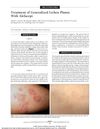
February 2006 in “Archives of Dermatology” This case report describes a 25-year-old woman with widespread lichen planus who did not respond to multiple systemic treatments, including antihistamines, hydroxychloroquine sulfate, and corticosteroids.
September 2023 in “Journal of the American Academy of Dermatology” This study found that in participants with notalgia paresthetica, 8 weeks of treatment with difelikefalin significantly improved itch intensity and increased the rate of strict complete response compared to placebo, starting as early as week 3.
50 citations
,
January 1941 in “Annals of Internal Medicine” Idiopathic hypoparathyroidism is rare and can be managed with dihydrotachysterol.
 26 citations
,
March 2015 in “American journal of clinical dermatology”
26 citations
,
March 2015 in “American journal of clinical dermatology” This study found that systemic mycophenolate mofetil and topical clobetasol were equally effective at reducing lichen planopilaris activity over six months, but satisfaction differed between the treatments.
 202 citations
,
June 2005 in “Aaps Pharmscitech”
202 citations
,
June 2005 in “Aaps Pharmscitech” This review discusses the potential of lecithin organogels for improving topical drug delivery and presents no new experimental results; the authors highlight their stability and low skin irritancy as advantages.
 February 2026 in “International Journal of Homoeopathic Sciences”
 In this case report, a 20-year-old woman with chronic spontaneous urticaria experienced clinical improvement after receiving personalized homeopathic treatment with Natrum muriaticum 1M, underscoring the potential role of individualized homeopathy in managing this condition.
 July 2025 in “International Journal of Homoeopathic Sciences”
 In this report, a 47-year-old woman with subclinical hypothyroidism experienced significant symptom relief and normalized TSH levels after six months of individualized homeopathic treatment with Sepia 1M, targeted to her symptom profile.
This chapter provides dermatology trainees with insights on managing lichen planopilaris, emphasizing treating active disease to prevent further hair loss and recommending a tapered course of oral steroids for disease stabilization.
1 citations
,
December 2017 in “Dermatology - Open Journal” This case study reports successful regression of alopecia areata in a female patient through DPCP immunotherapy supported by oral antihistamines and topical corticosteroids, suggesting indirect antihistamine effects on allergic inflammation may contribute to improvement.
May 2026 in “International Journal of Homoeopathic Sciences” This case report from Dr Batra’s Homeopathy Clinic documents successful treatment of rapidly progressive alopecia areata in a middle-aged female using a classical individualised homeopathic approach, resulting in halted progression, reduced hair fall, regrowth, and improved general health over six months.
6 citations
,
June 2022 in “Journal of Orthopaedic Surgery and Research” In this animal study, oral administration of wedelolactone significantly improved bone mineral density and reduced osteoclast numbers in a model of particle-induced osteolysis, suggesting potential as a treatment option.
 January 1988 in “Chemical and Pharmaceutical Bulletin”
 This study found that ointments containing indomethacin and its calcium salt showed potent anti-inflammatory effects on rat paw edema and arthritis with minimal skin irritation, suggesting potential for clinical use.
 July 2025 in “International Journal of Homoeopathic Sciences”
 This study suggests that homeopathic treatments may significantly improve menstrual regularity, reduce cystic formations, and enhance the overall quality of life for women with polycystic ovarian disease, indicating its potential as a complementary therapy in gynecological care.
 September 2022 in “Indian journal of research in homeopathy/Indian journal of research in homoeopathy”
 This case series from Nehru Homoeopathic Medical College and Hospital reported that all seven PCOS patients experienced symptomatic improvement and cyst resolution after treatment with constitutional homoeopathic medicines.
1 citations
,
February 2023 in “Advancements in Homeopathic Research” This review highlights the limited evidence available for homeopathy in the treatment of alopecia areata, indicating the need for more rigorous studies.
 July 1976 in “Archives of Dermatology”
 This correspondence reports that using cantharidin on warts can result in lymphangitis, and dermatologists should consider all potential complications of treatments.
141 citations
,
February 2005 in “Journal of the American Academy of Dermatology” In this study, oral prednisolone pulse therapy led to significant hair regrowth in some patients with extensive alopecia areata, whereas no improvement was seen in the placebo group.
 1 citations
,
June 2001 in “Annals of Internal Medicine”
1 citations
,
June 2001 in “Annals of Internal Medicine” This letter challenges an interpretation of results from a zinc lozenge trial that suggested patient perceptions of receiving treatment might indicate effective blinding, arguing this only holds for crossover studies.
 March 2026 in “International Journal of Homoeopathic Sciences”
 This study reported a case where individualized homeopathic treatment notably reduced hair fall and promoted hair regrowth over nine months in a 40-year-old man with androgenic alopecia, while also improving his confidence and body image.
 September 2019 in “Journal of Investigative Dermatology”
 This study reports that thermography and high-frequency ultrasound show promise as diagnostic tools for personalizing treatment plans in atopic dermatitis and psoriasis vulgaris by assessing skin lesion characteristics.
6 citations
,
December 2021 in “International Journal of High Dilution Research - ISSN 1982-6206” This review covers clinical studies on using homoeopathy to treat PCOS and concludes that further rigorous research is necessary to substantiate its effectiveness.
 December 2025 in “Journal of Integrated Standardized Homoeopathy”
 This case report describes the use of individualized homoeopathic treatment and dietary modifications to manage hypothyroidism in a 23-year-old woman, resulting in symptom improvement and normalized TSH levels after tapering off levothyroxine.
April 2019 in “The journal of investigative dermatology/Journal of investigative dermatology” This study suggests that stimulating olfactory receptors in human hair follicles with Sandalore® increases antimicrobial activity by upregulating dermcidin production, potentially offering a novel approach for treating hair follicle diseases with bacterial issues.
6 citations
,
May 2012 in “The Journal of Dermatology” This letter reports on a case of intractable ophiasis-type alopecia areata that was presumably improved by fexofenadine, but no new clinical results are presented.
39 citations
,
November 2017 in “PubMed” This case series reported that low-dose naltrexone may benefit patients with lichen planopilaris by reducing scalp symptoms and slowing disease progression, with no adverse effects observed in the patients.
 April 2017 in “Journal of Investigative Dermatology”
 In laboratory tests and mouse models, this study found that the novel IPC analog SIG-1451 may offer potent anti-inflammatory effects for treating allergic skin inflammation, potentially outperforming some current therapies in specific inflammatory phases.
 2 citations
,
January 2017 in “Clinical and medical investigations”
2 citations
,
January 2017 in “Clinical and medical investigations” This research reports that herb lotions for alopecia areata, particularly those containing salvia miltiorrhiza radix, were effective in promoting hair regrowth in 64.8% of severe cases, akin to DNCB and SADBE.