April 2025 in “International Journal of Dermatology” This study found that Black patients with alopecia areata showed an average 20% reduction in scalp involvement after JAK inhibitor therapy, indicating positive treatment outcomes in this group.
January 2013 in “Heilongjiang xumu shouyi” This study successfully cloned the KAP6.1 gene from Xinjiang fine-wool sheep and found its genetic sequence has high homology with sheep and goat sequences, indicating close genetic relationships.
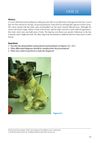 May 2019 in “Small Animal Dermatology”
 This chapter discusses a case of sebaceous adenitis in a Japanese Akita, providing educational material for students and practitioners but reports no new research findings.
This case study observed that a patient with multiple refractory inflammatory conditions, including psoriasis, alopecia areata, and psoriatic arthritis, experienced significant improvements after three months of treatment with upadacitinib. The report suggests potential benefits of upadacitinib for similar conditions, recommending further clinical trials.
 October 2022 in “The American journal of gastroenterology”
 This case report details a patient with myasthenia gravis and a malignant thymoma whose rising liver function tests, initially thought to be related to antibiotic use, were ultimately attributed to thymoma-associated multiorgan autoimmunity.
June 2026 in “British Journal of Dermatology” This study reported that dermatological adverse events are common in patients treated with amivantamab for non-small cell lung cancer, often impacting quality of life and requiring treatment modifications.
 April 2024 in “JEADV clinical practice”
 This study reports a case where a patient with rheumatoid arthritis and alopecia areata saw significant improvement in both conditions after switching to daily upadacitinib treatment, specifically achieving complete hair regrowth within six months.
This study found that in mice with alopecia areata, a single subcutaneous injection of botulinum neurotoxin serotype A significantly reduced hair loss and stimulated hair follicle regeneration.
April 2019 in “The journal of investigative dermatology/Journal of investigative dermatology” This study found that JAK1 and JAK3 inhibitors effectively reversed alopecia in a mouse model of AA by reducing skin inflammation, while JAK2 inhibition did not promote hair regrowth.
 May 2023 in “Journal of Ethnopharmacology”
 In this study, Allium macrostemon Bunge extract was found to promote hair regrowth in a testosterone-induced androgenetic alopecia mouse model by activating Wnt/β-catenin signaling and boosting hair dermal papilla cell proliferation and growth factor expression.
May 2018 in “The Journal of Immunology” In this study, daily treatment with angiotensin (1-7) significantly reduced disease severity in a mouse model of Systemic Lupus Erythematosus, suggesting potential for Mas agonists in future therapies.
 5 citations
,
January 2016 in “Elsevier eBooks”
5 citations
,
January 2016 in “Elsevier eBooks” This study found that combining AMD-3100 with FK506 in subimmunosuppressive doses enhanced stem cell release from bone marrow, resulting in 25% faster epithelialization in excisional wounds in rats and mice.
 April 2024 in “arXiv (Cornell University)”
 In this study, the researchers developed an advanced robotic system called STITCH for performing suture tasks, which completed an average of 2.93 sutures autonomously and 4.47 sutures with human intervention in physical trials.
 January 2024 in “Wiadomości Lekarskie”
 AI and advanced technologies are improving medical diagnostics and treatments.
57 citations
,
July 2000 in “Toxicology Letters” This study found that the K6/ODC transgenic mouse model is highly sensitive to identifying genotoxic carcinogens, showing 100% concordance with traditional rodent bioassays.
June 2026 in “DOAJ (DOAJ: Directory of Open Access Journals)” This report observed that a patient with alopecia areata, resistant to ritlecitinib, experienced significant recovery after 24 weeks of treatment with upadacitinib, highlighting its potential in treating ritlecitinib-resistant cases and suggesting personalized treatment strategies in managing alopecia areata.
 May 2026 in “Zenodo (CERN European Organization for Nuclear Research)”
 This study identified Saponin Re and Emodin as top candidates for treating androgenetic alopecia, suggesting future research in dermal papilla cell cultures and scalp organoids despite safety concerns.
280 citations
,
January 2004 in “The EMBO Journal” AGC2-1 protein is essential for root hair growth in Arabidopsis.
 December 2022 in “Small methods”
 This study developed dissolving microneedles incorporating a new AR degrader for treating androgenetic alopecia, showing that a single application leads to superior hair regeneration compared to daily minoxidil, without systemic toxicity or androgen-related issues.
 May 2026 in “Open Science Framework”
 This study conducted an in silico evaluation of Korean herbal compounds against key targets involved in androgenetic alopecia, finding Biochanin A, Saponin Re, and Emodin as promising candidates for topical treatments, but highlighting safety and topical formulation challenges.
2 citations
,
May 2025 in “Journal of Clinical Medicine” This study reported that in a case series of three adolescents with alopecia areata and atopic dermatitis, treatment with 15 mg/day of upadacitinib led to rapid improvement in skin symptoms and significant hair regrowth over 12 months, with no severe adverse events observed.
86 citations
,
December 2002 in “Tissue Antigens” In this study, researchers found that the AIRE G961C variant is a significant risk factor for severe alopecia areata and early-onset cases, particularly in patients with alopecia universalis.
2 citations
,
May 2017 in “Journal of the American Academy of Dermatology” Tofacitinib helped a 19-year-old regrow hair after other treatments failed.
August 2026 in “JAMA Dermatology” This study found that upadacitinib significantly improved hair regrowth compared to placebo in adults and adolescents with severe alopecia areata, and demonstrated a positive benefit-risk profile.
 July 2026 in “Zenodo (CERN European Organization for Nuclear Research)”
 This study evaluated Korean herbal compounds in silico and identified Biochanin A, Saponin Re, and Emodin as potential topical treatments for androgenetic alopecia, each with specific safety and efficacy considerations.
 April 2026 in “Dermatology Practical & Conceptual”
 This study suggests that autologous micrograft technology may be more effective than finasteride in promoting hair growth in patients with androgenetic alopecia.
 6 citations
,
November 2022 in “Journal of autoimmunity”
6 citations
,
November 2022 in “Journal of autoimmunity” This case report discusses a successful treatment of Alopecia Areata with tofacitinib and includes a literature review on the condition's pathophysiology and the mechanism of JAK inhibitors, though it notes the high failure rate of available treatments and absence of FDA-approved options.
 17 citations
,
June 2018 in “Frontiers in Physiology”
17 citations
,
June 2018 in “Frontiers in Physiology” This study found that acellular dermal matrix scaffolds may facilitate full-thickness skin wound healing by promoting a pro-regenerative immune response through M2 macrophage polarization via the Lamtor1 pathway.
 August 2021 in “Revista Colombiana de Reumatología/Revista Colombiana de Reumatologia”
 This case study reported that a 24-year-old patient with severe, treatment-resistant alopecia areata experienced excellent clinical improvement after one month of treatment with tofacitinib, a JAK inhibitor.
5 citations
,
December 2020 in “Gene” This study found that ANXA1 may influence hair growth in mice by regulating hair follicle stem cell proliferation through the EGF signaling pathway.