3 citations
,
November 2017 in “PubMed” This study found that individuals with alopecia areata experience variations in cortisol and insulin levels and adaptive mechanism pressures, which may serve as potential therapeutic targets.
 June 2026 in “Wiener klinische Wochenschrift”
 This review highlights advancements in the understanding and treatment of alopecia areata, noting that the approval of oral Janus kinase inhibitors like baricitinib and ritlecitinib marks a significant development in managing severe cases of this autoimmune condition.
 7 citations
,
August 2023 in “Journal of the American Academy of Dermatology”
7 citations
,
August 2023 in “Journal of the American Academy of Dermatology” This source reports that the approval of baricitinib and ritlecitinib, which are JAK inhibitors, has marked a significant advancement in treating severe alopecia areata (AA), and suggests that additional treatments with new mechanisms may further improve patient outcomes in the future.
 11 citations
,
June 2017 in “Journal of cell science”
11 citations
,
June 2017 in “Journal of cell science” In this study, researchers found that AGD1 is crucial for membrane recruitment during root hair development in Arabidopsis thaliana, with its pleckstrin homology domain essential for targeting specific plasma membrane regions.
 May 2023 in “The journal of investigative dermatology/Journal of investigative dermatology”
 This study found that baricitinib can counteract the cytokine-driven reduction of the enzyme PADI1 in human keratinocytes, which may help improve skin barrier function in atopic dermatitis by enabling epidermal differentiation.
 12 citations
,
June 2010 in “Journal of dermatology”
12 citations
,
June 2010 in “Journal of dermatology” This study found that hyperpigmentation following contact immunotherapy for severe alopecia areata may indicate poor treatment responsiveness and aligns with characteristics of pigmented contact dermatitis.
July 2026 in “Frontiers in Immunology” In this case report, a 28-year-old male with severe atopic dermatitis, prurigo nodularis-like lesions, and alopecia areata showed rapid improvements in skin and hair following treatment with the JAK1 inhibitor, ivarmacitinib, suggesting its potential benefit for complex AD phenotypes with immune-mediated hair loss.
 April 2023 in “Journal of Investigative Dermatology”
 In this study, the KPAI and KP-IGA scoring systems for assessing keratosis pilaris showed excellent interrater and intrarater reliability, offering standardized measures for clinical and research use.
June 2020 in “Dermatologic therapy” Using Janus kinase inhibitors (JAKi) in COVID-19 treatment requires careful consideration due to their immunosuppressive effects.
 February 2026 in “Clinical Cosmetic and Investigational Dermatology”
 This study found that early treatment of alopecia areata with JAK inhibitors can improve patients' physical and psychological quality of life without worsening skin lesions associated with sarcoidosis.
January 2026 in “International Journal of Dermatology” This article discusses the development of the Alopecia Areata Children's Quality of Life Index and highlights its potential importance for assessing the psychosocial burden in pediatric cases, without providing clinical results.
 April 2024 in “Liječnički vjesnik”
 In this case report, a nearly 12-year-old boy with alopecia universalis and atopic dermatitis experienced full hair regrowth and improved dermatitis following treatment with upadacitinib, a JAK 1 inhibitor, showing notable positive effects on his psychological well-being and family.
July 2026 in “Journal of the American Academy of Dermatology” JAK inhibitors are generally safe for treating alopecia areata.
January 2024 in “Biomedicines” This review discussed the cutaneous manifestations of APECED, highlighting chronic mucocutaneous candidiasis, alopecia areata, and vitiligo, while emphasizing the importance of early detection and monitoring for accurate diagnosis and patient care in various populations.
July 2026 in “Advances in Therapy” This study found that clinicians treating alopecia areata prioritize JAK inhibitor treatments with higher efficacy and faster initial hair growth, regardless of dosing frequency, and preferred the treatment option with ritlecitinib 50-mg data the least among several blinded profiles.
1 citations
,
July 2026 in “Dermatology and Therapy” In this study, JAK inhibitors for treating alopecia areata and atopic dermatitis were generally well tolerated in a real-world setting, with most adverse events being mild or moderate and rare serious cases resembling the general population incidence.
 April 2022 in “Cermin Dunia Kedokteran”
 This paper reports on five cases of alopecia areata in children and emphasizes the importance of understanding its characteristics for accurate diagnosis in pediatric patients.
 November 2023 in “Dermatologica sinica/Zhōnghuá pífūkē yīxué zázhì”
 In this case report, upadacitinib was used to treat a 21-year-old female with severe alopecia areata, resulting in significant hair regrowth; however, rapid hair loss recurred soon after discontinuing the drug, illustrating its potential efficacy as well as the risk of relapse upon stopping treatment.
 December 2022 in “Jurnal Kesehatan Jompa”
 This article reviews the causes and current treatment options for androgenetic alopecia, reporting no new clinical findings and highlighting the need for more therapeutic choices.
 6 citations
,
December 2011 in “Clinical and Experimental Dermatology”
6 citations
,
December 2011 in “Clinical and Experimental Dermatology” A woman developed rare, unexplained curly hair on her scalp and eyelashes.
13 citations
,
September 2022 in “Frontiers in immunology” This study found that Ifidancitinib, a JAK1/3 inhibitor, significantly promoted hair regrowth and reduced inflammation in a mouse model of alopecia areata by decreasing pathogenic T cell activity and inducing T cell exhaustion.
33 citations
,
October 2006 in “European Journal of Immunology” This study found that CD44 and CD49d together enhance signaling pathways in lymphocytes in mice with alopecia areata, influencing their activation and function.
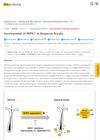
In this mouse model study, researchers observed that RIPK1 inhibitors delayed the onset of alopecia areata by modulating immune cells, specifically dendritic and CD8+ T cells, and increased hair length in organ culture mimicking the condition.
February 2025 in “Diagnostics” In this study, JAK inhibitors significantly improved outcomes for patients with both atopic dermatitis and alopecia areata, while dupilumab was linked to worsening alopecia in some cases.
September 2023 in “Journal of the American Academy of Dermatology” This study found that oral Janus kinase inhibitors were effective in treating alopecia areata, with a clinical response rate of 48.3%, though further research is needed to assess long-term effects.
 December 2025 in “Dermatology The American Medical Journal”
 In this conference session, experts reviewed clinical evidence and strategies for using JAK inhibitors in managing alopecia areata, emphasizing optimal treatment practices and individual patient considerations to enhance safety and effectiveness in real-world settings.
449 citations
,
December 2005 in “The Plant Cell” This study found that the BIK1 gene in Arabidopsis thaliana modulates defense responses to pathogens and is essential for normal root growth and development.
 8 citations
,
June 2012 in “Australasian Journal of Dermatology”
8 citations
,
June 2012 in “Australasian Journal of Dermatology” In this study, two patients with localized hair thinning showed histopathological signs typical of alopecia areata, responding to corticosteroid treatment similarly to classical cases.
 23 citations
,
June 2010 in “Journal of Investigative Dermatology”
23 citations
,
June 2010 in “Journal of Investigative Dermatology” This study found that the hair interior defect in AKR/J mice is linked to a mutation in the Soat1 gene, which disrupts SOAT1 protein expression and affects lipid metabolism critical for normal hair formation.
August 2017 in “Seoul National University Open Repository (Seoul National University)” The study investigated the role of Aminoacyl-tRNA synthetase interacting multifunctional protein 1 (AIMP1) in hair follicle stem cell proliferation and its potential as a treatment for alopecia. AIMP1, when dissociated from the multi-tRNA synthetase complex, was found to be secreted by dermal papilla cells in a sonic hedgehog (Shh) signal-dependent manner. This secretion increased the proliferation of CD34+ hair follicle stem cells by promoting the wnt signaling pathway through inhibition of sFRP1, a known wnt antagonist. The research demonstrated that the N-terminal fragment of AIMP1 could be developed into a therapeutic peptide for hair loss. When applied topically to depilated mice, this peptide significantly accelerated hair growth, especially when formulated with carbomer. The findings highlighted a novel mechanism of AIMP1 action and its potential application in alopecia treatment.