 September 2013 in “Hair transplant forum international”
 This article discusses the formation and membership of the British Association of Hair Restoration Surgeons and reports no clinical findings.
1 citations
,
September 2024 in “Journal of the American Academy of Dermatology” Farudodstat may effectively treat alopecia areata without harmful side effects.
June 2026 in “Frontiers in Medicine” This study evaluated the 308-nm excimer laser as an adjuvant treatment for frontal fibrosing alopecia and found it may stabilize hairline recession and improve erythema and perifollicular hyperkeratosis, with transient erythema as the only reported adverse effect.
This study found that the protein Formin 2 helps regulate cell-to-cell transport in thale cress by stabilizing actin filaments at plasmodesmata, with its absence leading to increased permeability and vulnerability to viral infections.
 8 citations
,
November 2018 in “Australasian Journal of Dermatology”
8 citations
,
November 2018 in “Australasian Journal of Dermatology” This study adds evidence suggesting a genetic component to frontal fibrosing alopecia, with daughters experiencing an earlier onset than their mothers, although the clinical pattern remains similar to non-familial cases.
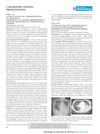 May 2025 in “The Journal of Rheumatology”
 This case report highlights a rare instance of diffuse alveolar hemorrhage in a patient with catastrophic antiphospholipid syndrome, emphasizing the importance of early recognition and multidisciplinary management.
14 citations
,
January 2014 in “Indian Journal of Dermatology Venereology and Leprology” Frontal fibrosing alopecia can affect men's beards and leads to permanent hair loss.
 63 citations
,
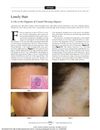
October 2011 in “Archives of Dermatology”
63 citations
,
October 2011 in “Archives of Dermatology” Isolated long hairs at the original hairline can help diagnose Frontal Fibrosing Alopecia.
 5 citations
,
September 2021 in “Journal of The American Academy of Dermatology”
5 citations
,
September 2021 in “Journal of The American Academy of Dermatology” This study found a high prevalence of beard and eyebrow alopecia in male patients with frontal fibrosing alopecia, and suggests a potential link between hormonal imbalances and the condition.
May 2018 in “Journal of Saidu Medical College Swat” The study observed that among Afghan women attending a gynecology outpatient department, the majority of those with hirsutism exhibited associated gynecological issues and were primarily categorized as having idiopathic causes or Polycystic Ovarian Disease.
 May 2024 in “International Seven Journal of Multidisciplinary”
 This review discusses fibrosing frontal alopecia, including its causes, mechanisms, and treatments, and emphasizes the need for further research to improve understanding and treatments; it reports no new clinical results.
 May 2014 in “Hair transplant forum international”
 This report announces that the International Society of Hair Restoration Surgery received Accreditation with Commendation.
Hair movement can indicate hair quality and health.
26 citations
,
October 2017 in “PubMed” According to this study, systemic retinoids, specifically oral isotretinoin and acitretin, were more effective than finasteride in stabilizing the frontal hairline in female patients with frontal fibrosing alopecia, achieving treatment goals in over 70% of cases.
 8 citations
,
February 2010 in “Journal für Kardiologie (Krause & Pachernegg GmbH)”
8 citations
,
February 2010 in “Journal für Kardiologie (Krause & Pachernegg GmbH)” This study developed a detailed classification system for functional androgenization in females that may enhance diagnosis and personalized treatment by identifying individual dysfunctions.
April 2019 in “Journal of Investigative Dermatology” This study found that frontal fibrosing alopecia involves distinct molecular changes, such as downregulation of steroid and cholesterol pathways and upregulation of fibrotic and immune response genes, which may help guide treatment strategies.
 339 citations
,
February 2014 in “Journal of The American Academy of Dermatology”
339 citations
,
February 2014 in “Journal of The American Academy of Dermatology” This study found that eyelash loss, facial papules, and body hair involvement were linked to severe frontal fibrosing alopecia, and antiandrogens were the most effective treatment.
February 2024 in “Medicina” In this study, researchers used atomic force microscopy to capture and analyze morphological changes in the surface of healthy hair, identifying features such as pitting and rod-shaped macro-fibrillar elements, which could inform future research on hair conditions and care.
 December 2024 in “Journal of Cancer Therapy and Research”
 In this study, researchers investigated the effects of Aqueous Artocarpus heterophyllus seed extract on testosterone enanthate-induced benign prostatic hyperplasia in adult Wistar rats, using three different dosages to assess its potential as an alternative therapy. Results are not reported in this abstract.
 33 citations
,
August 2013 in “British Journal of Dermatology”
33 citations
,
August 2013 in “British Journal of Dermatology” Lack of small, fine hair on the front hairline is a key sign of frontal fibrosing alopecia.
 January 2026 in “Research Square (Research Square)”
 This systematic review reports that HAIR-AN syndrome, characterized by severe insulin resistance, hyperandrogenism, and distinctive skin issues, significantly impacts obese women and can improve with treatments like metformin, emphasizing the importance of targeted management to reduce metabolic complications.
 April 2018 in “Journal of Investigative Dermatology”
 This study found that the absence of Hes1 in hair follicles delays secondary hair germ activation and shortens the anagen phase, impacting HFSC self-renewal and long-term hair regeneration.
 6 citations
,
January 2019 in “The American Journal of Dermatopathology”
6 citations
,
January 2019 in “The American Journal of Dermatopathology” This study discovered that adipose tissue infiltration at the isthmus level appears significantly more often in frontal fibrosing alopecia cases compared to controls, suggesting a potential role in the condition's pathology.
 166 citations
,
April 2012 in “Journal of The American Academy of Dermatology”
166 citations
,
April 2012 in “Journal of The American Academy of Dermatology” This study reviewed clinical data from 60 patients with frontal fibrosing alopecia and found increasing prevalence and generally poor response to treatment, with the cause remaining unclear.
 2 citations
,
May 2019 in “Journal of the American Academy of Dermatology”
2 citations
,
May 2019 in “Journal of the American Academy of Dermatology” The correspondence discusses the higher prevalence of acne vulgaris in hidradenitis suppurativa patients, but notes potential overestimation due to unrecognized facial HS.
 3 citations
,
March 2010 in “Dermatologica Sinica”
3 citations
,
March 2010 in “Dermatologica Sinica” This study reports the first case of atrichia with papular lesions in a Taiwanese family without a detectable mutation in the HR gene.
July 2015 in “International Society of Hair Restoration Surgery” This project by the International Society of Hair Restoration Surgery reviews best practices in hair restoration surgery and reports no new research findings.
 July 1997 in “Hair transplant forum international”
 This abstract contains only a photo caption and does not provide research findings.
21 citations
,
February 2024 in “JAMA Dermatology” This study identified multiple factors affecting the severity of alopecia areata, suggesting they could inform a tool for measuring disease impact and guide treatment selection.
January 2026 in “Dermatologic Therapy” This study found that treatment with human foreskin fibroblast conditioned medium improved both objective measures like hair density and subjective satisfaction in patients with androgenetic alopecia.