 February 2026 in “Frontiers in Medicine”
 This study found that fibrosing alopecia in a pattern distribution in Hispanic male patients often resembles androgenetic alopecia, with a tendency for earlier onset compared to European and North American populations.
 July 2017 in “Hair transplant forum international”
 This article reports on the 5th meeting of the AAHRS and Live Surgery Workshop, held in a scenic location but does not provide new research findings.
August 2023 in “Voprosy dermatologii i venerologii/Dermatologiâ ža̋ne veneralogiâ ma̋selelerì” This review discusses the characteristics and treatment options for abscessing undermining folliculitis and Hoffman's perifolliculitis, concluding that isotretinoin is currently the most effective treatment but reports no new clinical results.
 115 citations
,
March 2019 in “Nature Communications”
115 citations
,
March 2019 in “Nature Communications” This study identified significant genetic associations with frontal fibrosing alopecia at four genomic loci, suggesting it is a genetically predisposed immuno-inflammatory disorder influenced by the HLA-B*07: 02 allele.
January 2016 in “Indian dermatology online journal” This case study diagnosed a 60-year-old woman with frontal fibrosing alopecia after histopathological analysis showed characteristic scarring patterns in the hairline area.
 8 citations
,
February 2020 in “Fertility and Sterility”
8 citations
,
February 2020 in “Fertility and Sterility” This study discusses treatment approaches for refractory Asherman syndrome, highlighting the potential role of CD133+ bone marrow-derived stem cells in conjunction with hysteroscopy for endometrial regeneration and improved pregnancy outcomes.
1 citations
,
January 1979 in “International Journal of Dermatology” This article reviews the use of anti-androgens, particularly cyproterone acetate, for managing hirsutism, but does not provide new clinical results.
 January 2026 in “Medicine”
 This study suggests that Hejie Shengfa Decoction may help treat alopecia areata by influencing immune and inflammatory pathways, regulating apoptosis, and enhancing the follicular microenvironment.
2 citations
,
January 2016 in “Dermatology online journal” This case report describes a 46-year-old man diagnosed with frontal fibrosing alopecia, a condition primarily affecting postmenopausal women, highlighting its rare occurrence in men.
 25 citations
,
December 2017 in “Facial Plastic Surgery”
25 citations
,
December 2017 in “Facial Plastic Surgery” This study observed that combining high-potency steroids with pimecrolimus might effectively stabilize hairline recession in frontal fibrosing alopecia patients.
September 2009 in “Hair transplant forum international” This article reports that the ISHRS has formed a committee to register hair restoration outcomes in patients with cicatricial alopecia and other hair diseases, without presenting new research findings.
2 citations
,
March 2025 in “Journal of Translational Autoimmunity” This study reports that AhR pathway expression is significantly reduced in lymphocytes of alopecia areata patients, suggesting its potential as a diagnostic marker and therapeutic target.
April 2025 in “International Journal of Dermatology” This article proposes renaming frontal fibrosing alopecia to frontal fibrosing alopecia syndrome to better reflect its varied presentations and enhance understanding and treatment approaches.
![Influence of FHIT on Benzo[a]pyrene-Induced Tumors and Alopecia in Mice: Chemoprevention by Budesonide and N-Acetylcysteine](/images/assets/f8f56777-f891-4879-8c45-c87d6aa82563/small/35499.jpg) 24 citations
,
May 2006 in “Proceedings of the National Academy of Sciences of the United States of America”
24 citations
,
May 2006 in “Proceedings of the National Academy of Sciences of the United States of America” This study reported that heterozygosity for FHIT affects mice's susceptibility to spontaneous alopecia areata and to certain preneoplastic lesions induced by benzo[a]pyrene, but does not change how they respond to budesonide and N-acetyl-L-cysteine.
 18 citations
,
June 2017 in “Journal of The American Academy of Dermatology”
18 citations
,
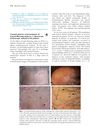
June 2017 in “Journal of The American Academy of Dermatology” In this study, trichoscopy consistently identified typical findings of frontal fibrosing alopecia, revealing three unusual clinical patterns in 18.4% of patients, which may aid in the differential diagnosis when clinical presentations are atypical.
 January 2026 in “Frontiers in Medicine”
 This article questions whether frontal fibrosing alopecia and fibrosing androgeneic patterned hair loss are overlapping conditions or stages of the same process, calling for further research to clarify their underlying factors.
2 citations
,
June 2021 in “Sultan Qaboos University medical journal” This case report presents three sisters with familial frontal fibrosing alopecia, making it the 25th documented familial case, with treatment results observed in one sister.
 1 citations
,
September 2021 in “CRC Press eBooks”
1 citations
,
September 2021 in “CRC Press eBooks” This chapter reviews trichoscopic-pathologic correlations in Frontal Fibrosing Alopecia and reports no new clinical results; the authors discuss genetics, clinical patterns, and unusual variants associated with this condition.
2 citations
,
March 2011 in “International Journal of Dermatology” This case report describes an 18-year-old male with IFAP syndrome, confirmed by total hair loss, severe photophobia, and characteristic skin changes, marking a rare presentation of the condition.
 January 2012 in “Yearbook of Dermatology and Dermatologic Surgery”
 The study concluded that a 'Swiss cheese' pattern in hair follicles is a useful sign for diagnosing alopecia areata.
 July 2018 in “Elsevier eBooks”
 This review discusses the evolving understanding of frontal fibrosing alopecia as a generalized skin condition with diverse manifestations, and reports no new clinical results.
 December 2000 in “Journal of the Royal Society of Medicine”
 Antiandrogen therapy may help treat hidradenitis suppurativa.
 9 citations
,
January 2020 in “Postepy Dermatologii I Alergologii”
9 citations
,
January 2020 in “Postepy Dermatologii I Alergologii” This review discusses the enigmatic nature of frontal fibrosing alopecia and reports no clinical results; the authors stress the need for further research.
2 citations
,
June 2024 in “Skin Appendage Disorders” This study identifies specific trichoscopic features such as empty follicles and perifollicular erythema in Caucasians with frontal fibrosing alopecia, which may assist in diagnosis and monitoring, but stresses the need for further research due to limited demographic data.
July 2024 in “Journal of Investigative Dermatology” Hair follicles are crucial for maintaining skin barrier function.
 1 citations
,
December 2017 in “Anais Brasileiros de Dermatologia”
1 citations
,
December 2017 in “Anais Brasileiros de Dermatologia” This article discusses the DOAJ, a comprehensive index of international open access journals, and emphasizes its role in providing free quality content online without presenting new research findings.
February 2021 in “International journal of regenerative medicine” In this study, emulsifying microfragmented adipose tissue increased the number of stromal vascular fraction cells available for regenerative treatments, suggesting the method's potential use in medical facilities.
 23 citations
,
April 2021 in “Journal of Clinical Medicine”
23 citations
,
April 2021 in “Journal of Clinical Medicine” This review compiles existing data on frontal fibrosing alopecia and highlights the promise of 5-alpha reductase inhibitors as a treatment option, while noting the need for clarity on its cause and progression.
21 citations
,
March 2018 in “JEADV. Journal of the European Academy of Dermatology and Venereology/Journal of the European Academy of Dermatology and Venereology” This review reported that 5-alpha-reductase inhibitors were effective in stabilizing disease progression or reducing the rate of progression in some cases of frontal fibrosing alopecia, though evidence on safety remains limited.
March 2005 in “Journal of the American Academy of Dermatology” This study found that key amino acids lost from hair due to weathering can be successfully reintroduced through cosmetic treatments, improving hair strength and aesthetics.