Intermittent fasting slows hair growth by damaging hair follicle cells.
September 2024 in “Clinical Case Reports” This case report highlights a rare presentation of APS-1 in a 28-year-old Pakistani male with cardiovascular and pulmonary symptoms, illustrating the importance of early recognition and multidisciplinary management for improved patient outcomes.
 May 2023 in “IntechOpen eBooks”
 This review outlines the role of testosterone in male sexual development and its therapeutic use for male hypogonadism, covering its biosynthesis, secretion, metabolism, and various biological actions, but does not report specific study results.
 May 2023 in “Frontiers in Endocrinology”
 This study found that tildacerfont treatment in males with congenital adrenal hyperplasia reduced androgen levels and improved markers of testicular function, suggesting potential benefits for male reproductive health.
 February 2023 in “Vaccines”
 This review discusses the potential impact of COVID-19 on the male reproductive system and highlights unanswered questions regarding its mechanisms and implications for men's health and fertility, reporting no new clinical results.
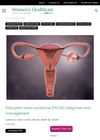 September 2022 in “Women's healthcare”
 This review discusses various aspects of polycystic ovary syndrome, including its prevalence, diagnosis, and treatment options, and reports no new empirical results.
 February 2022 in “Endocrine connections”
 This review summarizes existing research on how various endocrinopathies, including reproductive disorders and thyroid conditions, can affect vocal parameters, and reports no new clinical findings.
January 2003 in “Seminars in Reproductive Medicine” This review discusses updated recommendations and recent studies on PCOS management but reports no new clinical results, questioning whether the 2018 global guideline will change practice.
175 citations
,
January 2020 in “European Journal of Endocrinology” These guidelines recommend testing thyroid function in patients with obesity due to common hypothyroidism, and highlight that weight loss is crucial for addressing hormonal imbalances, with only modest weight loss benefits from treating endocrine disorders.
101 citations
,
January 2014 in “Journal of Visualized Experiments” This study validated a method for measuring cortisol levels in hair, which may serve as a biomarker for chronic stress in both humans and various animals.
 9 citations
,
March 2022 in “Frontiers in Endocrinology”
9 citations
,
March 2022 in “Frontiers in Endocrinology” This study found that PCOS is common among Iranian women, with phenotypes involving hyperandrogenism exhibiting worse lipid profiles and higher rates of metabolic syndrome compared to healthy women.
2 citations
,
January 2020 in “Clinical Dermatology Review” In this study, idiopathic hirsutism was identified as the most common cause of hirsutism among the patients, followed by polycystic ovarian syndrome.
1 citations
,
April 2025 in “Pigment Cell & Melanoma Research” This article reviews the underlying mechanisms of segmental vitiligo with white hair, focusing on skin and hair follicle melanocytes, and proposes potential targets for treatment, highlighting neuroendocrine factors as possible contributors to the condition.
 January 2025 in “The Journal of Clinical Endocrinology & Metabolism”
 This article discusses the complex aetiology, diagnostic criteria, and challenges in diagnosing polycystic ovary syndrome, but does not report new clinical findings.
January 2023 in “WikiJournal of Medicine” This review discusses alternative androgen pathways, including the "backdoor" pathway and pathways to 11-oxygenated steroids, and reports no new clinical results; the authors aim to clarify these concepts for better patient treatment.
 January 2022 in “IntechOpen eBooks”
 This review examines lesser-known factors contributing to polycystic ovarian syndrome and reports no new clinical results, emphasizing the need for further research into individualized treatment and prevention strategies.
 32 citations
,
June 2019 in “Frontiers in Endocrinology”
32 citations
,
June 2019 in “Frontiers in Endocrinology” This review discusses the overlapping clinical features and diagnostic challenges of non-classic adrenal hyperplasia and polycystic ovary syndrome without presenting original research findings.
11 citations
,
April 2023 in “Skin Health and Disease” This review discusses the interplay between dermatology and psychology in psychodermatology, highlighting the impact of neuroendocrine stress pathways on skin diseases and the importance of considering skin of color.
 10 citations
,
March 2016 in “The Journal of Obstetrics and Gynecology of India”
10 citations
,
March 2016 in “The Journal of Obstetrics and Gynecology of India” This review proposes renaming polycystic ovarian syndrome to "Hyperandrogenic Persistent Ovulatory Dysfunction Syndrome" to better reflect its diagnostic criteria and promote consistency in research, but reports no new clinical findings.
7 citations
,
May 2014 in “Iranian Red Crescent medical journal” This case study describes a 17-year-old female with severe hirsutism diagnosed with PCOS, NC-CAH, and HAIR-AN syndrome who was successfully treated based on her specific underlying conditions.
 7 citations
,
March 2017 in “Medical Hypotheses”
7 citations
,
March 2017 in “Medical Hypotheses” This study suggests that dysfunctions and altered expression of aquaporins may play a role in PCOS-related disorders, potentially impacting folliculogenesis and integrating with the insulin-dependent hypothesis of PCOS pathogenesis.
 1 citations
,
February 2023 in “Drug Design Development and Therapy”
1 citations
,
February 2023 in “Drug Design Development and Therapy” This review discusses the dermatological effects and potential mechanisms of plant adaptogens, emphasizing their role in skin health and aging without presenting new experimental results.
 April 2026 in “Journal of Inflammation Research”
 This narrative review highlights the shared immunopathogenesis of alopecia areata and atopic dermatitis and discusses approved and investigational therapies that target common pathways, suggesting a future for personalized treatment strategies.

This article explores whether Melampus, a mythological healer, may have intentionally caused the madness of Proetus' daughters through the use of herbs, despite being credited with their cure.
This review discusses polycystic ovary syndrome, focusing on its primary features of ovulatory dysfunction and hyperandrogenism, and reports no new findings.
 25 citations
,
January 2022 in “Endocrine journal”
25 citations
,
January 2022 in “Endocrine journal” This study suggests that hormonal changes may contribute to the persistent symptoms of long COVID, with specific patterns observed in serum hormone levels related to fatigue and sensory dysfunction.
 9 citations
,
February 2020 in “International Journal of Endocrinology”
9 citations
,
February 2020 in “International Journal of Endocrinology” This study found that men with early-onset androgenetic alopecia and certain risk factors may have worse gonadal steroidogenesis and an increased likelihood of developing gonadal dysfunction, suggesting a male equivalent of polycystic ovarian syndrome.
 April 2024 in “Canadian Women s Health Today”
 This review suggests that "polycystic ovarian syndrome" is a misleading name, as the disorder involves complex metabolic and reproductive issues beyond ovarian dysfunction and may stem from factors affecting the fetus in utero.
 October 2004 in “European Neuropsychopharmacology”
 This article reviews studies on younger men using finasteride for hair loss, finding persistent sexual and nonsexual side effects like erectile dysfunction and depression, and reports lower neurosteroid levels in affected individuals.
 86 citations
,
July 1993 in “Drugs”
86 citations
,
July 1993 in “Drugs” Finasteride treats enlarged prostate, shrinks it, improves urination, but may cause sexual dysfunction and isn't for women or children.