August 2026 in “JURNAL ILMU KEFARMASIAN INDONESIA” This study found that the addition of SPACE peptide significantly enhanced the penetration of amniotic membrane stem cell metabolites in mice, with only very mild irritation observed.
January 2026 in “Journal of Advances in Medicine and Medical Research” This randomized controlled trial found that adding Platelet-Rich Plasma to Direct Hair Implantation significantly improved hair growth rate and follicle density in patients with androgenetic alopecia.
 May 2025 in “Journal of Cosmetic Dermatology”
 This study observed that the addition of Cuticapil Stem Hair Serum to standard care significantly improved hair growth and reduced hair shedding in patients with androgenetic alopecia, demonstrating superior efficacy compared to standard care alone without any reported adverse events.
December 2023 in “Indian Journal of Endocrinology and Metabolism” In this case report from People's College of Medical Sciences, a 20-year-old man initially misdiagnosed with Addison's disease was ultimately found to have strongyloidiasis, with his symptoms and weight loss improving after antihelminthic treatment.
January 2022 in “Springer eBooks” This chapter reviews the clinical evidence of adding platelet-rich plasma to lipofilling for tissue regeneration, with suggestions of benefits in skin rejuvenation and wound healing, but lacks well-designed trials.
This study suggests that dermoscopy provides additional insights for diagnosing pattern alopecia in short coated dogs, beyond what is visible through standard dermatological examination.
 February 2017 in “Journal of Aesthetic Nursing”
 This systematic review explored the feasibility of adding skin needling to an aesthetic clinic's offerings, examining financial implications, time investment, and its integration with existing treatments. Various challenges and learning opportunities were noted, underscoring the complexity of introducing a new service.
 April 2016 in “JAMA Dermatology”
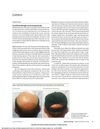
 This commentary highlights the importance of additional sun protection for individuals with alopecia, noting that common headwear like baseball caps may provide insufficient photoprotection for the scalp.
 225 citations
,
April 2018 in “Journal of Investigative Dermatology”
225 citations
,
April 2018 in “Journal of Investigative Dermatology” Two main types of fibroblasts with unique functions and additional subtypes were identified in human skin.
 54 citations
,
October 2002 in “Journal of controlled release”
54 citations
,
October 2002 in “Journal of controlled release” This study found that increasing a drug's lipophilicity and adding ethanol to the donor phase can enhance its delivery to the hair follicle, although the precise transport mechanism remains unclear.
 30 citations
,
March 2017 in “PLoS ONE”
30 citations
,
March 2017 in “PLoS ONE” In this study, adding δ34S isotope analysis to models modestly improved precision in estimating grizzly bears' salmon and terrestrial diets, but contributed little new information.
23 citations
,
November 1964 in “Journal of Dairy Science” This study found that high molybdenum levels in the diet, especially with added sulfate sulfur, led to symptoms like alopecia and hair color loss in heifers; however, these were corrected by adding copper.
18 citations
,
March 2023 in “Molecular Therapy — Nucleic Acids” In this study, adding CCL2 protein to organoid cultures helped adult skin cells regain the ability to self-organize and regenerate hair follicles, suggesting potential therapeutic applications.
![Comparative Oncology: Evaluation of 2-Deoxy-2-[18F]Fluoro-D-Glucose (FDG) Positron Emission Tomography/Computed Tomography (PET/CT) for the Staging of Dogs with Malignant Tumors](/images/assets/d55cf8d9-d8ee-4735-9b38-42a266b4059d/small/24322.jpg) 17 citations
,
June 2015 in “PLOS ONE”
17 citations
,
June 2015 in “PLOS ONE” This study reported that FDG PET/CT imaging provided additional information that significantly impacted the treatment and prognosis in seven out of ten canine cancer patients, suggesting its potential in veterinary oncology.
 11 citations
,
January 2006 in “Drug development and industrial pharmacy”
11 citations
,
January 2006 in “Drug development and industrial pharmacy” In this study, adding TPGS to a minoxidil formulation improved local retention and reduced systemic absorption in certain solvent mixes, particularly with a balance of alcohol and PEG 400.
8 citations
,
October 2022 in “Dermatologic Therapy” In this study, the addition of topical latanoprost to betamethasone treatment improved the therapeutic efficacy for patients with patchy alopecia areata, showing more significant hair regrowth compared to minoxidil alone and enhanced outcomes without adverse effects.
5 citations
,
April 2025 in “Journal of Functional Biomaterials” In this study, the addition of A-PRF+ to surgical protocols significantly improved bone healing and implant stability when combined with biomaterials, suggesting it as a viable option for patients concerned about using human- and animal-derived biomaterials.
5 citations
,
August 2013 in “Integrative Zoology” In this study, adding disinfected feathers to the diet of captive Arctic foxes increased gut bacterial species diversity without changing overall abundance, potentially influencing immune response and physiological performance.
 1 citations
,
June 2021 in “Journal of Cosmetic Dermatology”
1 citations
,
June 2021 in “Journal of Cosmetic Dermatology” In this study, the addition of a SULT1A1 enzyme booster to daily 5% minoxidil treatment significantly increased hair regrowth in men with androgenic alopecia compared to minoxidil alone.
1 citations
,
January 2021 in “Journal of clinical and diagnostic research” In this study, adding topical calcipotriol 0.005% to topical clobetasol 0.05% significantly improved treatment efficacy for Alopecia Areata compared to using clobetasol alone, as evidenced by a greater reduction in SALT scores over 24 weeks.
 1 citations
,
June 2019 in “Journal of Biological and Scientific Opinion”
1 citations
,
June 2019 in “Journal of Biological and Scientific Opinion” This article highlights the health risks associated with adding paraphenylenediamine to mehndi, such as contact dermatitis and asthma, and emphasizes the need for regulatory checks as its use grows among cancer patients, women with alopecia, and pregnant individuals.
1 citations
,
January 2010 in “LA Referencia (Red Federada de Repositorios Institucionales de Publicaciones Científicas)” In this study, adding conditioning agents PA1, PA2, and PA3 to light blonde oxidative hair dyes improved combability and protein retention of light brown hair without affecting tensile strength, though PA1 and PA2 offered enhanced thermal protection.
May 2026 in “Revista Iluminart” In this study, researchers found that adding coffee grounds to neutral shampoo, a popular DIY trend, resulted in peak caffeine extraction after seven days, with concentrations surpassing those in commercial products, suggesting educational potential for chemistry classes.
 January 2025 in “Journal of Cutaneous Medicine and Surgery”
 In this clinical trial, adding topical calcipotriol to intralesional triamcinolone acetonide significantly increased hair regrowth efficacy in scalp alopecia areata patches compared to steroids alone, but not in beard patches, with a lower incidence of atrophy observed.
 January 2025 in “Journal of Dermatological Treatment”
 This systematic review and meta-analysis found that adding low-level laser therapy to minoxidil treatment for androgenic alopecia does not significantly enhance hair count or diameter compared to using minoxidil alone.

In this study, adding plum blossom needle tapping to finasteride treatment significantly improved the clinical efficacy and symptom scores for male patients with androgenic alopecia compared to finasteride alone.
 August 2024 in “PLoS ONE”
 This study reviewed randomized controlled trials to assess whether adding platelet-rich plasma injections to a Minoxidil regimen offers any benefit in treating androgenetic alopecia, but results are not reported in the abstract.
 December 2023 in “International journal of research in dermatology”
 In this study, adding intralesional platelet rich plasma to topical mometasone proved more effective and showed earlier improvement in treating alopecia areata compared to using topical mometasone alone.
 May 2023 in “Metabolites”
 In this study, adding α-lactalbumin to myo-inositol treatment improved ovulation rates, menstrual cycle duration, and hyperandrogenism in women with PCOS more effectively than myo-inositol alone, suggesting potential benefits for those resistant to inositol treatment.
 October 2020 in “International Journal of Research in Dermatology”
 In this study, adding platelet-rich plasma to minoxidil and finasteride treatment for patterned hair loss improved hair outcomes with minimal side effects compared to using minoxidil and finasteride alone.