 March 2026 in “Preprints.org”
 This study reviewed evidence for six minimally invasive treatments for androgenetic alopecia, finding consistent support for platelet-rich plasma and topical finasteride, while other options like microneedling and intradermal dutasteride showed promise but need further and standardized research.
 January 2026 in “Journal of Sexual and Mental Health”
 This study reports that two oral hormonal agents, dimethandrolone undecanoate and 11β-methylnortestosterone dodecylcarbonate, may effectively suppress hormones to contraceptive levels in men with mild side effects, though longer-term trials are required to confirm their safety and efficacy.
This study reported a significant upregulation of VEGF, which may help explain the beneficial effects of Ro on wound healing and hair loss, although further in-vitro and in-vivo studies are needed to better understand its molecular mechanisms and potential applications for skin disorders.
January 2026 in “SSRN Electronic Journal” 
This study tested a novel cryo-carboxy dispensing device for treating androgenetic alopecia in six volunteers and found an unexpectedly rapid and positive response, with significant hair regrowth observed by day 90, prompting early conclusion of the trial.

In this case series, researchers reported an unexpectedly rapid and positive response to a topical, hydrogel-based botanical treatment for androgenetic alopecia in both male and female volunteers, achieving significant improvement in hair loss within 90 days instead of the planned 270 days.
July 2024 in “Journal of Investigative Dermatology”  February 2024 in “Mikailalsys Journal of Mathematics and Statistics”
 This study suggests that the non-seasonal Holt-Winters method effectively forecasts stock price returns for companies affected by the BDS action, with five out of six stocks showing decreases.
 December 2022 in “Journal of applied biological chemistry”
 In this study, Betula platyphylla extract, particularly fraction H3-2, promoted human derma papilla cell proliferation and increased expression of certain growth factors, suggesting potential benefits for hair loss prevention.
 July 2016 in “Cancer Research”
 This study developed a topical botanical lotion for managing chemotherapy-induced hair loss in cancer patients, reporting that it improved hair recovery times by 5-16 weeks, reduced inflammation, and enhanced scalp collagen levels with no observed side effects.
 348 citations
,
July 2017 in “Skin appendage disorders”
348 citations
,
July 2017 in “Skin appendage disorders” This review discusses the use of platelet-rich plasma in dermatology for various applications such as tissue regeneration and wound healing, but it reports no new clinical results and calls for clearer guidance on suitable treatments.
179 citations
,
May 1982 in “The Journal of clinical investigation/The journal of clinical investigation” This study found that plasma 3 alpha-diol glucuronide was markedly elevated in women with idiopathic hirsutism, suggesting it may be a marker of peripheral androgen action.
24 citations
,
May 1985 in “The Journal of Clinical Endocrinology & Metabolism” In this case study, the authors identified a circulating low molecular weight inhibitor that may contribute to insulin resistance in a woman with acanthosis nigricans and polycystic ovary syndrome.
17 citations
,
October 2012 in “European Journal of Pharmacology” This study found that inhaling toluene reduces core temperature in mice, with GABA receptors and neurosteroids involved at 4000 ppm, but different mechanisms contributing at 6000 ppm.
 3 citations
,
August 2019 in “Journal of The American Academy of Dermatology”
3 citations
,
August 2019 in “Journal of The American Academy of Dermatology” Clascoterone safely promotes hair growth similar to minoxidil.
November 2010 in “Bradford Scholars (University of Bradford)” In this study, the authors reported that NNC55-9216, a selective SUR1 KATP channel opener, stimulated hair follicle growth in culture and enhanced the effects of minoxidil, suggesting a new potential treatment for hair loss.
November 2007 in “Hospital pharmacy” This article discusses the importance of increasing awareness about specific adverse drug reactions, prevention methods, and the promotion of reporting ADRs to the FDA's MEDWATCH program; it reports no new results.
141 citations
,
June 2002 in “Philosophical Transactions of the Royal Society B Biological Sciences” This review discusses recent physiological and genetic advances in understanding tip growth in Arabidopsis thaliana root hairs and reports no new experimental results.
 118 citations
,
August 2010 in “Developmental Cell”
118 citations
,
August 2010 in “Developmental Cell” This study found that the protein MIM is crucial for maintaining cilia and Sonic hedgehog signaling in mesenchymal cells by counteracting Src-mediated phosphorylation of Cortactin, impacting hair follicle formation.
118 citations
,
December 2003 in “Mechanisms of Ageing and Development” Thymosin β4 helps heal wounds, grow hair, and improve blood vessel formation.
 54 citations
,
July 2017 in “Scientific Reports”
54 citations
,
July 2017 in “Scientific Reports” This study found that the JMJD3/NF-κB-Notch1 pathway plays a crucial role in regulating keratinocyte migration and skin wound healing, with Notch1 affecting key genes involved in cell migration.
 45 citations
,
April 2013 in “Cell Transplantation”
45 citations
,
April 2013 in “Cell Transplantation” In this study, the researchers reported that activin B combined with bone marrow-derived mesenchymal stem cells enhanced wound healing and hair follicle regeneration in rats by promoting cell migration through the ERK and JNK pathways.
28 citations
,
December 2016 in “Journal of Biomedical Materials Research Part A” This study found that mesenchymal progenitor cells from human hair roots seeded onto polymer scaffolds stimulated the production of mineralized proteins, enhancing bone-like structures, with optimal results at a pore size of 35 µm.
22 citations
,
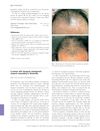
March 2019 in “The Journal of Cell Biology” This study identified that the Wave complex proteins ABI1 and Wave2 play a crucial role in regulating epidermal shape and growth during skin development, notably influencing SOX9 expression and Wnt signaling pathways.
 13 citations
,
February 2007 in “British Journal of Dermatology”
13 citations
,
February 2007 in “British Journal of Dermatology” EF and PXE not closely related.
 13 citations
,
December 2012 in “Cells”
13 citations
,
December 2012 in “Cells” This study describes how manipulating the actin cytoskeleton, particularly through the gelsolin family proteins, may enhance regenerative healing in mammals, suggesting potential therapeutic pathways for improved wound repair.
12 citations
,
May 2021 in “The journal of investigative dermatology/Journal of investigative dermatology” This study found that disrupting Lm332 expression in mice changes keratinocyte genetic expression, alters cell shape, and disrupts epidermal homeostasis, despite some compensatory anchorage by hair follicle basal cells.
11 citations
,
August 2006 in “Cell Biology International” This study found that endothelin-1 increases adhesion and chemotaxis of amelanotic melanocytes on fibronectin, laminin, and collagen IV, potentially through changes in the actin cytoskeleton.
 8 citations
,
January 2015 in “Genetics and molecular research”
8 citations
,
January 2015 in “Genetics and molecular research” This study identified four proteins that differ between Type III and non-Type III hair in Yangtze River Delta white goats, contributing to understanding the development of high-quality brush hair.
 8 citations
,
December 2009 in “Journal of The European Academy of Dermatology and Venereology”
8 citations
,
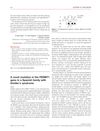
December 2009 in “Journal of The European Academy of Dermatology and Venereology” This article discusses a novel mutation in the FERMT1 gene identified in a Spanish family with Kindler’s syndrome but reports no new clinical results.