 March 2025 in “MINAR International Journal of Applied Sciences and Technology”
 This study reviewed evidence on the role of specific genes (FKBP12, SAMAHD1, TRF2, CD155, and GATA3) in predicting how breast cancer patients might respond to adjuvant chemotherapy, aiming to monitor these markers in blood or tissue samples.
 September 2024 in “Cureus”
 This case report outlines a 10-year-old boy who experienced a six-year history of twenty-nail dystrophy, highlighting the importance of physical examination for early diagnosis and management of nail disorders, with his primary symptoms involving nail disfigurement and alopecia areata, but no other health issues.
 August 2024 in “Turkish Journal of Pediatric Disease”
 This case report details a 5-month-old infant with acrodermatitis enteropathica, linked to zinc deficiency from total parenteral nutrition, who showed improvement using zinc spray and cream, contrasting with typical literature outcomes.
 January 2024 in “Dermatology Review”
 This study found that combining platelet-rich plasma with 4% hydroquinone was more effective in reducing melasma symptoms than using hydroquinone alone.
 June 2023 in “NILES Journal forGeriatric and Gerontology/NILES Journal for Geriatric and Gerontology”
 In this study, oral tranexamic acid significantly improved melasma in 40 female patients over three months, with no adverse effects like post-inflammatory hyperpigmentation or bleeding, demonstrating its potential as a safe and effective treatment option.
 January 2023 in “Journal of Cutaneous and Aesthetic Surgery”
 In this case report, follicular unit extraction successfully treated stable segmental vitiligo in the inguinoscrotal region.
 September 2022 in “JAMC. Journal of Ayub Medical College, Abbotabad, Pakistan/Journal of Ayub Medical College”
 This case study reports that zinc supplementation significantly improved the symptoms of Acrodermatitis Enteropathica in a 12-year-old boy, emphasizing the importance of early diagnosis and treatment compliance.
 June 2022 in “Asian Pacific journal of health sciences”
 This study reports a case of Indralupta (Alopecia Areata) successfully treated using Ayurvedic methods including Prachhan karma, Lepa, and Shirodhara, offering an alternative to conventional treatments like minoxidil and steroids, which may have adverse effects.
 April 2022 in “Cermin Dunia Kedokteran”
 This paper reports on five cases of alopecia areata in children and emphasizes the importance of understanding its characteristics for accurate diagnosis in pediatric patients.
 August 2021 in “Benha Journal of Applied Sciences”
 This article reviews various hypotheses on the pathogenesis of vitiligo and aims to evaluate potential provoking factors, but presents no new clinical findings.
 May 2021 in “Journal of the American College of Cardiology”
 This case report suggests that Kawasaki disease should be considered in the differential diagnosis for children presenting with alopecia following a febrile illness with mucositis and conjunctivitis.
 January 2021 in “Nasza Dermatologia Online”
 This case report describes a 50-year-old Kashmiri woman with plica polonica, detailing trichoscopic findings of entangled hair with crisscrossing shafts and concretions.
 May 2020 in “International journal of biology, pharmacy and allied sciences”
 This review discusses the correlation between vitiligo and various autoimmune, systemic, and dermatological diseases, highlighting the need to increase awareness of these comorbidities.
 April 2020 in “Journal of evolution of medical and dental sciences”
 This report reviews the clinical presentation and genetic aspects of a case of acrodermatitis enteropathica in a one-year-old child but provides no new clinical findings.
 January 2019 in “Open access journal of mycology & mycological sciences”
 This article discusses tinea capitis, highlighting its causes, symptoms, diagnostic methods, and the importance of selecting treatment based on the causal agent for effective outcomes; it reports no new clinical results.
 January 2019 in “Global Dermatology”
 This review discusses the genetic disorder, monilethrix, characterized by fragile, brittle hair and its inheritance patterns, and reports no new clinical results.

This book reviews evidence-based medicine practices in obstetrics and gynecology but reports no new clinical findings.
 October 2018 in “Springer eBooks”
 The document concludes that various topical medications are effective for skin conditions but often cause skin irritation as a side effect.

The researchers developed a new follicular unit extraction system with adjustable needle lengths and precise rotation speed, which they report as being superior to existing systems for non-incisional hair transplants.
 July 2018 in “Elsevier eBooks”
 This chapter details the causes and diagnostic process of pediatric alopecia, including trichoscopic findings, but reports no new clinical results.
 June 2018 in “Journal of Dermatological Science”
 UV radiation may cause DNA changes in skin, certain UVB therapy helps psoriasis, a new gene mutation is linked to mild piebaldism, different immune cells affect psoriasis, a drug promotes hair growth, and some cancer drugs could treat skin barrier issues.
May 2018 in “Journal of cosmetology & trichology” This study describes a case of successful treatment for alopecia universalis by combining PRP therapy with eye drops, resulting in significant hair regrowth and demonstrating no systemic side effects.
 January 2018 in “Springer eBooks”
 The document says that early treatment of Acne Vulgaris is important to prevent scarring and that adult onset acne is common in women, often due to hormonal imbalances.
 January 2018 in “Elsevier eBooks”
 Different nail disorders are treated by targeting their specific causes and using appropriate medications or protective measures.
 January 2018 in “Springer eBooks”
 Terbinafine is the most effective medicine for fungal nail infections, especially for diabetics and those with weak immune systems.
 December 2016 in “The Journal of Sexual Medicine”
 This study reviewed the preferences and reasons for testosterone injection therapy among 53 Canadian men with hypogonadism, finding that most opted for injections due to efficacy, ease, and cost considerations.
 November 2012 in “Actas Dermo-Sifiliográficas”
 An 86-year-old man had a rare tongue melanoma but refused treatment, showing the need for early cancer detection and treatment.
 September 2012 in “African Journal of Urology”
 This review describes the clinical features of testosterone deficiency syndrome in aging men but reports no new experimental findings, highlighting the need for clinical recognition and treatment of TDS.
 April 2012 in “Informa Healthcare eBooks”
 Temporal triangular alopecia is a lifelong condition with hairless patches on the side of the head that may be present from birth.
 June 2011 in “International Journal of Dermatology”
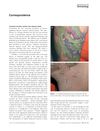
 A man's red tattoo caused a skin reaction and hair loss in his beard, which improved after treatment.