1 citations
,
May 2019 in “DOAJ (DOAJ: Directory of Open Access Journals)” This study presented two brothers with hereditary acrodermatitis enteropathica who had normal zinc serum levels and experienced skin and hair lesions, but no dental disorders.
 4 citations
,
February 2019 in “PubMed”
4 citations
,
February 2019 in “PubMed” This study found that cortexolone 17α-propionate (clascoterone) effectively inhibited androgen receptor-regulated transcription and IL-6 synthesis in scalp cells, potentially making it a promising candidate for topical treatment of androgenetic alopecia.
October 2025 in “OPAL (Open@LaTrobe) (La Trobe University)” In this case study, a 10-month-old minority infant from Xinjiang, China, with acrodermatitis enteropathy caused by an SLC39A4 gene mutation showed clinical improvement and increased zinc levels following zinc supplementation, highlighting the importance of early genetic testing and customized treatment in managing the disorder.
November 2016 in “The Molecular Biology Society of Japan” 1 citations
,
January 2018 in “Indian dermatology online journal” This case report describes a girl diagnosed with ADULT syndrome, highlighting its rarity, varied presentation, and the importance of early diagnosis to prevent unnecessary stress and medical expenses.
 December 2022 in “International Journal of Women's Dermatology”
 This study reported that using the Sinclair Shedding Scale and intralesional corticosteroid injections may help diagnose and manage alopecia areata incognita in women experiencing excessive hair shedding without clear diagnostic indicators.
 June 2026 in “Zenodo (CERN European Organization for Nuclear Research)”
 This review compiles current insights into alopecia areata's epidemiology, immune mechanisms, diagnosis, treatment options, including novel JAK inhibitors, and its severe psychosocial impact, while also highlighting emerging research areas.
 6 citations
,
May 2023 in “Drugs”
6 citations
,
May 2023 in “Drugs” This study reports that baricitinib was more effective than placebo in promoting hair growth in adults with severe alopecia areata after 36 weeks of treatment in clinical trials.
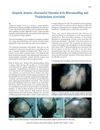 53 citations
,
January 2014 in “Journal of Cutaneous and Aesthetic Surgery”
53 citations
,
January 2014 in “Journal of Cutaneous and Aesthetic Surgery” Microneedling combined with triamcinolone can safely stimulate faster hair regrowth in people with Alopecia Areata.
January 2014 in “生命科学(ISSN1934-7391)” A certain gene variation can affect protein production and is linked to male pattern baldness.
 November 2022 in “The journal of investigative dermatology/Journal of investigative dermatology”
 In this case study, a 26-year-old female with PLEC mutations and features of muscular dystrophy and myasthenia gravis showed significant improvement in symptoms following steroid treatment.
 6 citations
,
February 2023 in “Journal of the American Academy of Dermatology”
6 citations
,
February 2023 in “Journal of the American Academy of Dermatology” This article addresses the pathogenesis of alopecia areata and discusses the emerging role of oral and topical JAK inhibitors in its treatment, but reports no new clinical findings.
 February 2023 in “International Journal of Medical Arts”
 In this study, 75% of alopecia areata patients showed improvement after treatment with 35% trichloroacetic acid, leading the researchers to conclude it is a safe and effective option for treating this condition.
22 citations
,
February 2000 in “Journal of the American Academy of Dermatology” Eosinophils are not a reliable marker for diagnosing alopecia areata.
January 2006 in “Chinese Journal of Dermatology” This study observed that amelanotic melanocytes from human hair follicles appeared morphologically immature, suggesting they might not transfer melanosomes into keratinocytes.
February 2023 in “Reactions Weekly”  42 citations
,
November 2018 in “Archives of dermatological research”
42 citations
,
November 2018 in “Archives of dermatological research” Apremilast was not effective in treating moderate-to-severe alopecia areata.
 October 2023 in “Indian journal of ophthalmology. Case reports”
 This case report described acute vision loss in a patient after forehead injections of triamcinolone acetonide for alopecia areata, attributing retinal artery occlusion to embolization by steroid particles.
2 citations
,
May 2023 in “The Journal of Immunology” This animal study observed that treatment with the S1PR modulator NXC736 significantly reduced lesion area and CD8+ T cell infiltration in mice with alopecia areata, suggesting its potential as a promising therapy for the condition.
19 citations
,
January 2015 in “Skin appendage disorders” This study identified a new variety of central centrifugal cicatricial alopecia that includes patchy hair loss on the lateral and posterior scalp in African-American women, which could be misdiagnosed as traction alopecia without dermatoscopy and pathology.
 2 citations
,
May 2023 in “Experimental dermatology”
2 citations
,
May 2023 in “Experimental dermatology” In this study, researchers used advanced four-dimensional optical imaging techniques to observe changes in skin afflicted with acne, finding increased epidermal thickness, keratinized hair follicles, inflammation, and aggregated blood flow, helping to distinguish between inflammation and reparative phases of acne progression.
 7 citations
,
January 2017 in “International Journal of Dermatology”
7 citations
,
January 2017 in “International Journal of Dermatology” This study found that superficial cryotherapy significantly increased hair density and thickness in treated eyebrows compared to untreated controls after 5 months in patients with alopecia areata.
 November 2025 in “SKIN The Journal of Cutaneous Medicine”
 In this study, UPA at doses of 15 mg and 30 mg showed higher efficacy than placebo for treating severe alopecia areata in adults and adolescents over 24 weeks, with a safety profile similar to approved uses.
This case study reported that acupuncture therapy successfully resolved long-standing alopecia areata in a 61-year-old male after nine months of treatment, suggesting potential efficacy without pharmacological intervention.
 8 citations
,
January 2015 in “International journal of trichology”
8 citations
,
January 2015 in “International journal of trichology” In this case report, the authors describe complete recovery from acute diffuse and total alopecia linked to Borrelia infection after treatment with intravenous ceftriaxone and topical clobetasol foam.
 July 2023 in “British journal of dermatology/British journal of dermatology, Supplement”
 In this study, researchers analyzed skin tumors from patients with CYLD cutaneous syndrome and found that loss of CYLD function is linked to changes in cellular signaling pathways, particularly NF-κB signaling, and leads to increased secretion of specific extracellular matrix proteins.
 August 2023 in “Dermatology Reports”
 This case report describes an 18-year-old male whose acne, unresponsive to traditional treatments and only partially improved with oral isotretinoin, was linked to androgen metabolism anomalies indicative of a non-classical form of congenital adrenal hyperplasia.
 11 citations
,
November 2013 in “Skin Pharmacology and Physiology”
11 citations
,
November 2013 in “Skin Pharmacology and Physiology” This case collection reports that 15% azelaic acid gel can be effectively used as a monotherapy to treat mild-to-moderate adult female acne.
 27 citations
,
May 2007 in “Archives of dermatological research”
27 citations
,
May 2007 in “Archives of dermatological research” In this study, alopecia areata patients treated with diphencyprone showed a significant increase in CD8 lymphocytes around hair bulbs, which may be associated with hair regrowth.