38 citations
,
January 2020 in “Cell Transplantation” This study found that ACE2 and TMPRSS2 genes were more highly expressed in tumors of elderly male cancer patients compared to healthy individuals, with notable differences across age and gender.
10 citations
,
September 2021 in “The FASEB Journal” This study found that ACKR2 plays a crucial role in reducing inflammatory skin fibrosis and promoting inflammation resolution through IFN‐β production, limiting tissue scarring.
 6 citations
,
May 2021 in “Clinical Chemistry and Laboratory Medicine”
6 citations
,
May 2021 in “Clinical Chemistry and Laboratory Medicine” This review discusses the impact of ACE polymorphism on COVID-19 severity, suggesting it affects adults more than children, but presents mixed findings concerning infection prevalence and mortality.
 2 citations
,
July 2024 in “Ibn AL- Haitham Journal For Pure and Applied Science”
2 citations
,
July 2024 in “Ibn AL- Haitham Journal For Pure and Applied Science” This study found that PCOS women with COVID-19 had lower ACE2 levels and higher insulin resistance, suggesting increased cardiovascular risk.
1 citations
,
January 2025 in “Journal of Cosmetic Dermatology” This study found that increased ACE2 expression, prompted by mechanical stretch, promotes skin regeneration and reduces dermal thinning during tissue expansion by enhancing collagen synthesis, suggesting ACE2's potential to improve clinical outcomes in reconstructive surgery settings.
August 2017 in “Academic Commons (Stony Brook University)” This study found that the enzyme Acer1 plays a crucial role in skin health and tumor prevention by regulating ceramide metabolism in mice.
 October 2022 in “Amplla Editora eBooks”
 Tocilizumab might be an effective treatment for COVID-19.
52 citations
,
August 2021 in “Microorganisms” This review observes higher ACE2 expression in myocardial and lung tissues of heart failure and COPD patients but finds no link between RAAS inhibitors and COVID-19 severity.
 39 citations
,
May 2011 in “Movement Disorders”
39 citations
,
May 2011 in “Movement Disorders” Finasteride may help reduce symptoms in male Tourette syndrome patients.
 10 citations
,
April 2018 in “Actas Dermo-Sifiliográficas”
10 citations
,
April 2018 in “Actas Dermo-Sifiliográficas” This study describes the prescribing habits of Spanish dermatologists, highlighting that topical minoxidil and oral finasteride are the most common treatments for male AGA and postmenopausal female AGA.
9 citations
,
June 2023 in “Human Genomics” This study found that higher levels of AR expression are linked to a decreased risk of severe COVID-19 in females, and identified ACE2, MX1, and TMPRSS2 as important molecular markers for COVID-19 management.
In this descriptive retrospective study, researchers reported that low-dose oral minoxidil (0.25-5mg/day) for androgenic alopecia demonstrated a good safety profile, with 84.4% of 641 patients experiencing no adverse effects and only 1.4% discontinuing due to side effects that resolved with dose reduction or withdrawal.
 77 citations
,
July 2020 in “European Journal of Clinical Pharmacology”
77 citations
,
July 2020 in “European Journal of Clinical Pharmacology” This review explores potential early-stage pharmacologic interventions for COVID-19 by targeting virus entry into host cells, identifying several existing drugs for further investigation, but reports no new clinical results.
20 citations
,
October 2017 in “Stem Cell Reports” This study found that loss of the ACER1 gene in mice led to increased ceramide levels and progressive hair loss, highlighting ACER1's role in maintaining hair follicle stem cell homeostasis.
 5 citations
,
March 2019 in “Journal of lipid research”
5 citations
,
March 2019 in “Journal of lipid research” This study reports new fluorogenic ceramidase substrates and highlights RBM14C24:1 as an efficient substrate for neutral ceramidase, while RBM15C18:1 is the best probe for measuring ACER1 and ACER2 activities, potentially aiding high-throughput screening for ceramidase inhibitors.
 228 citations
,
January 2021 in “Journal of Neuroimmune Pharmacology”
228 citations
,
January 2021 in “Journal of Neuroimmune Pharmacology” This review explores possible reasons for why male COVID-19 patients experience more severe symptoms and higher fatality rates than female patients but provides no new clinical results.
 185 citations
,
August 2020 in “Mayo Clinic Proceedings”
185 citations
,
August 2020 in “Mayo Clinic Proceedings” This review discusses biological sex differences in COVID-19 outcomes and reports no new clinical results; it identifies a need for studies to clarify how sex influences disease progression.
 139 citations
,
December 2020 in “Cell Stem Cell”
139 citations
,
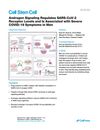
December 2020 in “Cell Stem Cell” Male hormones affect COVID-19 severity and certain drugs targeting these hormones could help reduce the risk.
 82 citations
,
June 2020 in “Inflammation Research”
82 citations
,
June 2020 in “Inflammation Research” This review discusses the complex pathophysiological and clinical aspects of COVID-19, including dermatological findings and their association with SARS-CoV-2 infection but reports no new clinical results.
 80 citations
,
June 2020 in “Dermatopathology”
80 citations
,
June 2020 in “Dermatopathology” This review discusses the various skin lesions associated with COVID-19, which vary in type and severity, and reports that these lesions can appear before other symptoms and typically resolve spontaneously.
 59 citations
,
October 2020 in “Stem Cell Reviews and Reports”
59 citations
,
October 2020 in “Stem Cell Reviews and Reports” This review discusses potential mechanisms contributing to higher COVID-19 mortality among men, particularly the roles of smoking, genetic factors, and reproductive hormones, without presenting new clinical findings.
 58 citations
,
December 2020 in “Mayo Clinic Proceedings”
58 citations
,
December 2020 in “Mayo Clinic Proceedings” This paper discusses the variability in COVID-19 susceptibility and severity, emphasizing factors like biological differences and suggesting potential precision medicine approaches, but it reports no new clinical results.
 50 citations
,
July 2021 in “Nature Communications”
50 citations
,
July 2021 in “Nature Communications” This study found that the antiandrogen drug enzalutamide reduced TMPRSS2 levels and significantly decreased SARS-CoV-2 entry and infection in lung cells, supporting further clinical trials for COVID-19 treatment.
 41 citations
,
February 2021 in “Cureus”
41 citations
,
February 2021 in “Cureus” In this study, Proxalutamide significantly increased the rate of viral clearance and reduced clinical remission time in patients with mild to moderate COVID-19 compared to placebo.
38 citations
,
April 2016 in “The Journal of Pathology” This study found that mice lacking alkaline ceramidase 1 with elevated skin ceramide levels showed disrupted skin homeostasis, including altered hair follicle structures, increased water loss, and a hypermetabolism phenotype.
 36 citations
,
July 2020 in “Frontiers in Medicine”
36 citations
,
July 2020 in “Frontiers in Medicine” Spironolactone might help protect against severe lung problems in COVID-19 patients.
 34 citations
,
September 2020 in “BMC Endocrine Disorders”
34 citations
,
September 2020 in “BMC Endocrine Disorders” This review highlights that while dexamethasone may reduce mortality in severe COVID-19, no other drugs have proven effectiveness for treatment, emphasizing the need for clinical trials of existing medications.
 23 citations
,
September 2021 in “Frontiers in Cellular and Infection Microbiology”
23 citations
,
September 2021 in “Frontiers in Cellular and Infection Microbiology” This review highlights the mixed roles of testosterone in COVID-19, noting both potential benefits through anti-inflammatory effects and risks due to increased virus entry, with low testosterone linked to increased severity.
 23 citations
,
February 2021 in “Journal of Endocrinological Investigation”
23 citations
,
February 2021 in “Journal of Endocrinological Investigation” This review discusses the impact of COVID-19 on the endocrine system and reports no clinical results; the authors emphasize the need to investigate endocrine damage during and after COVID-19 infection.
 21 citations
,
May 2021 in “Prostate Cancer and Prostatic Diseases”
21 citations
,
May 2021 in “Prostate Cancer and Prostatic Diseases” This review analyzes the potential mechanisms by which SARS-CoV-2 may exacerbate symptoms of benign prostatic hyperplasia and suggests a connection via ACE2 and androgen receptor pathways; it reports no new clinical results.