 10 citations
,
June 2024 in “American Journal of Clinical Dermatology”
10 citations
,
June 2024 in “American Journal of Clinical Dermatology” This review highlights that while sonidegib and vismodegib offer promising treatment options for advanced basal cell carcinoma, their use is often limited by treatment-emergent adverse events, which can be managed through protocol modifications and supportive interventions.
February 2025 in “Skin Appendage Disorders” This scoping review found that most of the 64 alopecia areata patients treated with upadacitinib in existing reports experienced significant hair regrowth, with mild side effects, but the authors call for larger studies to confirm these outcomes.
January 2016 in “대한피부과학회지” This study observed no significant association between early-onset androgenetic alopecia and medical comorbidities in the Korean population.
November 2025 in “Journal of Cosmetic Dermatology” This study reported that young men with early-onset androgenetic alopecia have a higher prevalence of insulin resistance and metabolic syndrome compared to controls, suggesting that AGA may indicate underlying metabolic disturbances.
12 citations
,
May 2016 in “British Journal of Dermatology” This report describes a rare case of epidermolysis bullosa acquisita in a child developing during therapy with squaric acid dibutyl ester for alopecia areata, suggesting a possible link between the medication and disease onset.
 51 citations
,
January 2012 in “Annals of Dermatology”
51 citations
,
January 2012 in “Annals of Dermatology” This review discusses characteristics of androgenetic alopecia in Asian patients and includes algorithmic management guidelines, but reports no new clinical findings.
 1 citations
,
January 2023 in “The FASEB Journal”
1 citations
,
January 2023 in “The FASEB Journal” This study found that circAGK was highly expressed in AGA patients and promoted dermal papilla cell apoptosis, suggesting it as a potential target for treating androgen alopecia.
 2 citations
,
January 2018 in “Journal of clinical & experimental dermatology research”
2 citations
,
January 2018 in “Journal of clinical & experimental dermatology research” This study suggests that AT-ASCs significantly improve terminal and intermediate hair counts and hair caliber in androgenetic alopecia more than PRP, though with more side effects like headache and erythema.
3 citations
,
November 2021 in “Clinical, Cosmetic and Investigational Dermatology” In this study, a single application of autologous cellular micrografts showed short-term favorable responses in up to two-thirds of patients with androgenetic alopecia.
 6 citations
,
June 2008 in “Journal of the European Academy of Dermatology and Venereology”
6 citations
,
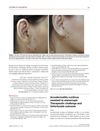
June 2008 in “Journal of the European Academy of Dermatology and Venereology” This paper discusses a case of acrodermatitis continua that was resistant to treatment with etanercept, highlighting the therapeutic challenges faced, but reports no new research results.
17 citations
,
November 2021 in “Journal of Cosmetic Dermatology” This review discusses treatment options for androgenetic alopecia, highlighting the need for personalized, evidence-based approaches but reports no new clinical results.
 40 citations
,
February 2013 in “American Journal of Clinical Dermatology”
40 citations
,
February 2013 in “American Journal of Clinical Dermatology” This study found that people with androgenic alopecia, particularly women, are more prone to anxiety and depression, often adopting avoidant coping strategies, which are linked to emotional and psychological impacts rather than clinical severity.
 June 2023 in “Skin Research and Technology”
 The researchers reported that an oral supplement containing hydrolysed fish-origin collagen, taurine, cysteine, methionine, iron, and selenium significantly improved the effectiveness of anti-hair loss treatments in people with androgenic alopecia or chronic telogen effluvium after 12 weeks, compared to drug treatments alone.
In this study, researchers found that crude extracts from Avicennia marina and its component avicequinone C inhibit mechanisms contributing to androgenic alopecia in vitro, including 5α-reductase activity and DHT-AR interactions, potentially promoting hair growth and delaying the catagen phase in human dermal papilla cells.
 September 2017 in “Journal of Investigative Dermatology”
 This study found that in AGA, the risk allele at locus 2q35 alters WNT10A expression through EBF1, suggesting a potential androgen-dependent regulatory mechanism.
 14 citations
,
March 2014 in “Journal of The European Academy of Dermatology and Venereology”
14 citations
,
March 2014 in “Journal of The European Academy of Dermatology and Venereology” This study found that androgenetic alopecia in asymptomatic young men was associated with increased arterial stiffness, as measured by the cardio-ankle vascular index.
 2 citations
,
July 2015 in “Journal of Cosmetic Dermatology”
2 citations
,
July 2015 in “Journal of Cosmetic Dermatology” This study did not find any correlation or linkage disequilibrium between androgen receptor gene CAG/GGC haplotypes and androgenetic alopecia in Mexican brothers.

In this case study, a patient developed a rash consistent with acute generalized exanthematous pustulosis after increasing the dose of semaglutide, suggesting that the reaction was likely due to the excipient propylene glycol, highlighting the importance of ingredient analysis and multidisciplinary collaboration for patient safety.
 April 2024 in “European Journal of Dermatology”
 This study suggests that the PPP2R3C gene may confer susceptibility to psoriatic arthritis and psoriasis vulgaris in Chinese patients, with additional possible associations involving IL-23R, ERN1, IFIH1, and KIF3A genes.
5 citations
,
June 2022 in “International Journal of Pharmaceuticals Nutraceuticals and Cosmetic Science” This review discusses the pharmacological and cosmeceutical properties of Centella asiatica, noting its potential benefits in skincare, but it reports no original experimental results.

This study found that a cholesterol-conjugated, cell-penetrating asiRNA targeting the androgen receptor effectively reduced hair loss and promoted hair growth in mouse models of androgenetic alopecia, suggesting potential as a novel treatment.
 1 citations
,
May 2013 in “Journal of the Egyptian Women's Dermatologic Society (Print)”
1 citations
,
May 2013 in “Journal of the Egyptian Women's Dermatologic Society (Print)” In this study, women with androgenetic alopecia showed higher cholesterol levels and carotid artery thickness, suggesting a potential link between female AGA and cardiovascular disease.
 18 citations
,
May 2015 in “Australasian Journal of Dermatology”
18 citations
,
May 2015 in “Australasian Journal of Dermatology” This study found that topical application of Serenoa repens extract increased hair count in men with androgenetic alopecia, suggesting it could be an alternative for those unable to use standard medications.
4 citations
,
November 2020 in “Acta Dermato Venereologica” In this study, patients with specific skin and scalp conditions, including eczematous lesions, showed significant improvement after two weeks of oral tofacitinib treatment, as evidenced by changes in the trunk lesions.
 91 citations
,
November 2007 in “Archives of Dermatology”
91 citations
,
November 2007 in “Archives of Dermatology” In this study, smoking status and intensity were significantly associated with moderate or severe androgenetic alopecia among Asian men, after accounting for age and family history.
 January 2017 in “Clinical approaches and procedures in cosmetic dermatology”
 This review explores the role of advanced glycation end products in skin aging and their interaction with oxidative stress, but reports no new clinical findings.
July 2025 in “Journal of Investigative Dermatology” Upadacitinib effectively treats pyoderma gangrenosum.
This study found that dominant mutations in the mouse agouti gene lead to maturity-onset obesity, with weight increases starting around 4 weeks and peaking between 8 and 17 months.

This study of androgenic alopecia patients reports that stress was associated with AGA in both men and women, with notable findings differing by gender, age, and AGA type.
January 2021 in “Brazilian Journal of Development” This study found that women with androgenic alopecia in Patos, Brazil, experienced significant psychological and social impacts, including feelings of frustration, low self-esteem, and social withdrawal.