20 citations
,
February 2004 in “Clinical & Experimental Immunology” This study suggests that long-term treatment with the contact sensitizer SADBE in mice may reduce leucocyte traffic in alopecia areata through impaired leucocyte extravasation.
 3 citations
,
July 2011 in “Journal of the Egyptian Women's Dermatologic Society (Print)”
3 citations
,
July 2011 in “Journal of the Egyptian Women's Dermatologic Society (Print)” This study observed a high prevalence of postadolescent acne in adult women, which was often inflammatory and moderately severe, with persistent acne in half the cases and frequent involvement of the mandible.
July 2025 in “Canadian Family Physician” This source summarizes the new 2024 American Academy of Dermatology guidelines, emphasizing strong recommendations for topical and oral therapies like benzoyl peroxide, doxycycline, and isotretinoin in managing acne vulgaris, while outlining the importance of tailored treatments for diverse patient needs in Canadian practice.
This study found that Avicennia marina extract and its active compound avicequinone C inhibit enzymes and receptors related to androgenic alopecia, potentially supporting hair growth in cultured dermal papilla cells.
12 citations
,
February 2017 in “Journal of neuroscience research” This study suggests that extrasynaptic δGABA-A receptors may have a protective role in modulating the severity of catamenial-like seizures by influencing neurosteroid and benzodiazepine responses in mice.
1 citations
,
June 2019 in “Journal of Cutaneous Immunology and Allergy” This report describes two cases where topical squaric acid dibutylester application in alopecia totalis patients led to severe pustular lesions, necessitating systemic prednisolone treatment.
October 2020 in “The American journal of gastroenterology” This case study reports a previously undescribed cause of drug-induced autoimmune hepatitis triggered by para-aminobenzoic acid (PABA), emphasizing the need for caution with this supplement.
 June 2026 in “International Journal of Innovative Technologies in Social Science”
 This source describes clascoterone, a new topical treatment for acne vulgaris that blocks androgen receptors to reduce sebaceous gland activity and inflammation, offering a lower risk of systemic side effects compared to oral treatments.
1 citations
,
January 2026 in “Journal of the European Academy of Dermatology and Venereology” This critique suggests that the prior iconodiagnosis of Vermeer's "Girl with a Pearl Earring" suffers from confirmation bias, arguing that cultural trends, rather than medical conditions, explain the artwork's features.
3 citations
,
December 2022 in “The Neurologist” This report presents the first documented case of CARASIL in an Arabic patient and notes unique magnetic resonance spectroscopy findings compared to prior cases.
 August 2018 in “Journal of The American Academy of Dermatology”
 A 16-year-old girl's skin rash was likely caused by an infection and improved with topical steroids.
September 2023 in “Journal of the American Academy of Dermatology”  May 2025 in “Insights-Journal of Health and Rehabilitation”
 This study found that Aloe vera and Citrus lemon extracts demonstrated notable antibacterial effects against Propionibacterium acnes in both lab and human skin models, with combined use resulting in a 67% reduction in acne, suggesting potential for future therapeutic applications.
This study introduced the C-CAT, a new assessment tool for central centrifugal cicatricial alopecia, and found that established treatments improved symptoms in most patients over six months.
4 citations
,
February 2025 in “Molecular Medicine” In this study, ALA-PDT significantly reduced lipogenesis in an acne-like model by upregulating OLR1 and suppressing lipid accumulation, highlighting a potential therapeutic target.
12 citations
,
August 1997 in “Postgraduate medicine” Educating people about acne is key because many still believe old myths, even though treatments exist for almost all types.
 January 1982 in “Journal of The American Academy of Dermatology”
 Experts discussed treatments for skin conditions in children, emphasizing hydration, cautious medication use, and early intervention for infections.
 35 citations
,
May 2008 in “Journal of Clinical Oncology”
35 citations
,
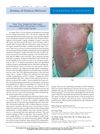
May 2008 in “Journal of Clinical Oncology” A cancer patient died from a severe skin reaction after taking the drug cetuximab.
8 citations
,
January 2013 in “European Journal of Dermatology” This article reviews the use of alitretinoin for corticosteroid-refractory chronic hand eczema and explores its potential therapeutic benefits in other skin conditions, but reports no clinical results.
This chapter discusses the characteristics and impacts of acne vulgaris, acne rosacea, and acne inversa and reports no new clinical results.
 7 citations
,
July 1990 in “Journal of the American Academy of Dermatology”
7 citations
,
July 1990 in “Journal of the American Academy of Dermatology” This case report describes a patient who developed severe alopecia and a rash after increasing captopril dosage, which resolved upon discontinuing the medication.
 October 2008 in “Clin-alert”
 This abstract lists keywords related to various medications and therapies, but it does not provide new study results or findings.

In this case report, the authors documented a fatal instance of Stevens-Johnson syndrome in an elderly woman potentially triggered by doxycycline and flucloxacillin, emphasizing the importance of recognizing such rare but severe drug reactions in older patients.
 September 1998 in “Journal of The European Academy of Dermatology and Venereology”
 Aging affects hair density and skin health, and Behcet's disease, a complex condition with no specific test, involves sores and systemic issues, treated with various medications.
1 citations
,
January 2009 in “Kidney International” This case report illustrates that false-positive antibodies for Ehrlichia species may occur in patients with systemic lupus erythematosus, complicating diagnosis and treatment.
 February 2016 in “The journal of investigative dermatology/Journal of investigative dermatology”
 This quiz presents educational questions about alopecia areata, including its diagnosis and underlying mechanisms, but reports no new clinical outcomes.
24 citations
,
February 2011 in “The American journal of pathology” This study found that AIRE, a usually nuclear protein, is expressed in the cytoplasm of human epidermal and follicular keratinocytes and associates with the intermediate filament protein cytokeratin 17, potentially impacting ectodermal abnormalities in APECED syndrome.
 2 citations
,
May 2025 in “Frontiers in Pharmacology”
2 citations
,
May 2025 in “Frontiers in Pharmacology” In this study, analysis of FDA data revealed a substantial risk of dermatologic adverse events with aromatase inhibitors, especially anastrozole and exemestane, highlighting the importance of dermatologic monitoring during such therapies.
 January 2024 in “Brazilian Journal of Veterinary Pathology”
 In this case report, veterinarians observed a 16-year-old mare with symptoms including chronic weight loss, pruritus, muscle atrophy, and lameness, which gradually progressed to neurological issues despite initial treatment.
 2 citations
,
January 2011 in “Elsevier eBooks”
2 citations
,
January 2011 in “Elsevier eBooks” This book reviews the various types of acne and acneiform conditions, as well as their treatment options, with expert insights from multiple fields.