 November 1966 in “British Journal of Dermatology”
 This conference proceeding abstract provides no new research results, focusing only on event details from the British Association of Dermatology's Forty-Sixth Annual Meeting held in Oxford in 1966.
 9 citations
,
July 2002 in “Journal of the European Academy of Dermatology and Venereology”
9 citations
,
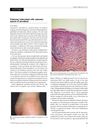
July 2002 in “Journal of the European Academy of Dermatology and Venereology” This article discusses multiple minute digitate hyperkeratosis in a dermatological context and reports no new clinical findings; the authors focus on a descriptive review.
This article provides an overview of the indications, interactions, and various potential adverse reactions associated with several drugs, but it reports no specific new results.
 3 citations
,
June 1983 in “Archives of Dermatology”
3 citations
,
June 1983 in “Archives of Dermatology” This article discusses the effectiveness of adrenal cortex compounds E and F in treating connective tissue disorders like rheumatoid arthritis and lupus erythematosus, but it reports no new clinical results.
 August 2025 in “International Journal of Research in Dermatology”
 This case report highlights an atypical presentation of acrodermatitis enteropathica in an 18-year-old male, exhibiting symptoms like erythrokeratoderma variabilis with a positive response to high-dose oral zinc, underscoring the importance of considering zinc deficiency in unusual skin conditions.
 January 2025 in “Clinical Cosmetic and Investigational Dermatology”
 This study found that pediatric alopecia areata patients with atopic predisposition showed heightened immune and inflammatory responses, including significant immune cell infiltration, compared to adults and healthy controls.
9 citations
,
July 2022 in “Journal of Clinical Oncology” This study found that oral paclitaxel combined with encequidar improved tumor response rates compared to intravenous paclitaxel in women with metastatic breast cancer, while also reducing neuropathy but increasing certain gastrointestinal and neutropenic side effects.
25 citations
,
June 1998 in “Journal of Investigative Dermatology” Murine cytomegalovirus does not cause alopecia areata in these mice.
September 2024 in “Health Problems of Civilization” This study describes the efficacy of oral isotretinoin in treating severe, hormonal, and treatment-resistant acne, noting significant side effects that depend on dose and duration, including teratogenic risks and common issues like skin dryness, while underscoring the importance of systematic monitoring to mitigate adverse effects.
 18 citations
,
October 2012 in “Dermatologic Clinics”
18 citations
,
October 2012 in “Dermatologic Clinics” This article discusses primary cicatricial alopecias, a group of rare inflammatory scalp disorders resulting in permanent hair loss, and reports no new findings.
This study found that Compound Diandao Pulvis Drug Facial Mask improved some signs of acne in a rabbit ear model, but its effects were not significantly different from tretinoin cream.
 January 2023 in “Postępy Dermatologii i Alergologii”
 This review provides an overview of azelaic acid's dermatological uses, mechanisms, and its potential in skin cancer treatment, but reports no new clinical results.
 10 citations
,
January 2009 in “Scientific Electronic Library Online (São Paulo Research Foundation, Latin American and Caribbean Center on Health Sciences Information, Conselho Nacional de Desenvolvimento Científico e Tecnológico)”
10 citations
,
January 2009 in “Scientific Electronic Library Online (São Paulo Research Foundation, Latin American and Caribbean Center on Health Sciences Information, Conselho Nacional de Desenvolvimento Científico e Tecnológico)” This study found that Eclipta alba extracts exhibit significant antimicrobial activity against various human pathogens, including antibiotic-resistant strains, suggesting potential use in treating infectious diseases.
2 citations
,
May 1984 in “Current Problems in Pediatrics” This article provides an overview of acne management for pediatricians and emphasizes patient education but reports no new clinical findings.
 March 2026 in “International Journal of Ayurvedic Medicine (Hyderabad)”
 In this case report, a novel Ayurvedic preparation of Catharanthus roseus, used alongside conventional chemotherapy, was associated with tumor stability and improved general health in a patient with advanced esophageal squamous cell carcinoma.
1 citations
,
July 2024 in “Journal of Investigative Dermatology” Plaquenil can cause a severe skin reaction called AGEP, requiring prompt diagnosis and treatment.
 March 2026 in “Critical Care Medicine”
 This study reports a rare case of refractory status epilepticus in a 48-year-old man after a hair transplant, likely due to neurotoxic effects from combined use of local anesthetics and tranexamic acid, highlighting the importance of early recognition and management of such complications.
2 citations
,
June 2008 in “University of Zagreb University Computing Centre (SRCE)” This case report details a cat with sterile neutrophilic dermatitis that improved with cessation of previous medications and local povidone iodine therapy.
 December 2005 in “Endocrine-related cancer”
 This case report describes a 57-year-old woman's virilizing adrenal tumor effectively treated with the antiandrogen cyproterone acetate, which led to symptom reversal and tumor resolution.
 19 citations
,
June 2011 in “British Journal of Dermatology”
19 citations
,
June 2011 in “British Journal of Dermatology” Severe digestive issues in DRESS need early endoscopy for better treatment.
3 citations
,
June 2023 in “Molecules/Molecules online/Molecules annual” The researchers reviewed cepharanthine, a long-used bisbenzylisoquinoline alkaloid, for its antiviral properties, including significant inhibition of SARS-CoV-2. They discussed cepharanthine's other pharmacological actions, highlighted plasma membrane fluidity as a key antiviral mechanism, and examined its safety, bioavailability, and potential for new clinical applications.
 May 2026 in “Zenodo (CERN European Organization for Nuclear Research)”
 This review highlights the dual nature of Abrus precatorius Linn., known for its toxic compound abrin and medicinal potential. The research emphasizes its traditional uses, phytochemical diversity, and pharmacological effects, while calling for standardization and controlled trials to ensure safety and efficacy in therapeutic applications.
 January 2019 in “Springer eBooks”
 Acne can appear or persist in adulthood due to hormonal changes, external factors, or substance use, and requires appropriate treatment.
19 citations
,
January 2023 in “ACS Omega” This study developed sodium alginate and epigallocatechin gallate cryogels cross-linked with ferric ions, showing that they have strong antibacterial properties and rapid hemostatic abilities, making them promising candidates for wound dressing applications.
 January 2003 in “American Journal of Clinical Dermatology”
 In 2002, various skin reactions were reported due to different drugs, including allergies, hair loss, skin lesions, and other skin conditions.
 20 citations
,
August 2019 in “Expert Opinion on Drug Safety”
20 citations
,
August 2019 in “Expert Opinion on Drug Safety” This review examines the cognitive effects of medications for lower urinary tract symptoms and indicates that muscarinic antagonists, particularly oral oxybutynin, pose the highest risk for cognitive impairment.

This case report describes retinal occlusion and medial canthal swelling in a 64-year-old female following the injection of acellular porcine urinary bladder matrix for hair restoration, a previously unreported side effect.
 1 citations
,
September 2025 in “International Journal of Drug Delivery Technology”
1 citations
,
September 2025 in “International Journal of Drug Delivery Technology” This randomized controlled study reported that combining Ecklonia cava with Diane-35 significantly improved weight, waist circumference, hormonal balance, and inflammation markers in women with polycystic ovary syndrome over three months compared to Diane-35 alone.
1 citations
,
April 2024 in “Journal of Clinical Medicine” This study found that patients with severe alopecia areata demonstrated reduced corneal sensitivity and increased corneal staining, and exhibited altered topographic and biomechanical eye parameters compared to controls, suggesting a possible increased risk of keratoconus and the necessity for regular ophthalmological exams.

This case series observed that patients with persistent post-COVID-19 symptoms reported considerable improvement after using icosapent ethyl, suggesting potential therapeutic success warranting further research.