 273 citations
,
May 2017 in “The Lancet”
273 citations
,
May 2017 in “The Lancet” This review discusses the diagnosis and management of severe cutaneous adverse reactions to drugs and provides guidance for physicians to improve patient outcomes, but it reports no new clinical results.
 238 citations
,
November 2016 in “Journal of The American Academy of Dermatology”
238 citations
,
November 2016 in “Journal of The American Academy of Dermatology” In this study, tofacitinib was reported to improve scalp hair regrowth in patients with severe alopecia areata, alopecia totalis, and alopecia universalis, showing a higher response in alopecia areata.
 232 citations
,
June 1975 in “Journal of Steroid Biochemistry”
232 citations
,
June 1975 in “Journal of Steroid Biochemistry” In this study, a treatment regimen combining cyproterone acetate and ethinyl estradiol significantly improved acne and seborrhoea in most women after three months, but had varied effects on hirsutism and alopecia.
 185 citations
,
June 2014 in “Journal of Investigative Dermatology”
185 citations
,
June 2014 in “Journal of Investigative Dermatology” This case report describes complete hair regrowth in a patient with alopecia universalis and improved psoriasis after treatment with the oral Janus kinase inhibitor, tofacitinib.
 165 citations
,
January 2014 in “Dermatology Research and Practice”
165 citations
,
January 2014 in “Dermatology Research and Practice” This review discusses the various dermatological applications of zinc, including its use in treating infections, inflammatory dermatoses, pigmentary disorders, and neoplasias, and reports no new clinical findings.
 162 citations
,
April 2016 in “The Lancet Diabetes & Endocrinology”
162 citations
,
April 2016 in “The Lancet Diabetes & Endocrinology” This review discusses the effects of testosterone therapy for transgender men, noting desired outcomes and potential risks, but reports no new research findings; the authors highlight a lack of high-quality data due to various study limitations.
 140 citations
,
August 2011 in “Biomaterials”
140 citations
,
August 2011 in “Biomaterials” This study observed that keratose, derived from human hair, integrated well in mouse tissue and remodeled with collagen, suggesting potential as a non-toxic biomaterial for regenerative applications.
 108 citations
,
July 2004 in “American Journal of Pathology”
108 citations
,
July 2004 in “American Journal of Pathology” This study suggests that nerve growth factor plays a crucial role in the stress-induced termination of hair growth in mice, and its antagonism might offer a therapeutic approach to mitigate stress-related hair loss.
87 citations
,
September 2016 in “Journal of the American Academy of Dermatology” In this prospective case series, intralesional triamcinolone injections significantly reduced erythema, edema, suppuration, size, and pain in acute hidradenitis suppurativa flares, though the study's small size and design limit the findings.
 85 citations
,
October 2012 in “Dermatologic Clinics”
85 citations
,
October 2012 in “Dermatologic Clinics” This article reviews recent updates on alopecia areata, focusing on its causes, clinical presentation, and treatment options, and provides treatment plans by patient age and disease extent, but reports no new clinical results.
 79 citations
,
September 2018 in “Dermatologic therapy”
79 citations
,
September 2018 in “Dermatologic therapy” This study found that treatment with oral tofacitinib, alone or with other therapies, was associated with clinical improvement in most patients with recalcitrant lichen planopilaris.
 77 citations
,
July 2020 in “Cell”
77 citations
,
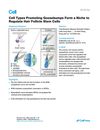
July 2020 in “Cell” This study found that sympathetic nerves and arrector pili muscles form a niche that modulates hair follicle stem cell activity, revealing their role in hair follicle regeneration.
 68 citations
,
January 2022 in “International Journal of Molecular Sciences”
68 citations
,
January 2022 in “International Journal of Molecular Sciences” This review summarizes factors involved in polycystic ovary syndrome pathogenesis and management, highlights commonly prescribed and repurposed medications, and calls for well-designed clinical trials to evaluate these treatments further.
 61 citations
,
January 2008 in “Biological & Pharmaceutical Bulletin”
61 citations
,
January 2008 in “Biological & Pharmaceutical Bulletin” In this study, finasteride dose-dependently inhibited stress-induced increases in allopregnanolone in rats, while enhancing 20alpha-reduction of progesterone without affecting 3alpha-dihydroprogesterone or 11-deoxycorticosterone levels.
 59 citations
,
February 2021 in “BMJ”
59 citations
,
February 2021 in “BMJ” This study found a strong dose-related increase in the risk of intracranial meningiomas associated with high doses of cyproterone acetate, with some reduction in risk after stopping the treatment.
58 citations
,
March 2019 in “Frontiers in Pharmacology” This study found that wedelolactone from Eclipta prostrata L. significantly reduced lung inflammation and fibrosis in mice with bleomycin-induced pulmonary fibrosis, suggesting potential therapeutic benefits through AMPK activation.
 55 citations
,
October 2019 in “Dermatology and therapy”
55 citations
,
October 2019 in “Dermatology and therapy” This review found that JAK/STAT pathway inhibitors, such as tofacitinib and ruxolitinib, led to symptom improvement in all observed atopic dermatitis cases, but responses were mixed for vitiligo and alopecia areata, with a generally mild safety profile reported.
 54 citations
,
May 2017 in “Biomedicine & Pharmacotherapy”
54 citations
,
May 2017 in “Biomedicine & Pharmacotherapy” This review discusses the nutrient profile and potential health benefits of pumpkin and watermelon seeds, concluding they are underutilized and could be developed into various nutraceuticals.
 53 citations
,
January 2006 in “The Journal of clinical endocrinology and metabolism/Journal of clinical endocrinology & metabolism”
53 citations
,
January 2006 in “The Journal of clinical endocrinology and metabolism/Journal of clinical endocrinology & metabolism” In this study, reduced androgen receptor gene methylation and shorter CAG repeats in children with premature pubarche may lead to increased hair follicle sensitivity to steroid hormones, potentially causing early pubic hair development.
 51 citations
,
May 2011 in “Phytotherapy Research”
51 citations
,
May 2011 in “Phytotherapy Research” This study suggests that red ginseng rhizome extracts, particularly ginsenoside Ro, may promote hair re-growth in an androgenetic alopecia model due to their inhibitory activity on testosterone 5α-reductase.
 49 citations
,
April 2012 in “Phytotherapy Research”
49 citations
,
April 2012 in “Phytotherapy Research” This study found that topical Rosmarinus officinalis leaf extract improved hair regrowth in mice and inhibited androgen-associated mechanisms involved in hair loss.
 49 citations
,
August 2009 in “British Journal of Cancer”
49 citations
,
August 2009 in “British Journal of Cancer” This study observed that finasteride use among men with benign prostatic hyperplasia was associated with a decreased incidence of low-grade prostate cancer but not high-grade tumors.
 49 citations
,
April 2000 in “Journal of The American Academy of Dermatology”
49 citations
,
April 2000 in “Journal of The American Academy of Dermatology” This article discusses the etiology, clinical features, diagnosis, histopathology, and treatment of alopecia areata but reports no new clinical findings; it emphasizes the palliative nature of current treatments.
47 citations
,
January 2016 in “MethodsX” This study found that while the reproducibility of hair cortisol measurements in captive chimpanzees was high, the fineness of homogenized hair, sample weight, and extraction time influenced absolute cortisol concentrations.
 45 citations
,
February 2019 in “Journal of Affective Disorders”
45 citations
,
February 2019 in “Journal of Affective Disorders” This study found that 12 weeks of melatonin supplementation improved mental health and metabolic parameters in women with polycystic ovary syndrome compared to a placebo.
 45 citations
,
September 2012 in “Life Sciences”
45 citations
,
September 2012 in “Life Sciences” This study observed that Aconiti Ciliare Tuber extract may promote hair growth in mice by activating the Wnt/β-catenin signaling pathway.
 41 citations
,
December 2015 in “JAMA Dermatology”
41 citations
,
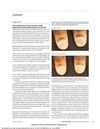
December 2015 in “JAMA Dermatology” Tofacitinib citrate improved nail dystrophy and pain in patients with alopecia universalis without causing side effects.
 40 citations
,
August 2014 in “Journal of Nanoparticle Research”
40 citations
,
August 2014 in “Journal of Nanoparticle Research” This study found that biologically synthesized silver nanoparticle gel demonstrated excellent wound healing efficacy in rats, surpassing both marketed formulations and ionic silver.
 39 citations
,
July 2016 in “Biomedicine & Pharmacotherapy”
39 citations
,
July 2016 in “Biomedicine & Pharmacotherapy” In this animal study, researchers found that cedrol, a constituent from Platycladus orientalis, significantly promoted hair growth in a dose-dependent manner in female C57BL/6 mice, surpassing results from blank control and 2% minoxidil groups over 21 days.
 39 citations
,
March 2008 in “Growth hormone & IGF research”
39 citations
,
March 2008 in “Growth hormone & IGF research” Raspberry ketone may help grow hair and improve skin elasticity.