24 citations
,
September 2024 in “Journal of Investigative Dermatology” 5 citations
,
August 2023 in “G3 Genes Genomes Genetics” The improved genome of the African spiny mouse will help understand its tissue regeneration abilities.
 1 citations
,
August 2023 in “Genome research”
1 citations
,
August 2023 in “Genome research” The spiny mouse regenerates ear tissue asymmetrically, with gene expression differences possibly explaining its unique healing abilities.
 1 citations
,
April 2023 in “Science Advances”
1 citations
,
April 2023 in “Science Advances” High levels of ERK activity are key for tissue regeneration in spiny mice, and activating ERK can potentially redirect scar-forming healing towards regenerative healing in mammals.
 January 2023 in “Biomaterials Science”
 Certain genes are more active during wound healing in axolotl and Acomys, which could help develop materials that improve human wound healing and regeneration.
 40 citations
,
November 2021 in “npj Regenerative Medicine”
40 citations
,
November 2021 in “npj Regenerative Medicine” Adult spiny mice recover better from heart attacks than common lab mice.
488 citations
,
July 2021 in “Cell” Fibroblasts are crucial for tissue repair and inflammation, and understanding them can help treat fibrotic diseases.
 22 citations
,
May 2021 in “Nature Communications”
22 citations
,
May 2021 in “Nature Communications” Tissue stiffness affects hair follicle regeneration, and Twist1 is a key regulator.
 35 citations
,
November 2020 in “Experimental Dermatology”
35 citations
,
November 2020 in “Experimental Dermatology” Different types of skin cells are organized in a special way in large wounds to help with healing and hair growth.
 24 citations
,
May 2019 in “PLOS ONE”
24 citations
,
May 2019 in “PLOS ONE” The African spiny mouse can fully regenerate its muscle without scarring, unlike the common house mouse.
 37 citations
,
February 2019 in “Experimental Dermatology”
37 citations
,
February 2019 in “Experimental Dermatology” Spiny mice are better at regenerating hair after injury than laboratory mice and could help us understand how to improve human skin repair.
 301 citations
,
February 2019 in “Nature Communications”
301 citations
,
February 2019 in “Nature Communications” The research found that different types of fibroblasts are involved in wound healing and that some blood cells can turn into fat cells during this process.
39 citations
,
June 2018 in “Burns” The spiny mouse can fully regenerate skin after burns, unlike the lab mouse.
 225 citations
,
April 2018 in “Journal of Investigative Dermatology”
225 citations
,
April 2018 in “Journal of Investigative Dermatology” Two main types of fibroblasts with unique functions and additional subtypes were identified in human skin.
 85 citations
,
December 2017 in “Developmental Biology”
85 citations
,
December 2017 in “Developmental Biology” Mammals might fail to regenerate not because they lack the right cells, but because of how cells respond to their surroundings, and changing this environment could enhance regeneration.
 408 citations
,
January 2017 in “Science”
408 citations
,
January 2017 in “Science” Some wound-healing cells can turn into fat cells around new hair growth in mice.
 87 citations
,
January 2016 in “Development”
87 citations
,
January 2016 in “Development” Blocking β-catenin in skin cells improves hair growth during wound healing.
 232 citations
,
October 2015 in “International journal of molecular sciences”
232 citations
,
October 2015 in “International journal of molecular sciences” Stem cells are crucial for skin repair and new treatments for chronic wounds.
1235 citations
,
December 2013 in “Nature” Two fibroblast types shape skin structure and repair differently.
 418 citations
,
September 2012 in “Nature”
418 citations
,
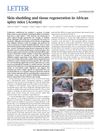
September 2012 in “Nature” African spiny mice can regenerate skin, hair, and cartilage, but not muscle, and their unique abilities could be useful for regenerative medicine.
 70 citations
,
March 2008 in “Mechanisms of Ageing and Development”
70 citations
,
March 2008 in “Mechanisms of Ageing and Development” Maintaining DNA health in stem cells is key to preventing aging and tissue breakdown.
 69 citations
,
September 1991 in “Journal of Surgical Research”
69 citations
,
September 1991 in “Journal of Surgical Research” Understanding how fetal wounds heal could help improve healing in adults.

