5 citations
,
February 2025 in “Cell Reports” In this study, inducible whole-body Acly-knockout mice revealed that ACLY is essential for skin homeostasis, as its deficiency led to increased sebum production and skin abnormalities, indicating a vital role for cytosolic acetyl-CoA synthesis in preserving skin barrier integrity and systemic lipid regulation.

Intermittent fasting slows hair growth by damaging hair follicle cells.
 September 2023 in “The Journal of Dermatology”
 In this 2-year prospective study, researchers observed that weight loss through bariatric surgery in patients with morbid obesity led to improvements in various skin conditions, although it also resulted in hair loss (telogen effluvium) for over half of the participants.
 6 citations
,
December 2022 in “Cell reports”
6 citations
,
December 2022 in “Cell reports” This study found that feeding mice a high-fat diet with fish oil leads to hair loss through a mechanism involving omega-3 fatty acids and TNF-α signaling, with epidermal fatty acid binding protein playing a key role.
 21 citations
,
November 2022 in “Frontiers in immunology”
21 citations
,
November 2022 in “Frontiers in immunology” This article reviews sebaceous immunobiology and highlights the complex role of sebaceous glands and sebocytes in skin barrier function and inflammation, particularly in acne pathogenesis, but reports no new results.
 124 citations
,
June 2020 in “Cell Stem Cell”
124 citations
,
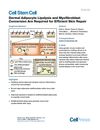
June 2020 in “Cell Stem Cell” This study found that in mice, dermal adipocytes initiate inflammation and aid repair after skin injury by releasing lipids, suggesting a role in managing inflammatory diseases and impaired wound healing.
136 citations
,
September 2019 in “Journal of Clinical Investigation” This study found that mature dermal adipocytes have high plasticity, undergoing dedifferentiation and redifferentiation, which plays a significant role in hair cycling and wound healing.
67 citations
,
September 2017 in “Cell Reports” Caloric restriction improves skin and fur structure but can cause muscle loss and movement issues.
38 citations
,
April 2016 in “The Journal of Pathology” This study found that mice lacking alkaline ceramidase 1 with elevated skin ceramide levels showed disrupted skin homeostasis, including altered hair follicle structures, increased water loss, and a hypermetabolism phenotype.
 92 citations
,
September 2015 in “Journal of Lipid Research”
92 citations
,
September 2015 in “Journal of Lipid Research” This review discusses the roles of dermal white adipose tissue (dWAT) as an insulator, antibiotic, and regenerative tissue, highlighting its importance in systemic metabolism and immune function, but reports no new clinical results.
88 citations
,
August 2014 in “PLOS genetics” This study found that mice lacking syndecan-1 experienced cold stress and metabolic issues due to reduced intradermal fat, which was restored by thermoneutral housing or rosiglitazone treatment.
67 citations
,
December 2013 in “Journal of Biological Chemistry” This review discusses the role of the enzyme Δ9-desaturase-1 in skin lipid regulation and whole-body energy balance in mice and reports no new experimental results.
 238 citations
,
March 2013 in “Development”
238 citations
,
March 2013 in “Development” This study found that adipocytes play a crucial role in skin wound healing by facilitating fibroblast recruitment and dermal reconstruction during the healing process.
 127 citations
,
December 2007 in “Journal of Investigative Dermatology”
127 citations
,
December 2007 in “Journal of Investigative Dermatology” This review examines regenerative hair waves and complex hair cycle domains in transgenic mice, highlighting how these dynamic processes contribute to skin regeneration and the physiological regulation of organs, but reports no new experimental results.

