 33 citations
,
May 2019 in “Aesthetic Plastic Surgery”
33 citations
,
May 2019 in “Aesthetic Plastic Surgery” This review found that most studies support the effectiveness and safety of using hyaluronic acid fillers and laser treatments together for facial rejuvenation, but highlights that the evidence is limited to small, nonrandomized studies and additional research is necessary.
 3 citations
,
June 2017 in “Aesthetic plastic surgery”
3 citations
,
June 2017 in “Aesthetic plastic surgery” This study reported that novel adipose slurry injections improved rhytides and dermis density in patients receiving facial wrinkle treatments based on evaluations at multiple follow-up intervals.
 175 citations
,
November 2009 in “PLOS ONE”
175 citations
,
November 2009 in “PLOS ONE” This study found that both genetic and environmental factors influence appearance-related aging in women, with skin wrinkling, hair graying, and sun damage significantly affecting perceived age more than chronological age.
 137 citations
,
June 2005 in “Climacteric”
137 citations
,
June 2005 in “Climacteric” This review indicates that estrogen loss during menopause significantly impacts skin health, while estrogen treatment may increase skin collagen, thickness, and elasticity, though effects on other skin characteristics are inconsistent.
 120 citations
,
July 2005 in “Dermatologic surgery”
120 citations
,
July 2005 in “Dermatologic surgery” This study found that topical niacinamide significantly improved the appearance of wrinkles, skin yellowing, and elasticity in aging facial skin over 12 weeks.
 114 citations
,
February 2012 in “International Journal of Dermatology”
114 citations
,
February 2012 in “International Journal of Dermatology” This review examines the dermatologic effects of tobacco use and nicotine, noting potential benefits and drawbacks for various skin conditions, but reports no new clinical results.
 49 citations
,
August 2016 in “Aesthetic Surgery Journal”
49 citations
,
August 2016 in “Aesthetic Surgery Journal” This study found that micro-needling with cosmeceuticals or platelet-rich plasma significantly improved wrinkles, skin laxity, scar softening, and hair growth over 12 months, with minimal side effects, and that the best results occur with pigment and platelet massaging between 5 to 30 minutes post-treatment.
 49 citations
,
June 2009 in “Seminars in Cutaneous Medicine and Surgery”
49 citations
,
June 2009 in “Seminars in Cutaneous Medicine and Surgery” This article examines differences in aging among ethnic populations and highlights cosmetic procedures specific to skin of color, but reports no new research findings.
 39 citations
,
June 2019 in “Toxins”
39 citations
,
June 2019 in “Toxins” This review explores the therapeutic potential of bee venom for treating various skin diseases, discussing its mechanisms and effects but reports no new clinical findings.
 27 citations
,
May 2016 in “Dermatologic Surgery”
27 citations
,
May 2016 in “Dermatologic Surgery” This review examines how male facial anatomy and behavior contribute to sexual dimorphism in facial aging, pointing to factors that accelerate aging in men but presents no new clinical results.
 24 citations
,
April 2017 in “Journal of Investigative Dermatology”
24 citations
,
April 2017 in “Journal of Investigative Dermatology” This study identified sex-specific determinants for facial wrinkles, finding that age is the strongest factor and that lifestyle influences like smoking, alcohol use, and skin color differentially affect wrinkling in men and women.
 23 citations
,
August 2018 in “Facial Plastic Surgery Clinics of North America”
23 citations
,
August 2018 in “Facial Plastic Surgery Clinics of North America” This review discusses the role of defensin peptides in stem cell activation for potential skin rejuvenation therapies and reports no new clinical findings, emphasizing the need for further studies.
 21 citations
,
September 2024 in “Cureus”
21 citations
,
September 2024 in “Cureus” This review explores the mechanisms, techniques, and clinical applications of microneedling, highlighting its advantages and challenges in skin rejuvenation, and discusses future innovations in the field as it continues to evolve.
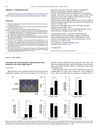 11 citations
,
June 2012 in “Journal of Dermatological Science”
11 citations
,
June 2012 in “Journal of Dermatological Science” This article reviews how aging affects skin and stem cells, but it contains no new research findings.
 11 citations
,
September 2007 in “Advances in therapy”
11 citations
,
September 2007 in “Advances in therapy” This study found that the oral supplement INVERSION® Femme significantly reduced weight and hair loss and improved skin and nails in overweight women.
 6 citations
,
September 2024 in “Discover Psychology”
6 citations
,
September 2024 in “Discover Psychology” This study observed that men who conform more strongly to traditional masculinity norms are likelier to undergo cosmetic surgery as a way to assert power, success, dominance, and sexual success.
 6 citations
,
July 2017 in “Plastic surgical nursing : official journal of the American Society of Plastic and Reconstructive Surgical Nurses”
6 citations
,
July 2017 in “Plastic surgical nursing : official journal of the American Society of Plastic and Reconstructive Surgical Nurses” This abstract does not provide research results or a summary of findings, but only lists author affiliations and contact information.

In this study, a polyphenol and biotin supplement improved skin roughness and significantly reduced hair shedding, but did not demonstrate clear superiority over placebo in overall skin outcomes.
 March 2026 in “Food, Nutrition and Health.”
 This review highlights research reporting that oral collagen peptide supplements are effective in enhancing skin elasticity, hydration, and reducing wrinkles, although results vary across studies. Oral supplementation was generally well-tolerated, and further investigation is needed to optimize formulations and explore topical application challenges.
 March 2026 in “Aging Research”
 This review provides a comprehensive synthesis of skin aging research, highlighting the interplay of genetic and environmental factors, cellular mechanisms, and advances in diagnostic and therapeutic strategies, while also addressing current debates and future directions in the anti-aging field.
 January 2026 in “Forum Dermatologicum”
 This review concluded that LED-based photobiomodulation is generally safe and effective for certain dermatologic conditions, though consumer devices often show less efficacy compared to professional systems.

This review suggests that injectable platelet-rich fibrin therapy shows promise for improving hair density in androgenetic alopecia and enhancing facial skin texture and elasticity, but larger studies are needed to confirm its effectiveness.
 September 2016 in “Springer eBooks”
 This review discusses how physical appearance, including skin, facial features, and physique, is linked to aging and health risks, but reports no new experimental results.
 May 2014 in “Transfusion and Apheresis Science”
 PRP is a safe natural treatment that improves skin by reducing wrinkles and enhancing texture for up to 4 months.
 41 citations
,
April 2017 in “JAMA Dermatology”
41 citations
,
April 2017 in “JAMA Dermatology” This study found that the top 10 film villains have a higher frequency of significant dermatologic features than the top 10 heroes, which may contribute to societal prejudice against individuals with skin conditions.
 23 citations
,
September 2020 in “Journal of Cosmetic Dermatology”
23 citations
,
September 2020 in “Journal of Cosmetic Dermatology” This review discusses the potential applications of injectable platelet‐rich fibrin in various conditions and reports no new clinical results; the authors highlight its favorable use in comparison to existing treatments.
 23 citations
,
August 1987 in “Australasian Journal of Dermatology”
23 citations
,
August 1987 in “Australasian Journal of Dermatology” In these studies, among 326 geriatric patients in Ottawa, the most common skin complaints were actinic keratoses, eczema, benign tumors, and malignant tumors.
 10 citations
,
August 2024 in “Clinical Cosmetic and Investigational Dermatology”
10 citations
,
August 2024 in “Clinical Cosmetic and Investigational Dermatology” This review reports that natural compounds show promise in slowing skin photoaging by targeting cellular pathways in keratinocytes and fibroblasts. However, comprehensive clinical studies are needed to verify their efficacy and safety.
 9 citations
,
January 2008 in “Medical mycology”
9 citations
,
January 2008 in “Medical mycology” In this study, ketoconazole treatment successfully cured a dog with erythematous epilation caused by Chaetomium globosum, with new hair growth observed 9 weeks later.
7 citations
,
June 2024 in “Skin Research and Technology” Combining treatments significantly reduces dark circles and wrinkles better than nanofat alone.