 5 citations
,
January 1990 in “Journal of Society of Cosmetic Chemists of Japan”
5 citations
,
January 1990 in “Journal of Society of Cosmetic Chemists of Japan” This study found that permanent wave lotion I extracts proteins from human hair, with molecular weights ranging from 5,000 to 65,000, which may elucidate hair damage mechanisms.
May 2018 in “University Library - University of Saskatchewan (University of Saskatchewan)” This study found that in women with polycystic ovary syndrome, a pulse-based diet was more effective than the TLC diet at improving insulin sensitivity and cardiometabolic risk factors, although both diets improved PCOS-specific health outcomes.
 1 citations
,
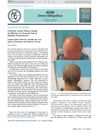
April 2016 in “Actas Dermo-Sifiliográficas”
1 citations
,
April 2016 in “Actas Dermo-Sifiliográficas” Wearing a wig caused a woman's skin condition to worsen due to pressure from the wig's fasteners.
July 2025 in “Frontiers in Medicine” This study identified compound heterozygous mutations, c.1101del and c.736 T > A, in the LIPH gene responsible for causing autosomal recessive woolly hair in a child, with c.1101del being a novel frameshift mutation.
 3 citations
,
January 2025 in “Indian Journal of Plastic Surgery”
3 citations
,
January 2025 in “Indian Journal of Plastic Surgery” This article finds that while plastic surgeons in India experience a high prevalence of WRMDs due to high case loads, applying ergonomic practices could help reduce these issues.
 2 citations
,
March 2023 in “Biomedicine & pharmacotherapy”
2 citations
,
March 2023 in “Biomedicine & pharmacotherapy” This study found that platelet lysate significantly improved hair growth and follicle performance in both experimental settings and AGA patients, showing results comparable to platelet-rich plasma.
33 citations
,
February 2021 in “Journal of Medicinal Chemistry” This study found that novel MPC inhibitor analogues with specific chemical modifications promoted significant hair growth in shaved mice when applied topically.
December 2015 in “OPAL (Open@LaTrobe) (La Trobe University)” In human hair follicle keratinocytes, this study found that treatment with the pharmacological inhibitor QLT0267 led to a strong inhibition of proliferation and migration and induced nearly 100% apoptosis.
 12 citations
,
March 2016 in “Life Sciences”
12 citations
,
March 2016 in “Life Sciences” This review discusses the potential of combined therapy with WP 631 and epothilone B for ovarian cancer, but reports no new clinical results.
 September 2021 in “CRC Press eBooks”
 This review discusses the clinical and trichoscopic features of lichen planopilaris and notes its potential underdiagnosis prior to hair transplant, but it reports no new findings.
1 citations
,
April 2010 in “Cancer Research” In preclinical studies, a B-Raf inhibitor called WYE-130600 caused dose-related skin effects in dogs and rats, suggesting potential similar responses might occur in humans.
September 2023 in “Journal of the American Academy of Dermatology” Recognizing IPPP is crucial to prevent misdiagnosis and unnecessary treatments.
June 2026 in “British Journal of Dermatology” This case study documented the first known instance of biopsy-confirmed lichen planopilaris occurring after hairline-lowering surgery in a patient without prior history, highlighting a potential complication where surgical trauma may trigger immune-mediated hair loss.
1 citations
,
July 2024 in “New Phytologist” In this study, researchers identified that three homologous genes—ZmSPL10, ZmSPL14, and ZmSPL26—are crucial for the development of stigmatic papilla in maize, with triple knockout mutants lacking these genes showing almost no stigmatic papilla and significantly reduced kernel setting.
 March 2026 in “Zenodo (CERN European Organization for Nuclear Research)”
 This report provides an overview of polycystic ovarian disease, discussing its causes, symptoms, and management strategies, but presents no new clinical findings.
 23 citations
,
November 2021 in “Journal of Bionic Engineering”
23 citations
,
November 2021 in “Journal of Bionic Engineering” This study found that PCL-Col/ZnO fibrous scaffolds enhanced wound healing and exhibited antibacterial properties, making them promising for use as a wound dressing.
30 citations
,
September 2013 in “PubMed” This study found that Chinese women with PCOS have a high prevalence of mild to moderate NAFLD, particularly when BMI is ≥24 kg/m(2), emphasizing the role of insulin resistance and metabolic abnormalities.
 3 citations
,
September 2015 in “Journal of Vascular Surgery”
3 citations
,
September 2015 in “Journal of Vascular Surgery” This study found that chemical lumbar sympathectomy with 5% phenol effectively treated idiopathic livedo reticularis in most patients, offering a potential long-lasting solution with repeatable efficacy upon recurrence.
1 citations
,
December 2016 in “Rossijskij žurnal kožnyh i veneričeskih boleznej” This study reported that 80% of patients with non-scarring alopecia showed a clinical cure after treatment with unactivated platelet leukocyte autoplasma.
29 citations
,
May 2025 in “Polymers” This study systematically examines how smart biomaterials used with DLP technology can enhance bioprinting in tissue engineering and regenerative medicine, while also identifying current challenges and future research needs.
1 citations
,
May 2025 in “Cell Reports Medicine” This study found that RSPO1, a Wnt/β-catenin pathway agonist, significantly induces insulin-producing β cell replication and neogenesis in various settings, offering a promising potential therapy for diabetes.
 November 2024 in “NeoReviews”
 Pallister-Killian Syndrome is a complex genetic disorder requiring coordinated care and genetic counseling.
 December 2025 in “Zenodo (CERN European Organization for Nuclear Research)”
 This study tested the acute toxicity of Ficus platyphylla methanol leaf extract in Wistar rats and found no mortality or significant liver enzyme changes at doses up to 5000 mg/kg, suggesting a high margin of acute safety and supporting its traditional use under short-term exposure.
August 2025 in “Texila international journal of management” This research explores the commercial potential of Platelet Rich Plasma in the cosmetic industry, indicating market growth driven by consumer interest in non-surgical procedures and personalized beauty solutions, despite regulatory challenges.
 1 citations
,
April 2019 in “Journal of Investigative Dermatology”
1 citations
,
April 2019 in “Journal of Investigative Dermatology” This study found that cold atmospheric plasma can accelerate wound healing processes and reduce bacterial growth, including drug-resistant strains, suggesting its potential as a novel treatment for chronic wounds.
January 2016 in “프로그램북(구 초록집)” This study found that combining a thulium laser with intra-perifollicular PDRN injections significantly improved hair thickness but not hair counts compared to mesotherapy and PDRN in patients with pattern hair loss.
September 2024 in “Genes” This study found significant genetic differences between pigs with and without hair whorls, suggesting potential implications for pig breeding strategies in China.
102 citations
,
April 2014 in “PloS one” In this study, Wharton’s Jelly Mesenchymal Stem Cells, cultured with human platelet lysate, showed enhanced wound-healing capabilities and multilineage differentiation potential, distinguishing them from bone marrow-derived stem cells and presenting exciting prospects for regenerative medicine.
January 2025 in “JAAD Case Reports” In this study, researchers noted that while Poly-L-lactic acid dermal fillers boost collagen synthesis to add volume and reduce wrinkles, there is no established link between these fillers and hair loss according to existing literature.
4 citations
,
May 2024 in “Cytotechnology”