 January 2021 in “Mastology”
 This study found that over 80% of women treated with paclitaxel who used a hypothermic glycerin-based hydrogel cap preserved at least 50% of their initial hair volume, suggesting scalp cooling may effectively prevent chemotherapy-induced alopecia.
October 2022 in “Hair Transplantation” This review discusses techniques for repairing large scalp defects, emphasizing the combination of older methods like scalp reduction and tissue expansion with modern hair restoration surgery to achieve satisfactory results, despite challenges like compromised scalp viability due to factors like trauma or radiation.
 10 citations
,
July 2001 in “Hair transplant forum international”
10 citations
,
July 2001 in “Hair transplant forum international” This article discusses challenges in hair restoration surgery and reports no new clinical results.
 March 2025 in “International Journal of Trichology”
 In this case report, researchers described a treatment for post-aplasia cutis congenita alopecia using follicular unit transplantation, platelet-rich plasma, and fat grafting, which significantly improved hair follicles, skin quality, and sensitivity in the affected scalp area.
 17 citations
,
February 2018 in “Journal of Cosmetic and Laser Therapy”
17 citations
,
February 2018 in “Journal of Cosmetic and Laser Therapy” In this study, researchers administered eight sessions of intradermal injections containing growth factors into the scalp of 1000 patients, reporting a significant reduction in hair fall in 83% of participants and increased total hair count and shaft diameter, with promising tolerance and safety.
 June 2026 in “Zenodo (CERN European Organization for Nuclear Research)”
 This article discusses the popularity and mechanisms of Platelet Rich Plasma therapy for skin rejuvenation and hair loss, but it reports no new clinical results.
 November 2024 in “Fizioterapevt (Physiotherapist)”
 This study found that combining fractional laser therapy, intravenous blood irradiation, and minoxidil significantly improved the psycho-emotional state and quality of life in patients with diffuse telogen effluvium, performing better than individual treatments alone, as measured by the DIQOL index.
 70 citations
,
February 2017 in “Dermatologic Surgery”
70 citations
,
February 2017 in “Dermatologic Surgery” This study reports that plasma rich in growth factors appeared to improve hair follicle regeneration and patient satisfaction in individuals with androgenetic alopecia, though further trials are needed.
 January 2014 in “Sen i Gakkaishi”
 In this study, liposome-encapsulated thioglycolic acid improved hair perming by enhancing the penetration of perm solutions, resulting in a stronger S-shaped wave and higher cysteine content compared to the control.
 September 1997 in “Dermatologic Surgery”
 This article reviews different grafting strategies for hair restoration surgery in extensive baldness and suggests uniform density grafting offers less detectable results, especially under adverse grooming conditions.
 April 2023 in “The journal of investigative dermatology/Journal of investigative dermatology”
 This study provides ex vivo proof-of-principle that low-intensity ultrasound may protect human hair follicles from paclitaxel-induced damage, potentially reducing chemotherapy-related alopecia.
 4 citations
,
November 2017 in “Journal of Cosmetic Dermatology”
4 citations
,
November 2017 in “Journal of Cosmetic Dermatology” This study found that polyquaternium-68 at pH 9 achieved the greatest hair deposition, while polyquaternium-44 demonstrated the best wash resistance at pH 6.
 December 2016 in “Journal of Pakistan Association of Dermatology”
 In this study, tissue expansion was identified as a safer initial procedure before hair transplantation for patients with large scalp defects, with the majority of participants having postburn scars and a mean expansion time of 33.6 days.
 February 2026 in “Clinical Cosmetic and Investigational Dermatology”
 This case study reports significant hair regrowth in a 29-year-old female with filler-induced alopecia after treatment with concentrated growth factor injections, suggesting it as a promising alternative therapy to standard hyaluronidase injections.
3 citations
,
January 2023 in “Journal of Cosmetic Dermatology” This study found that combining Fractional CO2 laser with platelet-rich plasma led to better improvement in vitiligo treatment compared to platelet-rich plasma alone, based on patient satisfaction and lesion size reduction.
 June 2026 in “Zenodo (CERN European Organization for Nuclear Research)”
 This article discusses the use of Platelet Rich Plasma therapy for skin rejuvenation and hair loss and reports no new clinical results, noting its minimally invasive nature and effect on skin texture and elasticity.
This study reports that using stamps to mark scalp incisions with gentian violet ink and a barrier film improved incision symmetry and maintained slot visibility for hair graft insertion in the frontal region.
 16 citations
,
April 2016 in “PLoS ONE”
16 citations
,
April 2016 in “PLoS ONE” In a porcine model, this study observed that using an External Tissue Expansion Device increased epidermis thickness, cell proliferation, and vessel density at fat graft recipient sites.

In this study, researchers developed vegan exosome-like vesicles from microalgae that mimic mammalian exosomes, demonstrating promising in vitro, ex vivo, and clinical effects such as improved wrinkle depth and elasticity, making them a potential alternative in cosmetic applications.
 1 citations
,
March 2007 in “Hair transplant forum international”
1 citations
,
March 2007 in “Hair transplant forum international” This article discusses the emotional impact of post-operative telogen effluvium on women undergoing hair transplantation and reports no new empirical findings.
 4 citations
,
November 2003 in “Hair transplant forum international”
4 citations
,
November 2003 in “Hair transplant forum international” This abstract mentions that using magnification during follicular unit graft dissection in hair restoration is known to reduce transection and increase graft yield, but does not report on new findings itself.
May 2026 in “Waste and Biomass Valorization” July 2025 in “Burns & Trauma” In this study, researchers developed a new SFL-3D system to produce extracellular vesicles from rejuvenated dermal papilla cell spheroids, which demonstrated significant antifibrotic effects in reducing hypertrophic scarring, highlighting their potential for precision-targeted scar management.
 June 2022 in “Ain Shams medical journal”
 This study found that incorporating platelet-rich plasma in hair transplant procedures for cicatricial alopecia improved patient satisfaction and hair growth outcomes compared to procedures without it.
January 2012 in “Zhongguo shengwuzhipinxue zazhi” This study found that a complex filling material made from autologous skin fibroblasts and hair keratin significantly improved the appearance of facial wrinkles, suggesting potential for clinical cosmetic applications.
 1 citations
,
September 2022 in “Journal of dermatological science”
1 citations
,
September 2022 in “Journal of dermatological science” This study found that a combination of vitamins in hair care products promoted hair shaft elongation in a mouse model by activating the PlGF/VEGFR-1 signaling pathway.
July 2026 in “Skin Appendage Disorders” This study observed that plant-derived extracellular vesicles delivered through a microneedling technique showed favorable tolerance and subjective improvement in androgenetic alopecia patients, with 95% reporting perceived improvement and 85% experiencing no adverse effects after six sessions.
 March 2026 in “International Journal of Research and Review”
 This clinical study found that Rosmarinum officinalis mother tincture significantly improved hair volume and density in individuals with diffuse hair loss by enhancing hair parameters measured through a hair shedding visual scale and ponytail thickness test.
 3 citations
,
September 2010 in “International Society of Hair Restoration Surgery”
3 citations
,
September 2010 in “International Society of Hair Restoration Surgery” This article discusses the importance of artistic hairline design and clear outlining in planning the recipient area for hair transplants but reports no clinical results.
 2 citations
,
October 2006 in “International Journal of Dermatology”
2 citations
,
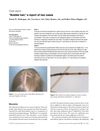
October 2006 in “International Journal of Dermatology” This study reports that discontinuing blow drying improved hair loss in two women with vacuolization in their hair shafts, suggesting a potential link between heat styling and alopecia.