76 citations
,
April 2002 in “Urology” This review examines the use of selenium and vitamin E supplements for reducing prostate cancer risk, finding mixed evidence that suggests benefits may be limited to individuals with specific risk factors, like low baseline levels or smoking history, rather than broadly applicable.
 47 citations
,
September 2023 in “Pharmacological Reports”
47 citations
,
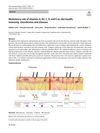
September 2023 in “Pharmacological Reports” In this review, researchers explored the roles of vitamins A, B3, C, D, and E in skin immunity, highlighting their potential as therapeutics for skin diseases due to their antioxidant, anti-inflammatory, and antimicrobial properties.
 30 citations
,
December 2019 in “PLoS ONE”
30 citations
,
December 2019 in “PLoS ONE” This study found that formulating raloxifene in nano-lipid carriers significantly enhanced its permeation and cytotoxicity against cancer cells compared to raw raloxifene.
20 citations
,
June 2020 in “Journal of Advanced Research” This study found that high-dose vitamin A and E supplementation with zinc may improve glycemic control and beta-cell function in patients with type 2 diabetes, compared to no supplements.
 4 citations
,
March 2023 in “Journal of medical case reports”
4 citations
,
March 2023 in “Journal of medical case reports” The authors concluded that coagulopathy can result from vitamin E supplementation, even at marginally elevated levels, especially when combined with other drugs that increase bleeding risk.
 4 citations
,
January 1965 in “THE JOURNAL OF VITAMINOLOGY”
4 citations
,
January 1965 in “THE JOURNAL OF VITAMINOLOGY” In this study, applying 0.5% vitamin E lotions on rabbits accelerated hair growth and increased it up to 2.4 times compared to controls within four weeks.
 2 citations
,
September 2023 in “Scientific reports”
2 citations
,
September 2023 in “Scientific reports” This study reports that zinc oxide or silver nanoparticles capped with vitamin A or E, incorporated into wheat gluten films, showed significant potential in promoting burn wound healing in mice by facilitating wound contraction, re-epithelialization, and collagen deposition, while also exhibiting antioxidant and antibacterial properties.
2 citations
,
October 2022 in “Journal of Sustainable Materials Processing and Management” This research found that Nano-Transfersomes containing Vitamin E and aloe vera showed improved permeability and prolonged drug release compared to a marketed formulation, with no skin irritancy observed in mice, potentially offering a sustainable and biocompatible option for psoriasis management.
2 citations
,
October 1961 in “Experimental Biology and Medicine” This study found that rabbits fed a diet deficient in Vitamin E developed severe muscular dystrophy that was not fully prevented by adding selenium, Vitamin E supplements, or natural feedstuffs, indicating other nutritional deficiencies.
1 citations
,
May 2023 in “Journal of the European Academy of Dermatology and Venereology” In this retrospective study, the authors explored the use of minoxidil and vitamin E for treating nail growth disorders, but no specific outcomes or results are reported in the abstract.
1 citations
,
July 2021 in “Small ruminant research” This study found that supplementing arsenic-fed Black Bengal kids with vitamin E, alone or combined with yeast culture, partially ameliorated growth and reduced arsenic load in faeces, urine, and hair.
 1 citations
,
September 2022 in “Journal of dermatological science”
1 citations
,
September 2022 in “Journal of dermatological science” This study found that a combination of vitamins in hair care products promoted hair shaft elongation in a mouse model by activating the PlGF/VEGFR-1 signaling pathway.
 May 2026 in “Archives of Dermatological Research”
 This study found that treating human hair with vitamin E and γ-oryzanol significantly reduced UV-B-induced structural damage, with γ-oryzanol providing greater protection, especially in female hair samples. The findings highlight these compounds' potential as cost-effective solutions for preserving hair integrity against UV damage.
 May 2026 in “Archives of Dermatological Research”
 In this study, serum levels of vitamin C, vitamin E, and total antioxidant capacity did not differ significantly between individuals with premature greying hair and controls, but a strong association with family history was observed.
 February 2026 in “Pakistan Veterinary Journal”
 In this study of White cashmere goat ewes and their offspring in Tibet, selenium and vitamin E supplementation improved antioxidant capacity and serum biochemical indices and enhanced secondary hair follicle development in lambs, but did not significantly alter fecal microbiota composition.
 September 2025 in “International Journal for Research in Applied Science and Engineering Technology”
 This paper discusses the potential benefits of incorporating guava leaf extracts into skincare, hair care, and oral care products, highlighting their antibacterial, antioxidant, and acne-treating properties, as well as their possible effects on dandruff removal and hair loss reduction.
 February 2025 in “International Journal of Morphology”
 In this study conducted on mouse fetuses, valproic acid was found to reduce Sonic Hedgehog expression in the skin and hair follicles, but the inclusion of vitamin E helped mitigate this effect, supporting its potential role in managing valproic acid-induced changes.
 November 2024 in “International Journal of Biology Pharmacy and Allied Sciences”
 This study aimed to evaluate a herbal shampoo made from custard apple leaves for its physical properties, skin irritability, and foam formation, with a focus on efficacy and safety, particularly for addressing hair issues like lice infection.
July 2024 in “DOAJ (DOAJ: Directory of Open Access Journals)” This article reviews the effects of vitamins, including A, C, D, E, and B, on animal fur, highlighting their roles in promoting healthy skin and fur condition by regulating cell renewal, metabolism, and collagen synthesis.
 May 2024 in “International Journal of Advanced Academic Studies”
 This study found that in Iraqi women with PCOS, those taking vitamin E supplements experienced a significant reduction in androgenic symptoms like hair loss, weight gain, and acne, along with lower levels of certain hormones linked to the condition.
November 2023 in “Systems Biology in Reproductive Medicine” This study assessed vitamin E and a combined oral contraceptive's impact on continuous light-induced PCOS in female rats, finding they reduced testosterone levels and modified oxidative stress, suggesting benefits via melatonin-related pathways.
June 2021 in “International journal of cosmetics and dermatology” This review found limited support for oral vitamin C and E in treating pigmentary disorders like chloasma, inflammatory conditions, and pressure wounds, with evidence constrained by small, varied studies.
 July 2020 in “International journal of biology sciences”
 This study found that coconut oil mixed with egg yolk and vitamin E may enhance hair growth in male rabbits more efficiently than amla, reetha, and sikhakai oil.
 April 2016 in “Journal of The American Academy of Dermatology”
 A vitamin and mineral supplement significantly reduced hair shedding in Brazilian women with telogen effluvium.
August 2026 in “Non-coding RNA Research” September 2005 in “CRC Press eBooks” This study reports that the epidermis is both a source and target for vitamin D3's active form, influencing skin and hair follicle differentiation through a calcium-mediated pathway.
December 2021 in “Vestnik Rossiĭskoĭ akademii meditsinskikh nauk / Rossiĭskaia akademiia meditsinskikh nauk” In this study, personalized treatment of folic acid and vitamin E deficiencies improved hair parameters in AGA patients, while Se supplementation might be unnecessary.
180 citations
,
January 2002 in “The journal of investigative dermatology/Journal of investigative dermatology” This study observed that vitamin D receptor knockout mice exhibit impaired epidermal differentiation and progressive hair loss, suggesting the importance of the vitamin D receptor in normal skin and hair follicle development.
 119 citations
,
July 2016 in “Annals of the New York Academy of Sciences”
119 citations
,
July 2016 in “Annals of the New York Academy of Sciences” This review examines the impact of vitamin D signaling in extraskeletal tissues and notes that expected benefits from animal and cell studies have not been consistently replicated in human clinical trials.
 57 citations
,
April 2002 in “The journal of investigative dermatology/Journal of investigative dermatology”
57 citations
,
April 2002 in “The journal of investigative dermatology/Journal of investigative dermatology” This study found that the vitamin D receptor is crucial for initiating the postnatal hair follicular cycle in mice, preventing alopecia associated with its inactivation.