6 citations
,
July 2024 in “Journal of Cosmetic Dermatology” In this study, researchers found that a composition containing mannose-6-phosphate significantly reduced the total skin pore area by 24% in women after 56 days and by 30.2% in men after 7 days, suggesting its effectiveness in improving pore appearance by targeting dermal and epidermal modifications.
 3 citations
,
November 2021 in “Clinical, Cosmetic and Investigational Dermatology”
3 citations
,
November 2021 in “Clinical, Cosmetic and Investigational Dermatology” This review evaluated existing studies on platelet-rich plasma for facial rejuvenation and found limited clinical evidence supporting its effectiveness, suggesting that more research is needed to establish its utility.

This review reports that collagen as a nutraceutical shows promising results for improving skin health in estrogen-deficient women, but more research is needed for scalp hair, nail health, and optimal dosing of curcumin and glutathione.
January 2026 in “Dermatologic Therapy” This study found that treatment with human foreskin fibroblast conditioned medium improved both objective measures like hair density and subjective satisfaction in patients with androgenetic alopecia.
 July 2025 in “Current Issues in Molecular Biology”
 This study evaluated the safety and efficacy of Bio-Pulsed avian mesenchymal stem cell-derived small extracellular vesicles when applied topically, finding significant improvements in hair growth, skin rejuvenation, and regenerative microRNA presence among 60 human participants without adverse events.
 November 2024 in “Journal of Cosmetic Dermatology”
 Regenerative medicine is effective and safe for treating vitiligo.
September 2021 in “Medicina Estética Revista Científica de la Sociedad Española de Medicina Estética (SEME)” The treatment improved hair growth and thickness in most patients with minimal side effects.
 September 2021 in “Medicina estética”
 Sabal serrulata and biomimetic peptides with microneedling reduced hair loss and improved hair thickness in men with balding.
70 citations
,
November 2020 in “The Ocular Surface” This review discusses the role of organoids and organ chips in advancing ophthalmological research and therapeutic evaluation, but it reports no new clinical findings.
3 citations
,
February 2020 in “DOAJ (DOAJ: Directory of Open Access Journals)” This review discusses the challenges of managing intraoperative floppy iris syndrome during cataract surgery and highlights the importance of preoperative risk assessment and multidisciplinary collaboration, reporting no new clinical results.
 2 citations
,
June 2024 in “Archives of Dermatological Research”
2 citations
,
June 2024 in “Archives of Dermatological Research” In this study, researchers compared three treatments for stable vitiligo and found that a combination of follicular cell suspension and mini punch grafting resulted in significantly better re-pigmentation after six months compared to using either method alone.
1 citations
,
December 2020 in “Case reports in dermatological medicine” This case report discusses a 67-year-old male with pre-existing pemphigus vulgaris who showed nearly 90% resolution of his skin lesions after two weeks of acyclovir treatment, accompanied by continued use of systemic steroids.
September 2023 in “Journal of the American Academy of Dermatology” 6 citations
,
June 2024 in “Biofabrication” This study used digital-light-processing bioprinting to create a 3D skin-on-a-chip model with a miniaturized vascular network to closely study immune cell interactions similar to real human skin, demonstrating the potential to analyze immune-T cell trafficking influenced by skin signals.
6 citations
,
January 2005 This study evaluated laser excision of the fibrous band for oral submucous fibrosis treatment, noting that while it offers immediate relief, long-term effects require further evaluation due to potential drawbacks.
 28 citations
,
February 2014 in “Journal of Telemedicine and Telecare”
28 citations
,
February 2014 in “Journal of Telemedicine and Telecare” Smartphone-based teledermatology is effective for diagnosing skin diseases in the military with good accuracy.
6 citations
,
October 2001 in “British Journal of Ophthalmology” This article discusses the potential of intralesional cidofovir for treating SCC without systemic toxicity, noting that surgical excision remains the best treatment option; it reports no new clinical results.
June 2025 in “British Journal of Dermatology” This study detailed the implementation of an autonomous AI device in an NHS skin cancer pathway, showing that it achieved a sensitivity of 97.3% for diagnosing skin cancers and exceeded sensitivity targets compared to specialists with a negative predictive value over 99.7%.
 8 citations
,
March 2015 in “Facial Plastic Surgery”
8 citations
,
March 2015 in “Facial Plastic Surgery” This article discusses aesthetic concepts in facial volume restoration but reports no new clinical results, highlighting strategies for mimicking natural facial shapes and the importance of highlights and shadows in aging.
 24 citations
,
April 2017 in “JAMA Facial Plastic Surgery”
24 citations
,
April 2017 in “JAMA Facial Plastic Surgery” This study found that facial rejuvenation surgery led casual observers to perceive patients as younger, more attractive, and more successful and healthy, suggesting significant societal benefits beyond a youthful appearance.
 4 citations
,
January 2016 in “Dermatology practical & conceptual”
4 citations
,
January 2016 in “Dermatology practical & conceptual” This report describes the first known case of Kaposi's varicelliform eruption occurring after a follicular unit extraction procedure, possibly linked to surgical trauma and post-surgical steroid use.
 39 citations
,
December 2008 in “Clinics in Dermatology”
39 citations
,
December 2008 in “Clinics in Dermatology” This article reviews recent trends and developments in dermoscopy, highlighting its expanding use beyond pigmented lesions, and reports no new clinical results.
 April 2024 in “Journal of applied cosmetology”
 This study found that while hyaluronic acid fillers can enhance facial balance and aesthetics, particularly in the temple area, they carry significant risks like vascular occlusion and blindness, highlighting the need for careful technique and product selection to ensure safety.
 14 citations
,
July 2012 in “Journal of the American Academy of Dermatology”
14 citations
,
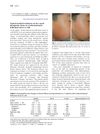
July 2012 in “Journal of the American Academy of Dermatology” This study found that topical tacalcitol improved roughness and scaling in erythromelanosis follicularis faciei et colli, although it was less effective for facial erythema.
 6 citations
,
January 2016 in “Springer eBooks”
6 citations
,
January 2016 in “Springer eBooks” Invasomes effectively deliver drugs through the skin and have potential for improved treatments.
 November 2025 in “Clinical Cosmetic and Investigational Dermatology”
 In this study, researchers suggest that digital microscopy using visible light could offer a more objective approach to diagnosing hirsutism by quantifying terminal hair, with future research needed to assess its usefulness in women with the condition.
47 citations
,
March 1987 in “The Journal of dermatologic surgery and oncology” Carbon dioxide laser treatment effectively removed facial hair cysts without scarring or them coming back.
October 2013 in “InTech eBooks” Successful outcomes depend on accurate diagnosis and strong doctor-patient relationships.
 18 citations
,
March 2018 in “Archives of Plastic Surgery”
18 citations
,
March 2018 in “Archives of Plastic Surgery” This article reviews the use of superficial temporal artery island flaps for facial reconstruction and provides a systematic approach for managing composite facial defects, reporting no major complications in 72 patients.
25 citations
,
May 1995 in “Journal of the American Academy of Dermatology” This article reports two new cases of erythromelanosis follicularis faciei in women and includes a literature review on this rarely diagnosed condition.