 May 2024 in “Indian Dermatology Online Journal”
 This study reports a case of trichobacteriosis pubis, a rare bacterial infection causing malodour in the pubic region, which improved with hair trimming and topical clindamycin, subsequently enhancing the patient's sexual relationship.

In this case report, a woman's Majocchi's granuloma, linked to her pet guinea pig infected with Trichophyton mentagrophytes, improved significantly with a combination of terbinafine and ketoconazole cream.
 September 2025 in “Cermin Dunia Kedokteran”
 This research reports that onychomycosis, a common nail fungal infection often caused by Candida yeast, requires laboratory testing like direct preparations, fungal cultures, and molecular tests for accurate diagnosis due to its diverse etiology and differential diagnosis, improving therapy effectiveness and efficiency.
2 citations
,
January 2015 in “Indian dermatology online journal” This case report describes a 30-year-old woman with vitiligo who developed a rare dermatophyte infection encircling one of her vitiligo patches, possibly due to immunosuppression from her treatment.
September 2015 in “Photodiagnosis and Photodynamic Therapy” October 2010 in “EUR Research Repository (Erasmus University Rotterdam)” This case report describes the successful treatment of scedosporiosis-induced cellulitis with voriconazole and intermittent pneumatic compression in a 72-year-old Portuguese woman.
 September 2024 in “BMJ Case Reports”
 This case report highlights an atypical presentation of favus in an immunocompetent adult, where a psoriasiform plaque over the 'bindi' area was successfully treated with systemic itraconazole, achieving complete resolution without relapse. Simple stains proved essential for diagnosis in this resource-limited setting.
11 citations
,
January 2017 in “Pediatrics in review” This review discusses fungal skin infections in children, including diagnosis challenges and treatment options, and does not present new clinical findings; the authors emphasize the importance of accurate pathogen identification for effective treatment.
January 2018 in “Archivio istituzionale della ricerca (Alma Mater Studiorum Università di Bologna)” This study reports a case where Geotricum candidum caused skin lesions in a horse following long-term corticosteroid and antibiotic use, highlighting the importance of prompt veterinary consultation for dermatitis diagnosis.
24 citations
,
July 2009 in “Mycoses” This case report describes an adult patient with tinea capitis due to Microsporum canis who experienced complete hair regrowth following treatment with fluconazole and ketoconazole shampoo.
3 citations
,
January 2021 in “Therapeutic advances in infectious disease” This report describes a 9-year-old girl with a scalp kerion treated successfully with terbinafine and ketoconazole shampoo, leading to hair regrowth after two months.
 62 citations
,
June 2015 in “Sexually Transmitted Infections”
62 citations
,
June 2015 in “Sexually Transmitted Infections” This study identifies sexual activity as a significant potential transmission route for Trichophyton interdigitale, causing tinea genitalis among travelers to South East Asia.
 35 citations
,
November 1996 in “Journal of the American Academy of Dermatology”
35 citations
,
November 1996 in “Journal of the American Academy of Dermatology” This study reports two HIV-infected men with a rare M. canis infection unresponsive to ketoconazole and terbinafine, where itraconazole was effective but prolonged treatment led to only one cure.
November 2025 in “JEADV Clinical Practice” In this case report, a 28-year-old woman's tinea capitis, diagnosed using a Wood's lamp, was successfully treated with oral itraconazole and ketoconazole shampoo over eight weeks.
12 citations
,
August 2011 This paper discusses tinea capitis in adults, emphasizing that it particularly affects postmenopausal African American or Black women, and notes challenges in treatment due to antifungal resistance.
2 citations
,
October 2015 in “Mikrobiyoloji bülteni” This case report describes a 20-year-old female with favus caused by T. schöenleinii, which initially improved with antifungal treatment but recurred due to poor adherence, underscoring favus as an ongoing health issue in Turkey.
4 citations
,
May 2020 in “Animals” This case study identified Geotrichum candidum as a cause of skin lesions in a horse following extended corticosteroid or antibiotic use, noting the importance of thorough diagnosis and specific antifungal treatment to improve symptoms.
1 citations
,
August 2021 in “Pediatrics in review” This case report describes a rare instance of labial hair tourniquet syndrome in a 10-year-old girl, emphasizing the importance of considering this condition in the differential diagnosis of vulvar lesions.
This report presents the first known case of tinea capitis caused by Microsporum canis in an adult female in the authors' locality, responsive to oral fluconazole treatment.
 May 2022 in “International journal of infectious diseases”
 In this case study, a 70-year-old woman with generalized favus caused by Trichophyton schoenleinii achieved a clinical and mycological cure after a one-month terbinafine treatment.
4 citations
,
March 1999 in “International Journal of STD & AIDS” This report details a case of severe recurrent bacterial vaginosis in a woman with Netherton's syndrome.
2 citations
,
April 2022 in “Medicine” This case study reports the first documented instance of kerion Celsi in a child caused by Microsporum gypseum, likely transmitted from a guinea pig, with remission observed following combination therapy.
 24 citations
,
July 1998 in “Journal of the South African Veterinary Association”
24 citations
,
July 1998 in “Journal of the South African Veterinary Association” In this study, persistent ringworm infections in dairy calves appeared resistant to standard topical treatments and showed a potential risk of spreading to human attendants.
November 2022 in “Indian Journal of Dermatology” This case report describes a 52-year-old woman with erythema annulare centrifugum after using topical luliconazole and oral itraconazole, suggesting a drug-induced reaction confirmed by a positive rechallenge test.
 3 citations
,
January 2015 in “Journal of clinical and diagnostic research”
3 citations
,
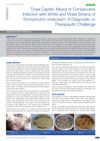
January 2015 in “Journal of clinical and diagnostic research” This case report described a seven-year-old with tinea capitis, which improved clinically after six weeks of griseofulvin treatment, changing the fungal strain from Trichophyton violaceum white variant to violet strain.
 2 citations
,
July 1996 in “Annals of Internal Medicine”
2 citations
,
July 1996 in “Annals of Internal Medicine” This letter argues that the association between fluconazole therapy and alopecia may be misattributed, suggesting instead that systemic fungal infections themselves could lead to hair loss.
 100 citations
,
September 2016 in “Clinical transplantation/Clinical transplantation.”
100 citations
,
September 2016 in “Clinical transplantation/Clinical transplantation.” This study highlights that prolonged voriconazole use is linked to an increased risk of aggressive cutaneous malignancies like squamous cell carcinoma, necessitating careful monitoring of drug levels to manage adverse effects.
 May 2024 in “Microbial Biosystems Journal”
 This study found that the antifungal potential of six herbal shampoos developed using various phytoconstituents is comparable to marketed synthetic antifungal shampoos in treating Seborrheic dermatitis caused by Candida albicans.
 2 citations
,
March 2020 in “Skin”
2 citations
,
March 2020 in “Skin” This report highlights hyperpigmentation as an underreported side effect of topical cidofovir treatment for trichodysplasia spinulosa.
 July 2015 in “Actas Dermo-Sifiliográficas”
 A young woman with a rare fungal infection showed significant improvement after treatment with antifungal medication.