 4 citations
,
February 1995 in “Journal of Clinical Dermatology”
4 citations
,
February 1995 in “Journal of Clinical Dermatology” This study observed an increasing trend of young patients with androgenetic alopecia visiting dermatologists, with genetic factors and abnormal androgen metabolism in the scalp contributing to its development.
1 citations
,
December 1995 in “Archives of Dermatology” This case report describes a patient with advanced androgenetic alopecia who underwent a 6-month trial of topical minoxidil and oral finasteride, aiming to optimize hair regrowth without surgery.
52 citations
,
September 2021 in “Kidney International” In this report, a 23-year-old woman developed nephrotic syndrome and was diagnosed with lupus nephritis after receiving the first dose of the AstraZeneca COVID-19 vaccine, but causation is not established.
11 citations
,
September 1996 in “Journal of applied polymer science” In this study, treatment with aqueous KCN selectively converted disulfide bonds to monosulfide crosslinks in hair, leading to changes in microstructural properties and rubberlike elasticity under specific laboratory conditions.
2 citations
,
September 1996 in “Journal of Applied Polymer Science” This study found that treating hair with aqueous KCN converts disulfide bonds to monosulfide crosslinks, affecting the elasticity and crosslink distribution in hair microstructures.
January 2026 in “National Journal of Maxillofacial Surgery” In this study, the application of hibiscus hair oil combined with Gua-sha improved eyebrow hair rejuvenation more effectively than hibiscus oil alone in female participants, enhancing microcirculation and aesthetic features after 30 days.
December 2021 in “Journal of the European Academy of Dermatology and Venereology” This autobiographical account details the personal and professional journey of a dermatologist from Yugoslavia, highlighting key influences, career milestones, and reflections on changes in dermatology practice and personal observations over several decades.
8 citations
,
July 2018 in “The Journal of Dermatology” In this retrospective study, researchers observed that additional rounds of intravenous corticosteroid pulse therapy led to only partial hair regrowth in some rapidly progressive alopecia areata cases, with all participants experiencing relapse, indicating limited efficacy for severe cases resistant to initial treatment.
 15 citations
,
November 2015 in “Pharmacopsychiatry”
15 citations
,
November 2015 in “Pharmacopsychiatry” This review discusses sexual dysfunction as a side effect of α-blockers and 5-ARIs for BPH/LUTS, highlighting methodological flaws in existing studies and the need for more rigorous research.
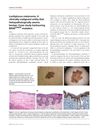 1 citations
,
March 2015 in “Journal of the European Academy of Dermatology and Venereology”
1 citations
,
March 2015 in “Journal of the European Academy of Dermatology and Venereology” This letter to the editor shares a case study of lentiginous melanoma that appears clinically malignant but histopathologically benign, involving the BRAFV600R mutation.
April 2026 in “Zenodo (CERN European Organization for Nuclear Research)” In this case study, a daily morning Detox Drink combined with Malasana improved bowel frequency, stool consistency, and other constipation-related symptoms in a 37-year-old woman with chronic Malabaddha.
April 2026 in “Zenodo (CERN European Organization for Nuclear Research)” This single observational study reported that a combination of a morning Detox Drink regimen and Malasana yoga practice improved symptoms of chronic constipation in a 37-year-old woman over seven days.

This phase II study found that a 0.05% topical dutasteride solution was more effective than oral finasteride (1 mg/day) in increasing hair count and width in males with androgenetic alopecia over 24 weeks, without causing irritation.
This study developed a three-dimensional model for studying hair follicle development, showing that immortalized dermal papilla cells retain certain differentiation activities and can induce tubule formation in vitro.
136 citations
,
March 1998 in “Oncogene” This study found that transgenic mice overexpressing E2F1 in their epidermis developed skin tumors, confirming in vivo that deregulated E2F1 activity can contribute to tumor development.
114 citations
,
July 2003 in “PubMed” This study found that KSR1 is necessary for v-Ha-ras-mediated skin tumor formation but not for MT-driven mammary cancer, indicating its potential as a therapeutic target in Ras/MAPK signaling-related tumors.
 37 citations
,
January 2017 in “International Journal of Dermatology”
37 citations
,
January 2017 in “International Journal of Dermatology” This study found that trichoscopic features like exclamation mark hairs and angulated hairs were more indicative of alopecia areata in an Asian population, while features like broken hairs of different lengths and flame hairs were more common in trichotillomania.
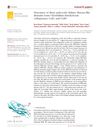 18 citations
,
February 2015 in “Acta Crystallographica Section D: Structural Biology”
18 citations
,
February 2015 in “Acta Crystallographica Section D: Structural Biology” This study reports that Ca 2+ binding alters the dynamics and surface properties of PKD-like domains in Clostridium histolyticum collagenases, enhancing their stability and potentially aiding in collagen-targeting vehicle development.
 17 citations
,
June 2018 in “Frontiers in Physiology”
17 citations
,
June 2018 in “Frontiers in Physiology” This study found that acellular dermal matrix scaffolds may facilitate full-thickness skin wound healing by promoting a pro-regenerative immune response through M2 macrophage polarization via the Lamtor1 pathway.
13 citations
,
December 2001 in “Journal of Investigative Dermatology” This study demonstrated that the tracheal xenotransplant procedure is an effective technique for assessing the invasiveness of epidermal keratinocytes and studying factors affecting hair follicle formation.
 11 citations
,
December 2018 in “Journal of Dermatology”
11 citations
,
December 2018 in “Journal of Dermatology” This study found that finasteride 1 mg improved hair growth in 85.7% of Korean men with androgenetic alopecia over five years, with varying effectiveness depending on the type of hair loss.
 8 citations
,
June 2021 in “Acta dermato-venereologica”
8 citations
,
June 2021 in “Acta dermato-venereologica” This systematic review concludes that trichoscopy is a reliable diagnostic tool for trichotillomania and should be incorporated into standard clinical practice for differential diagnosis.
7 citations
,
September 2006 in “Molecular Carcinogenesis” This study observed that K5Cre +/+ transgenic mice develop a distinct phenotype characterized by wavy hair, curly whiskers, and an increased rate of papilloma malignant transformation.
 6 citations
,
January 2020 in “Postepy Dermatologii I Alergologii”
6 citations
,
January 2020 in “Postepy Dermatologii I Alergologii” This study identified several specific trichoscopic features of trichotillomania, with trichoptilosis, V hair, and hair powder being the most frequent findings.
 5 citations
,
November 2017 in “Dermatologica Sinica”
5 citations
,
November 2017 in “Dermatologica Sinica” In this study, transverse sectioning of scalp biopsy samples showed higher diagnostic accuracy than vertical sectioning for noncicatricial alopecia, although both techniques are important for accurate diagnosis.
2 citations
,
December 2017 in “Theriogenology” This study found that V-ATPase plays a role in the acidification of vas deferens fluid under the influence of testosterone in orchidectomized rats.
 1 citations
,
January 2024 in “Skin research and technology”
1 citations
,
January 2024 in “Skin research and technology” This study reviewed various lipolytic agents for reducing submental fat and highlighted that while deoxycholic acid is FDA-approved, other compounds like phosphatidylcholine with deoxycholate lack cosmetic approval due to safety concerns. Understanding these agents' mechanisms and anatomy is crucial for safe fat reduction applications.
 January 2022 in “Bio web of conferences/BIO web of conferences”
 This study concluded that the elemental composition of tail brush hair in newborn calves can indicate trace element supply to the fetus during the last months of pregnancy.
November 2025 in “Journal of Investigative Dermatology” BTNL2 helps protect hair follicles from immune attacks.
November 2025 in “The Journal of Immunology” This study identified specific genes upregulated in skin γδ T cells involved in alopecia areata, with findings suggesting these cells contribute to disease pathogenesis through inflammatory and Th1 response mechanisms in mouse and possibly human skin.