 50 citations
,
March 2021 in “Journal of investigational allergology & clinical immunology”
50 citations
,
March 2021 in “Journal of investigational allergology & clinical immunology” This review examines existing research and clinical trials on the use of dupilumab for various skin, respiratory, and gastrointestinal disorders, but it reports no new clinical findings.
 April 2023 in “International journal of dermatology and venereology”
 This study observed distinct dermoscopic features in pityriasis versicolor that could aid in its differentiation from similar skin disorders.
 89 citations
,
May 1999 in “Allergy”
89 citations
,
May 1999 in “Allergy” This article reviews the role of Pityrosporum (Malassezia) in skin conditions such as pityriasis versicolor, seborrheic dermatitis, and atopic dermatitis, and discusses treatment approaches; it reports no new clinical results.
January 2026 in “Journal of Aesthetic Nursing” This review discusses the regenerative potential of polynucleotides and polydeoxyribonucleotides in aesthetic medicine, noting their benefits for skin texture, hydration, and patient satisfaction despite limited high-quality evidence.
 2 citations
,
July 1998 in “Dermatologic Clinics”
2 citations
,
July 1998 in “Dermatologic Clinics” This review examines the differences in dermatology practices between Europe and North America, noting that European dermatologists often prioritize evaluating patients' psychosocial factors and utilize nondrug treatments, unlike their North American counterparts.
 May 2026 in “The Scientific Issues of Ternopil Volodymyr Hnatiuk National Pedagogical University Series pedagogy”
 The researchers reported that integrating the naturopathic complex Detoxil into standard therapy for chronic dermatoses enhances detoxification, normalizes metabolic markers, and accelerates symptom resolution, suggesting potential benefits for managing skin conditions.
1 citations
,
April 2025 in “Clinical Cosmetic and Investigational Dermatology” This report describes a rare case of porokeratotic eccrine ostial and dermal duct nevus in a 64-year-old woman, successfully treated with CO₂ laser, highlighting its potential occurrence in older adults.
 November 2023 in “Journal of cosmetic dermatology”
 This report describes three cases of erythromelanosis follicularis faciei et colli showing significant improvement in facial telangiectasia following treatment with a 595-nm pulsed dye laser, with minimal recurrence observed during follow-up.
4 citations
,
August 2015 in “Journal of Cosmetic Dermatology” This study found that UVA blocker-containing sunscreens instantly reduced follicular fluorescence due to porphyrins in facial skin, with the effect lasting for a few hours, influenced by sunscreen amount and formulation.
 1 citations
,
October 2021 in “Cureus”
1 citations
,
October 2021 in “Cureus” This study found that platelet-rich plasma treatment led to significant reductions in lesion sizes for both plaque psoriasis and atopic dermatitis, with many patients achieving complete remission and no adverse events reported.
 3 citations
,
December 2021 in “Dermatology reports”
3 citations
,
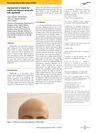
December 2021 in “Dermatology reports” This study presents a reported case where dupilumab treatment for atopic dermatitis led to improvement in alopecia universalis.
9 citations
,
September 2010 in “Dermatologic therapy” This study found that combined therapy with cetirizine and topical steroids stabilized inflammation in most patients with lichen planus pilaris, though one patient experienced cardiac arrhythmia.
1 citations
,
May 2024 in “Dermatology Online Journal” In this case study, two middle-aged patients with pruritic scalp erosions were diagnosed with localized pemphigus vulgaris, which resolved without relapse after treatment with low-dose oral prednisone and intralesional triamcinolone acetonide.
 February 2013 in “Journal of the American Academy of Dermatology”
 This case report found that intense focused skin tightening ultrasound reduced excessive underarm sweating by nearly 80% in two patients and was associated with temporary side effects like tenderness and redness.
 33 citations
,
February 2019 in “Journal of Tissue Engineering and Regenerative Medicine”
33 citations
,
February 2019 in “Journal of Tissue Engineering and Regenerative Medicine” This review discusses the use of platelet-rich plasma for various dermatological conditions and highlights the need for more research to standardize its protocols and understand its biological mechanisms.
 9 citations
,
September 2009 in “Journal of Cutaneous Medicine and Surgery”
9 citations
,
September 2009 in “Journal of Cutaneous Medicine and Surgery” This study reports cases of androgenetic alopecia patients with depigmented macules on sun-exposed scalp areas, suggesting potential ultraviolet-induced scalp leukoderma not covered in existing dermatology texts.
May 2026 in “Journal of Cosmetic Dermatology” This narrative review found that skin boosters, including hyaluronic acid and other agents, improve skin hydration, elasticity, and texture with favorable safety, though evidence is limited by study heterogeneity and lacks standardized protocols, suggesting a need for further clinical research.
January 2024 in “Skin Appendage Disorders” May 2026 in “Therapeutic Delivery” This study found that applying a dutasteride-loaded liposome formulation to damp rat skin nearly doubled the drug's follicular accumulation compared to dry skin, suggesting scalp hydration status may significantly impact the drug's topical delivery, especially in follicle-rich areas.
 19 citations
,
September 2011 in “Seminars in Cutaneous Medicine and Surgery”
19 citations
,
September 2011 in “Seminars in Cutaneous Medicine and Surgery” This review discusses home-use laser and light skin devices for various dermatological purposes and reports no new clinical findings; the authors highlight the need for dermatologists to evaluate these devices' clinical value.
20 citations
,
February 2018 in “Journal of the European Academy of Dermatology and Venereology” This study reported that applying a cream with 5% vitamin C reduced dermatoporosis-related purpura, suggesting the condition may be linked to vitamin C deficiency.

This study observed that exosome treatment in skin led to increased dermal vascularity and mild inflammation, with one alopecia patient showing hair follicle growth at treated areas.
 1 citations
,
January 2013 in “Archives of Aesthetic Plastic Surgery”
1 citations
,
January 2013 in “Archives of Aesthetic Plastic Surgery” This study found that combining liposuction with diode laser ablation was effective in treating axillary osmidrosis, with high patient satisfaction and no significant complications reported over a 10-month follow-up period.
19 citations
,
January 2019 in “JAAD case reports” This study reports a case where a biologic medication used for atopic dermatitis unexpectedly also treated concurrent alopecia areata.
63 citations
,
April 1985 in “Journal of the American Academy of Dermatology” This study observed that topical PUVA treatment led to excellent or good hair regrowth in 45.4% of patients with alopecia areata, though many experienced relapse after treatment stopped.
2 citations
,
September 2024 in “Journal of the American Academy of Dermatology” Deuruxolitinib significantly helps regrow scalp hair in adults with moderate to severe alopecia areata.
October 2025 in “Figshare” This systematic review and meta-analysis reported that deuruxolitinib is effective for hair regrowth and improving patient-reported outcomes in individuals with moderate to severe alopecia areata, but observed manageable treatment-emergent adverse events such as elevated creatinine kinase levels and headaches, particularly with higher doses.
6 citations
,
February 2023 in “Genes” This study found that overexpression of the CUX1 protein promotes proliferation of Hu sheep dermal papilla cells and affects key genes in the Wnt/β-catenin signaling pathway.
 13 citations
,
July 2014 in “The Journal of Dermatology”
13 citations
,
July 2014 in “The Journal of Dermatology” Dermoscopy helped diagnose discoid lupus erythematosus in two patients without needing skin biopsies.
 46 citations
,
January 2020 in “Theranostics”
46 citations
,
January 2020 in “Theranostics” This study demonstrated that OSA hydrogels enhanced the stability and retention of dermal papilla-derived extracellular vesicles, which significantly improved hair regeneration in both cultured human hair and a mouse depilation model.