 December 2021 in “Research Square (Research Square)”
 In this study, high expression of S100A4 in glioblastoma was associated with worse patient survival and promoted tumor progression by enhancing pro-tumorigenic vascular functions.
 January 2024 in “Wiadomości Lekarskie”
 This study reported the development of fluorescent markers using wide band gap metal oxides with rare earth ions for early tumor detection and treatment. Testing in animals showed high efficiency and selectivity, with potential applications in contrast-enhanced MRI, targeted drug delivery, and photodynamic cancer therapy.
 January 2024 in “Wiadomości Lekarskie”
 In this report, a case of a large primary extradural solitary fibrous tumor in the sacrum of a 31-year-old woman is detailed, where surgical treatment led to remission and improved functionality, despite the patient opting out of adjuvant radiotherapy to preserve fertility potential.
 1398 citations
,
May 2008 in “Histochemistry and Cell Biology”
1398 citations
,
May 2008 in “Histochemistry and Cell Biology” This review summarizes the cell type distribution and functional significance of human keratins, emphasizing their roles in tumor diagnosis and potential clinical applications, and reports no new clinical findings.
 2 citations
,
August 2025 in “Scientific Reports”
2 citations
,
August 2025 in “Scientific Reports” This study analyzed pexidartinib-associated adverse events from FDA data and reported common events such as hepatic issues and systemic reactions. It highlighted sex-specific susceptibilities and reinforced the need for risk mitigation and long-term monitoring in tenosynovial giant cell tumor management.
 42 citations
,
August 1999 in “The American journal of pathology”
42 citations
,
August 1999 in “The American journal of pathology” This study found that basal cell carcinomas show strong expression of vitamin D receptors at both mRNA and protein levels, suggesting a potential role in tumor growth regulation.
 73 citations
,
September 2016 in “Journal of Translational Medicine”
73 citations
,
September 2016 in “Journal of Translational Medicine” This review discusses the drug repurposing of cardiovascular medications like aspirin and statins for new uses, including potential anti-tumor effects, noting promising experimental outcomes but less conclusive clinical trials, particularly in the field of cancer treatment.
In this study, pilomatricoma, a benign skin tumor from hair follicle matrix cells, is highlighted as an important consideration when diagnosing painless, firm subcutaneous nodules, with accurate diagnosis relying on histopathological examination.
August 2024 in “Clinical Case Reports” This case study reports on a rare benign skin tumor known as Pilomatricoma in the lower left orbital region of a 32-year-old male, highlighting its characteristic histopathological features and emphasizing the importance of surgical excision for successful treatment and minimal recurrence risk.
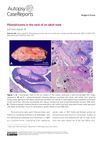 January 2022 in “Autopsy and Case Reports”
 This article describes a case of pilomatricoma in a 22-year-old male with successful surgical excision and no recurrence, highlighting its histopathological features and typical clinical presentation.
 36 citations
,
January 2019 in “Nature communications”
36 citations
,
January 2019 in “Nature communications” This study found that Ldh activity in hair follicle stem cell-mediated squamous cell carcinoma is not necessary for tumorigenesis, as its modulation did not affect the cancer's development or characteristics.
22 citations
,
August 2020 in “Cells” This review discusses the role of TGM3 in skin and hair follicle biology, human tumor pathology, and genetic abnormalities, and reports no novel results; the authors highlight its potential as a cancer diagnostic biomarker.
17 citations
,
January 2014 in “Journal of Oral and Maxillofacial Pathology” This case report establishes the diagnosis of seborrheic keratosis in an elderly Indian woman based on histopathological examination, highlighting its potential to mimic malignant tumors and emphasizing the importance of differential diagnosis.
 13 citations
,
April 2022 in “Frontiers in oncology”
13 citations
,
April 2022 in “Frontiers in oncology” This review discusses the early phases of melanomagenesis and the factors influencing melanoma cell variability and reports no new clinical results.
13 citations
,
March 2021 in “Frontiers in oncology” This review discusses the strong correlation between reflectance confocal microscopy images and horizontal histopathology in diagnosing skin tumors, highlighting the reliability of this non-invasive technique; no new clinical results are reported.
August 2025 in “Dermatopathology” This study identified 96 cases of pilomatricomas linked to genetic syndromes, including a novel association with Apert syndrome, highlighting that these tumors often manifest as the first indication of underlying conditions in pediatric patients.
 January 2022 in “Nasza Dermatologia Online”
 In this study, dermoscopy was suggested as a potentially useful tool for improving the clinical recognition of pilomatricoma.
 November 2020 in “Journal of The American Academy of Dermatology”
 This study examined dermoscopic features in African-American women with different types of alopecia and found that a perifollicular pink blush, potentially indicating inflammation, was common, particularly resolved with anti-inflammatory treatment, suggesting dermoscopy could aid in management.
333 citations
,
March 2000 in “Proceedings of the National Academy of Sciences” In this study, researchers established that increased expression of the human GLI-1 gene in mouse skin leads to the development of tumors that closely resemble human basal cell carcinomas, without requiring additional mutations in the p53 or Ha ras genes.
January 2026 in “Therapeutics” This study found that SCUBE3 protein is upregulated in various cancers, promoting tumor growth and poor outcomes, while suppressing growth in renal cell carcinoma, and may serve as a diagnostic marker and potential therapeutic target for several diseases due to its secreted nature.
 January 2024 in “Wiadomości Lekarskie”
 This study found that in prodromal Alzheimer's disease, pro-inflammatory gut bacteria were associated with reduced cerebral blood flow and reactivity, while beneficial gut bacteria correlated with better outcomes.
 67 citations
,
May 2010 in “Journal of The American Academy of Dermatology”
67 citations
,
May 2010 in “Journal of The American Academy of Dermatology” This article discusses a unique case of permanent chemotherapy-induced alopecia in a patient receiving chemotherapy for breast cancer, characterized by a distinctive histologic finding and excludes bone marrow transplantation, but reports no new clinical results.
 42 citations
,
February 2017 in “Scientific Reports”
42 citations
,
February 2017 in “Scientific Reports” In this study, researchers differentiated induced pluripotent stem cells into cells with dermal papilla-like properties, demonstrating their potential role in hair follicle bioengineering and drug testing for hair growth.
 14 citations
,
April 2018 in “ACS Biomaterials Science & Engineering”
14 citations
,
April 2018 in “ACS Biomaterials Science & Engineering” In this study, luteolin-loaded nanoemulsions were shown to promote hair growth similarly to a luteolin solution in organic solvents, offering enhanced stability for follicular delivery.
 8 citations
,
May 2022 in “International journal of nanomedicine”
8 citations
,
May 2022 in “International journal of nanomedicine” This study developed a fully natural resveratrol nanoparticle system using lecithin, showing potent anti-cancer activity in vitro and increased tumoral uptake in vivo on breast cancer models.
 1 citations
,
June 2021 in “Curēus”
1 citations
,
June 2021 in “Curēus” This study discusses incidental findings of syringomas and syringomatous proliferations in areas of scalp alopecia, suggesting they may be secondary to reactive changes from subclinical alopecia.
 April 2026 in “Antioxidants”
 In this study, broccoli sprout extract and sulforaphane were found to reduce cell viability, suppress growth, and induce apoptosis in breast cancer cells, and oral broccoli sprout extract inhibited tumor growth in animal models, suggesting it may be effective in managing breast cancer.
May 2025 in “International Journal of Women’s Dermatology” In this retrospective cohort study, researchers found that exposure to 5-alpha reductase inhibitors and spironolactone in female alopecia patients was not linked to an increased risk of developing malignant or benign gynecologic tumors when compared to minoxidil use.
 April 2024 in “Journal of cancer research and clinical oncology”
 This review discusses the isolation, characterization, and potential clinical applications of tissue-derived extracellular vesicles in cancer diagnosis, prognosis, and treatment, noting their significance but highlighting the risks and need for appropriate protocols.
32 citations
,
August 2020 in “American Journal Of Pathology” This study reports that in ovarian high-grade serous carcinoma, overexpressed S100A4 likely promotes epithelial-mesenchymal transition and cancer stem cell properties, affecting tumor behavior through its interaction with NMIIA and mutant p53.